We are processing your request.
Please, don’t close or refresh the page.
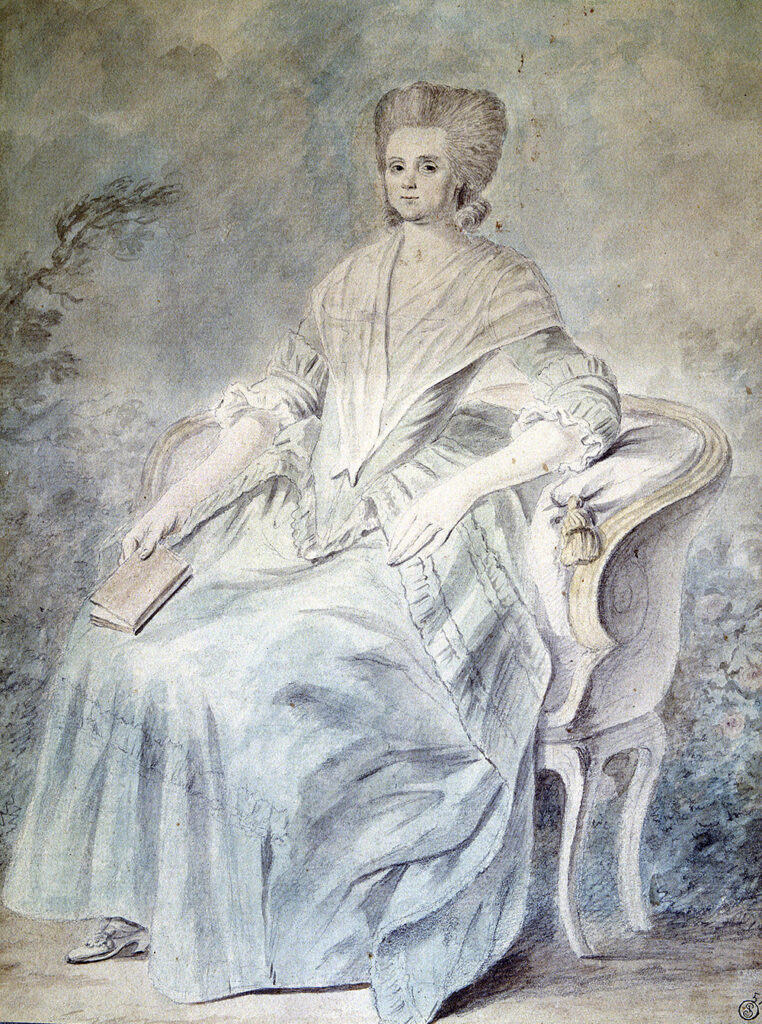
Portrait of Olympe de Gouges

Olympe de Gouges: The Woman Who Wrote the Declaration of the Rights of Woman

Born into a butcher’s family in Montauban, she became a Paris playwright, attacked slavery and demanded the same rights for women as for men. Her words took her to the Conciergerie, and to the scaffold.

Who Was Olympe de Gouges?

Olympe de Gouges was a French playwright and political writer, and one of the first voices to demand equal rights for women. In 1791 she answered the Declaration of the Rights of Man with her own Declaration of the Rights of Woman and of the Female Citizen. She also wrote against slavery, for divorce and against the violence of the Terror. Her last stop before the guillotine was the Conciergerie, among the women of the French Revolution held there.

Olympe de Gouges in Brief

She was married against her will at 17, widowed within a year and never married again.

She called marriage the tomb of trust and love.

Her play on slavery was staged by the Comédie-Française despite a campaign by the slave-trade lobby.

She signed her public letters citoyenne, the female form of citizen.

She opposed the execution of Louis XVI, partly out of opposition to the death penalty.

A square in the Marais has borne her name since 2004.

From Montauban to the Stages of Paris

Portrait of Olympe de Gouges

Marie Gouze was born in Montauban in 1748 and married off at 17 to a man she did not love. When he died soon after, she took the name Olympe de Gouges and moved to Paris with her son.

She had little formal schooling, yet she built a prolific career as a playwright and pamphleteer. Her play on slavery made her powerful enemies, and critics attacked her for daring to write at all. One suggested giving such women razors as a present.

She answered that she was determined to succeed in spite of them, and she kept writing on divorce, children’s rights and social security.

The Declaration of the Rights of Woman
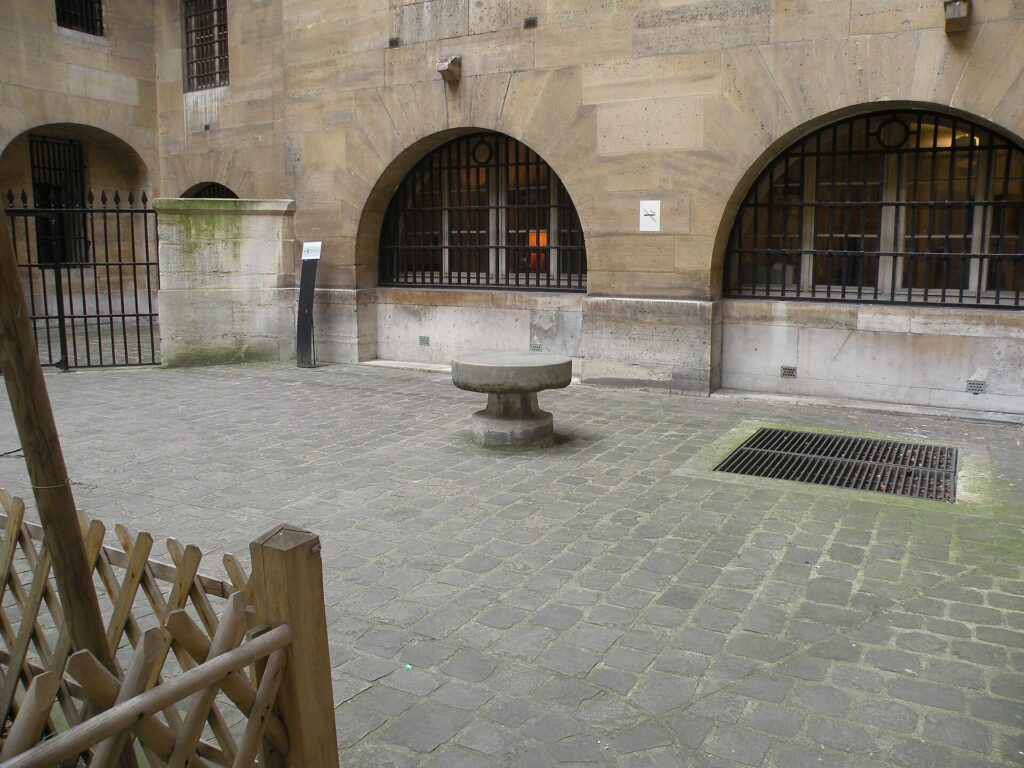
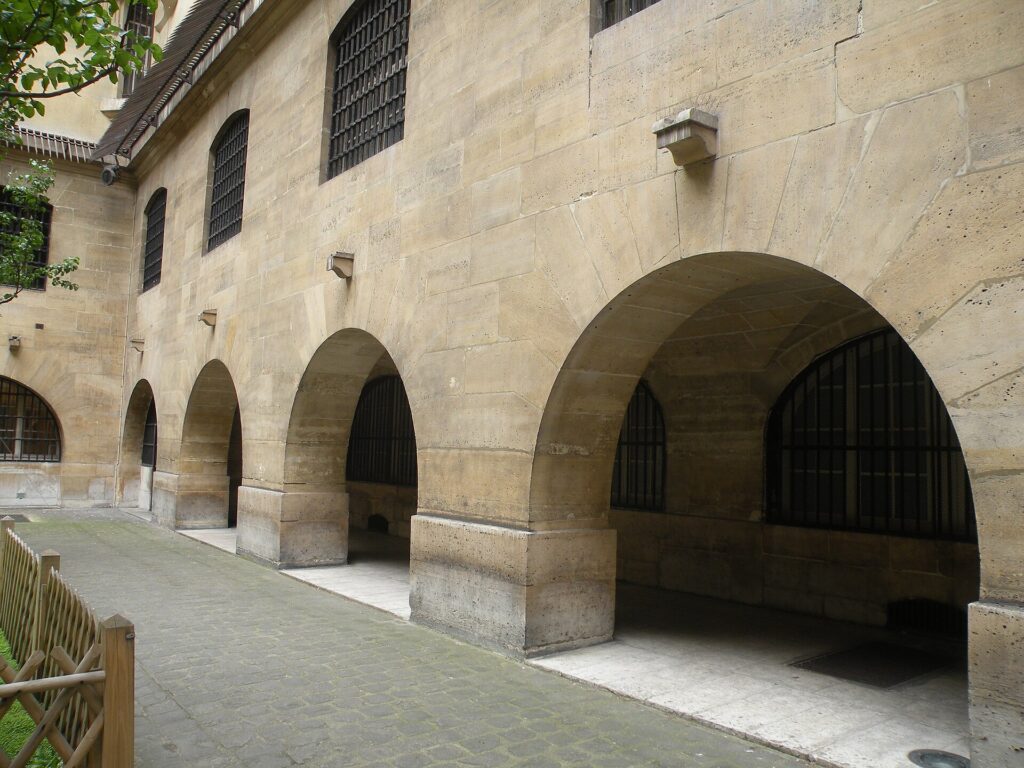
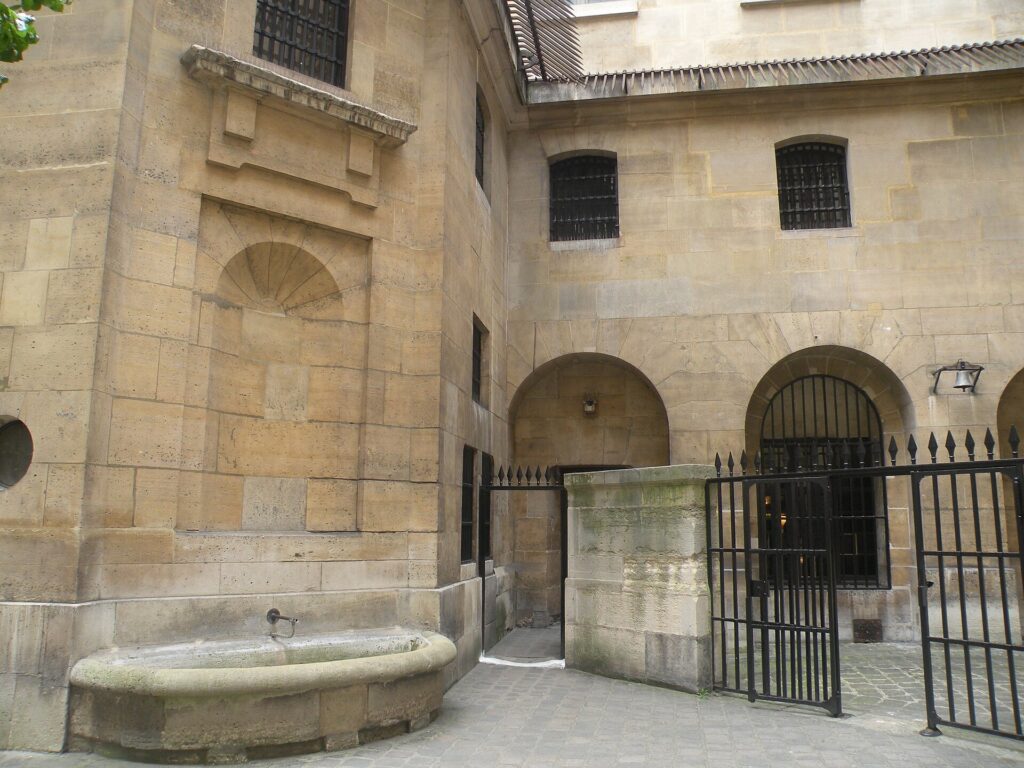
The Women’s Courtyard in the Conciergerie
Photo: Chatsam, CC BY-SA 3.0, via Wikimedia Commons

The Revolution declared the rights of man in 1789, and left women out. In 1791 Olympe de Gouges published the Declaration of the Rights of Woman and of the Female Citizen, article by article, to show what equality would really mean.

Its most famous line argues that if a woman has the right to mount the scaffold, she must also have the right to speak from the tribune. She followed it with a social contract proposing marriage between equals.

She was not guillotined for her feminism alone. Her attacks on Robespierre condemned her, but the official press said she had crossed the boundaries of female virtue.

Arrest, the Conciergerie and the Scaffold
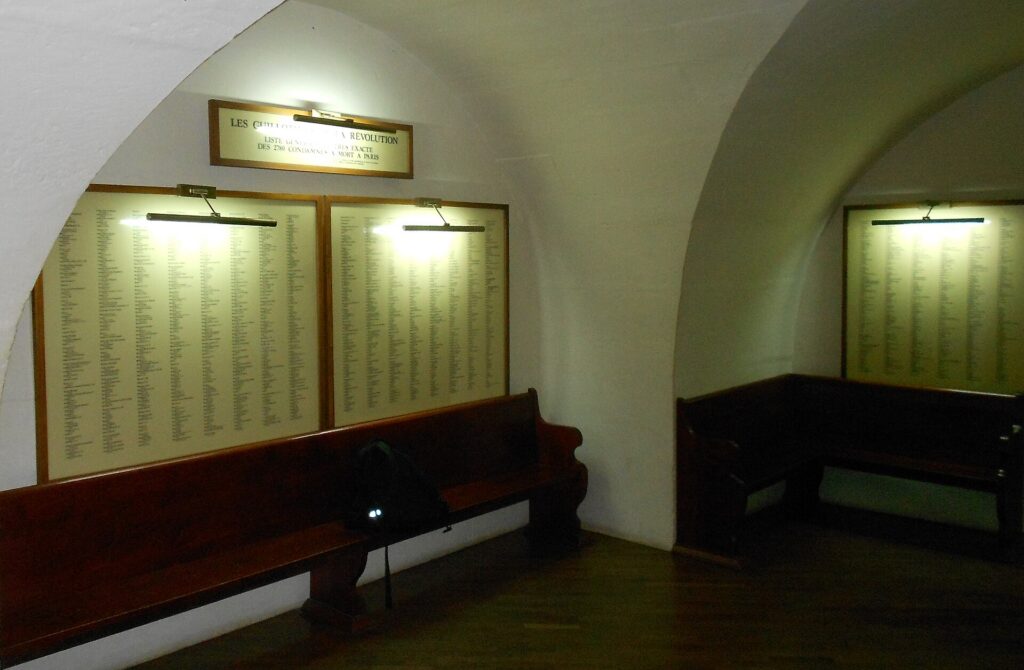
Names of prisoners of the Revolutionary Tribunal in the Conciergerie

On 19 July 1793 she had a poster, Les Trois Urnes, put up across Paris, calling for a vote on the form of government. She was arrested the next day and denied a lawyer, on the grounds that she could defend herself.

From prison she still managed to publish two texts condemning the Terror. According to the City of Paris, three months later she was held at the Conciergerie, the antechamber of the guillotine, where Marie-Antoinette had come shortly before her.

She was guillotined on 3 November 1793, aged 45. The night before, she wrote to her son that she died a victim of her love for her country.

Visiting the Conciergerie for Olympe de Gouges

Start in the Hall of Names, then walk through the prison rooms to the Women’s Courtyard, where the women held here spent their days. The Histopad tablet included with the ticket reconstructs the prison as it was in 1793.

Visit the Conciergerie

Highlights

Discover medieval prison cells from the French Revolution, including the famous cell of Queen Marie Antoinette.

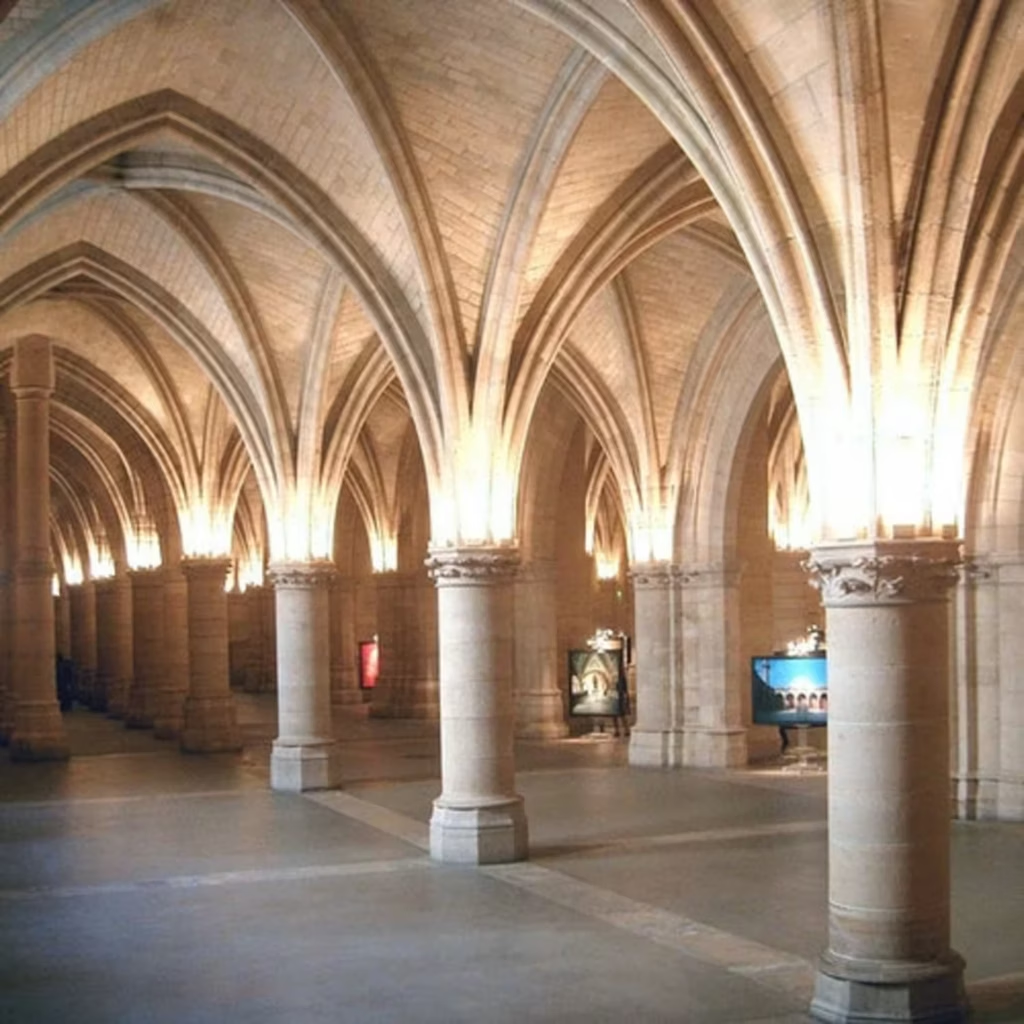
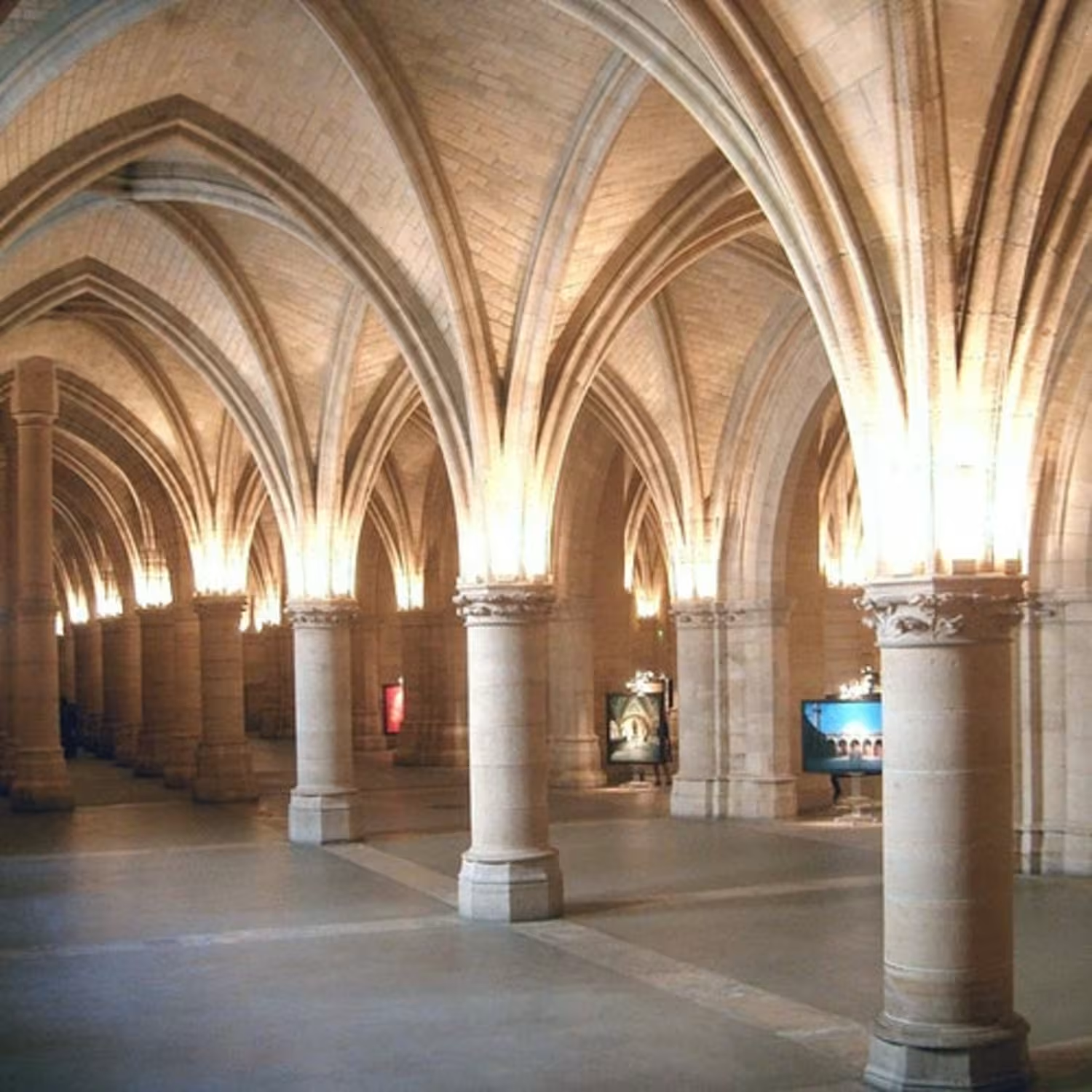
Visit the grand Gothic Salle des Gens d’Armes, Europe’s largest surviving medieval hall.

Experience the haunting history of a building once known as the antechamber to the guillotine.

Explore the torture chamber in the Bonbec Tower, where prisoners were coerced to confess.

Enhance your visit with the Histopad, an augmented reality device revealing the palace’s past appearances.


Entry Ticket to the Sainte Chapelle and the Conciergerie

Highlights

Visit the stunning Gothic Sainte-Chapelle featuring extraordinary stained glass windows.

Explore the Conciergerie, a former royal palace turned prison with deep revolutionary history.

Use the Histopad augmented reality device to experience the Conciergerie’s medieval and revolutionary history.

Enjoy priority entrance and skip the regular lines at both locations.

Discover the captivating stories behind Marie Antoinette’s imprisonment and King Louis IX’s relic collection.


Questions About Olympe de Gouges

Who was Olympe de Gouges?

A French playwright and political writer, born in 1748, best known for her Declaration of the Rights of Woman and of the Female Citizen.

What is the Declaration of the Rights of Woman?

A 1791 text by Olympe de Gouges that rewrote the Declaration of the Rights of Man to claim equal rights for women.

Was Olympe de Gouges held at the Conciergerie?

Yes. After her arrest in July 1793 she passed through other prisons and was held at the Conciergerie before her execution.

Why was Olympe de Gouges executed?

For her political writings against Robespierre and the Terror, in particular her poster Les Trois Urnes, which called for a vote on the form of government.

When did Olympe de Gouges die?

She was guillotined in Paris on 3 November 1793, at the age of 45.

Did Olympe de Gouges oppose slavery?

Yes. She was one of the first public opponents of slavery in France, in her plays and in her 1788 Reflections on Black People.

This website sells official tickets for this venue. Please note, however, that it is not the official website of the venue.

The images and videos on this website may contain visual elements that have been created or enhanced using AI technology. They are provided for illustrative purposes only.