We are processing your request.
Please, don’t close or refresh the page.
Paris Tickets Rodin Museum Paris The Thinker
The Thinker by Rodin at the Musée Rodin, Paris

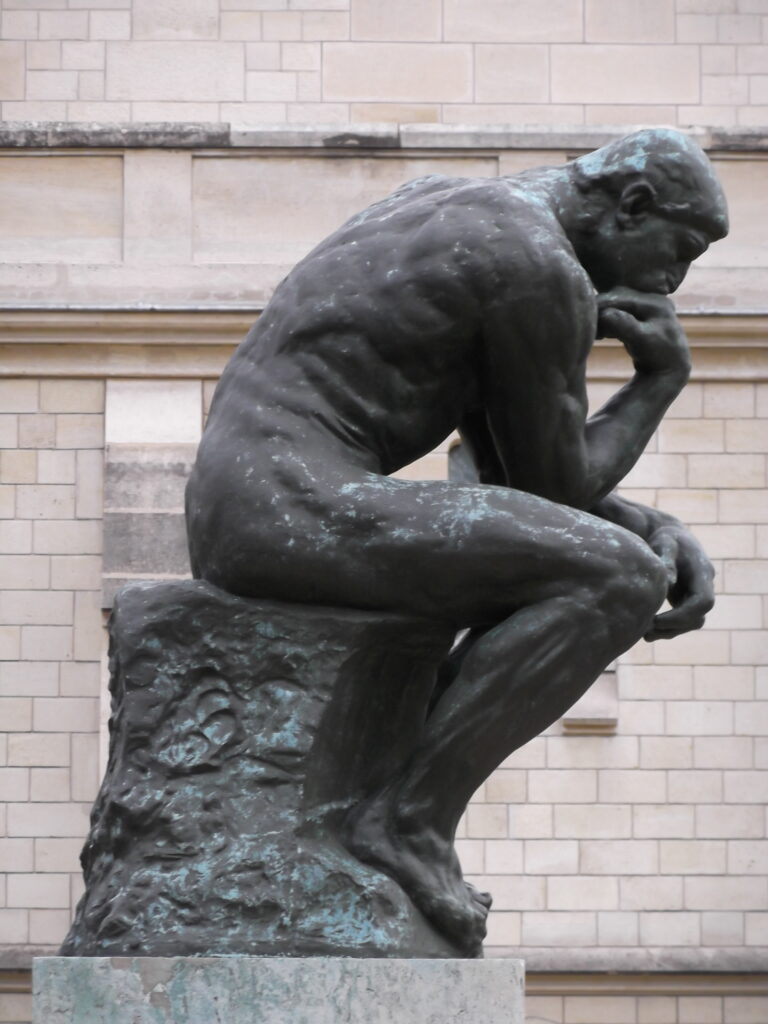
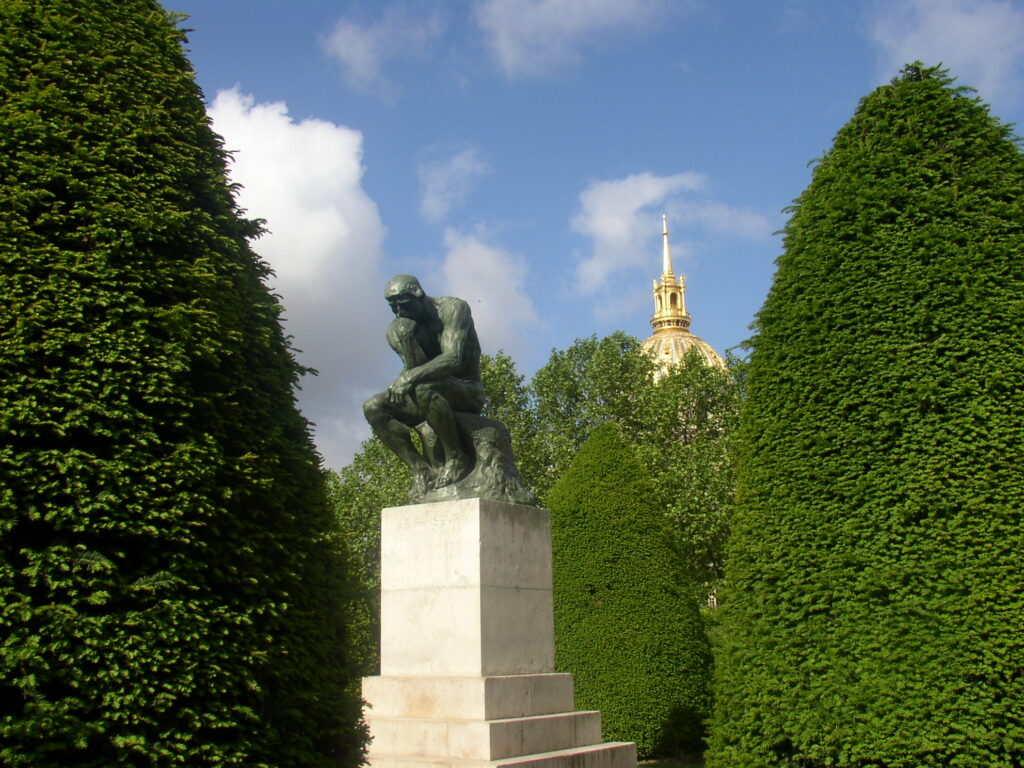
The Thinker by Rodin: The Bronze in the Musée Rodin Garden, Paris

The Thinker began as a small figure of a poet on a doorway, grew to a monumental bronze in 1904, stood outside the Panthéon for sixteen years, and now sits in the Musée Rodin garden.

Who Sculpted The Thinker, and Why

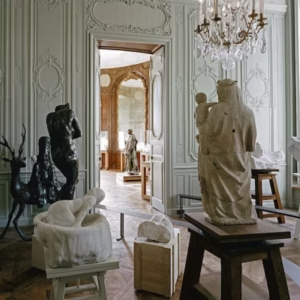
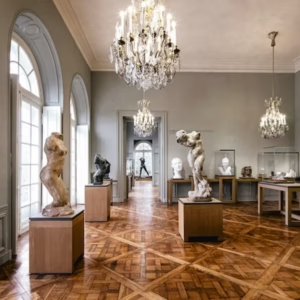
Auguste Rodin modelled The Thinker around 1880, and he did not set out to make a standalone statue at all. The figure was one element of a commission, a seated man placed above a pair of monumental doors, and Rodin called him The Poet at the time. The man was meant to be Dante, looking down over the characters of his own Inferno. Only later did the figure leave the door, get enlarged and take on the name the world knows him by. For the rest of what Rodin left behind, including the marbles indoors and the other large bronzes outside, see the Musée Rodin’s own collection of Rodin sculptures.

From a Poet on a Doorway to a Statue of Its Own
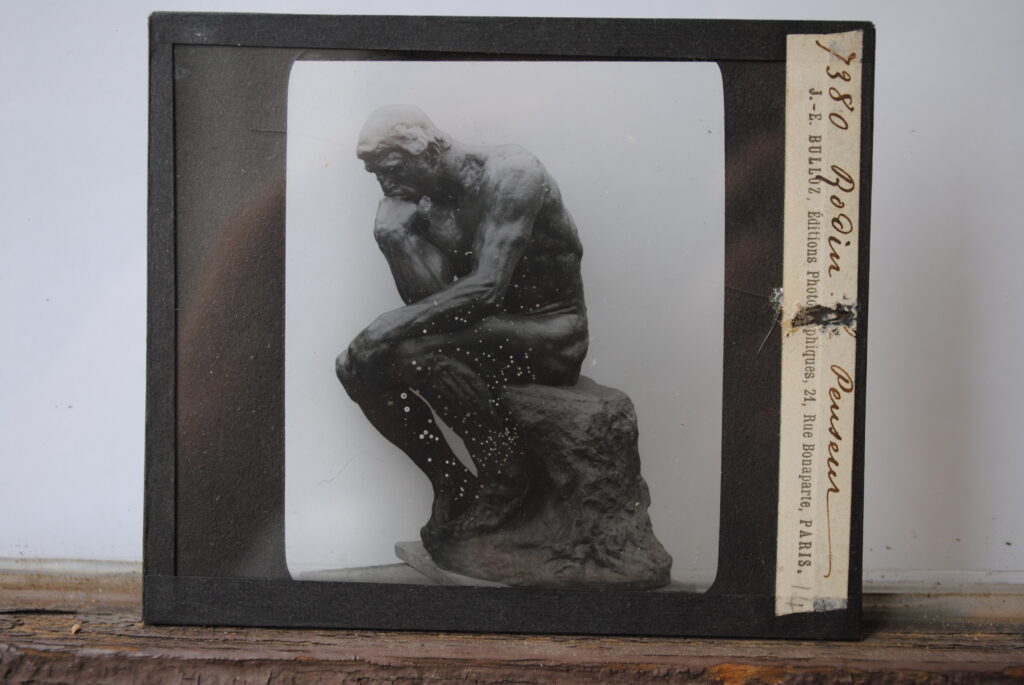
An early photograph of Rodin’s The Thinker, before 1919
Photographic plate by Jacques-Ernest Bulloz, before 1919. Public domain, via Wikimedia Commons

The first version was small, roughly 72 cm, and easy to miss among the two hundred-odd figures crowding The Gates of Hell. Rodin kept returning to it. He had it enlarged to about 180 cm and shown on its own in Paris in 1904, and at that scale the figure stopped reading as one character in somebody else’s story and started reading as a subject in its own right.

The name came from outside the studio. The foundry workers who cast it are said to have called it Le Penseur, after Michelangelo’s Il Pensieroso, and the title stuck. It suits the piece better than The Poet ever did, though the pose is anything but restful: the right elbow sits on the left knee, the toes grip the rock, and every muscle is working. Rodin said he thought with his whole body.

Where The Thinker Stands in Paris Today
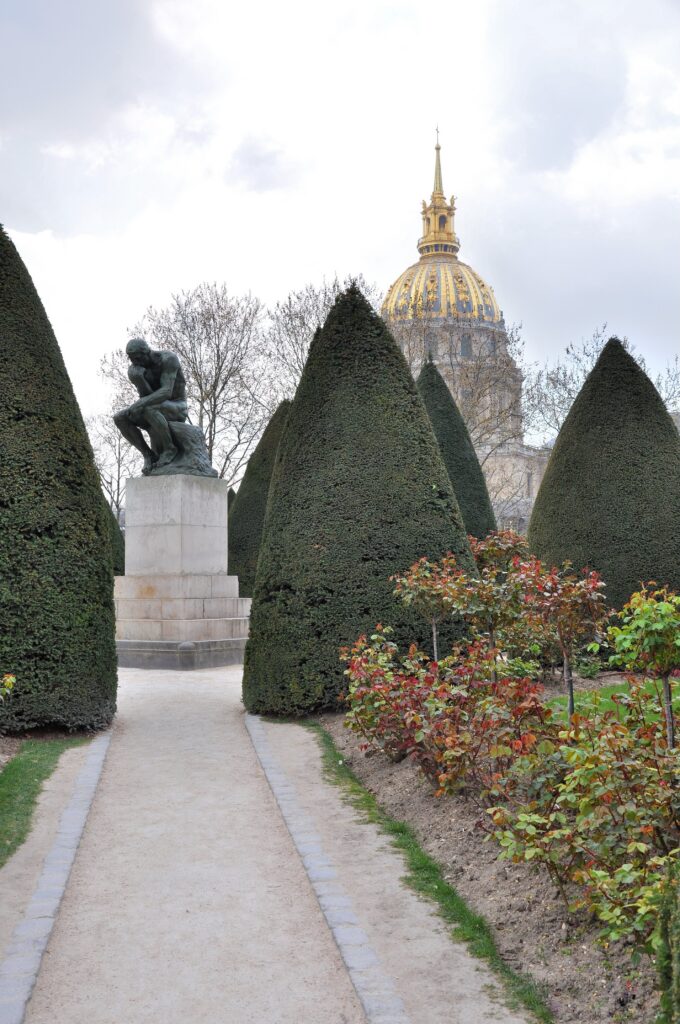
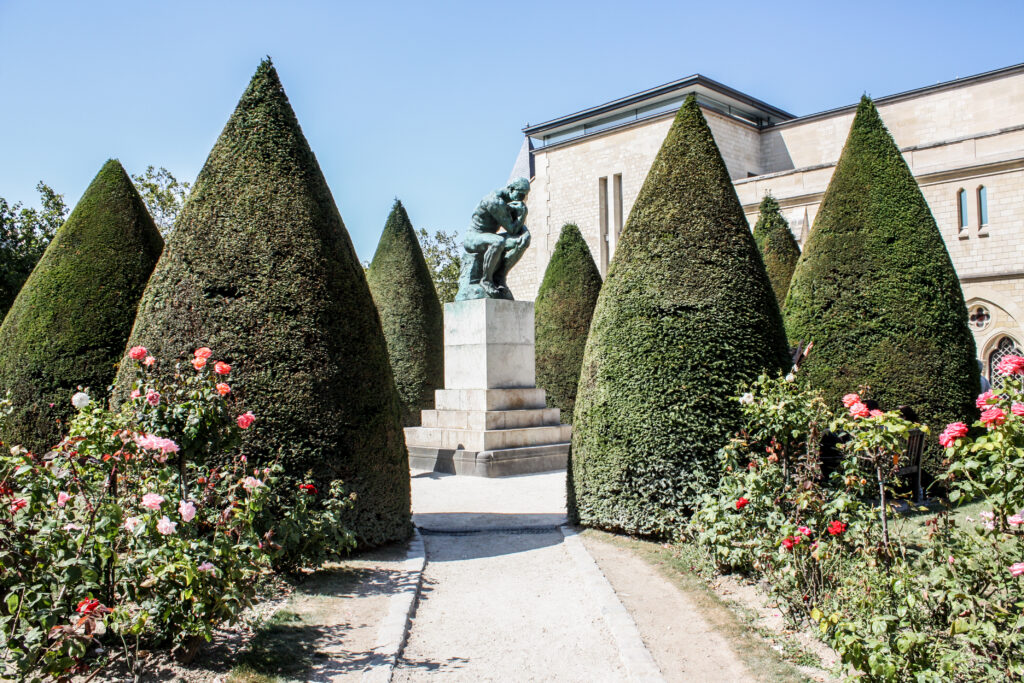
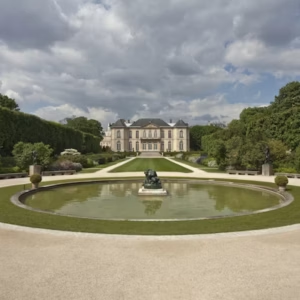
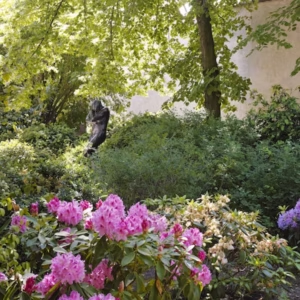
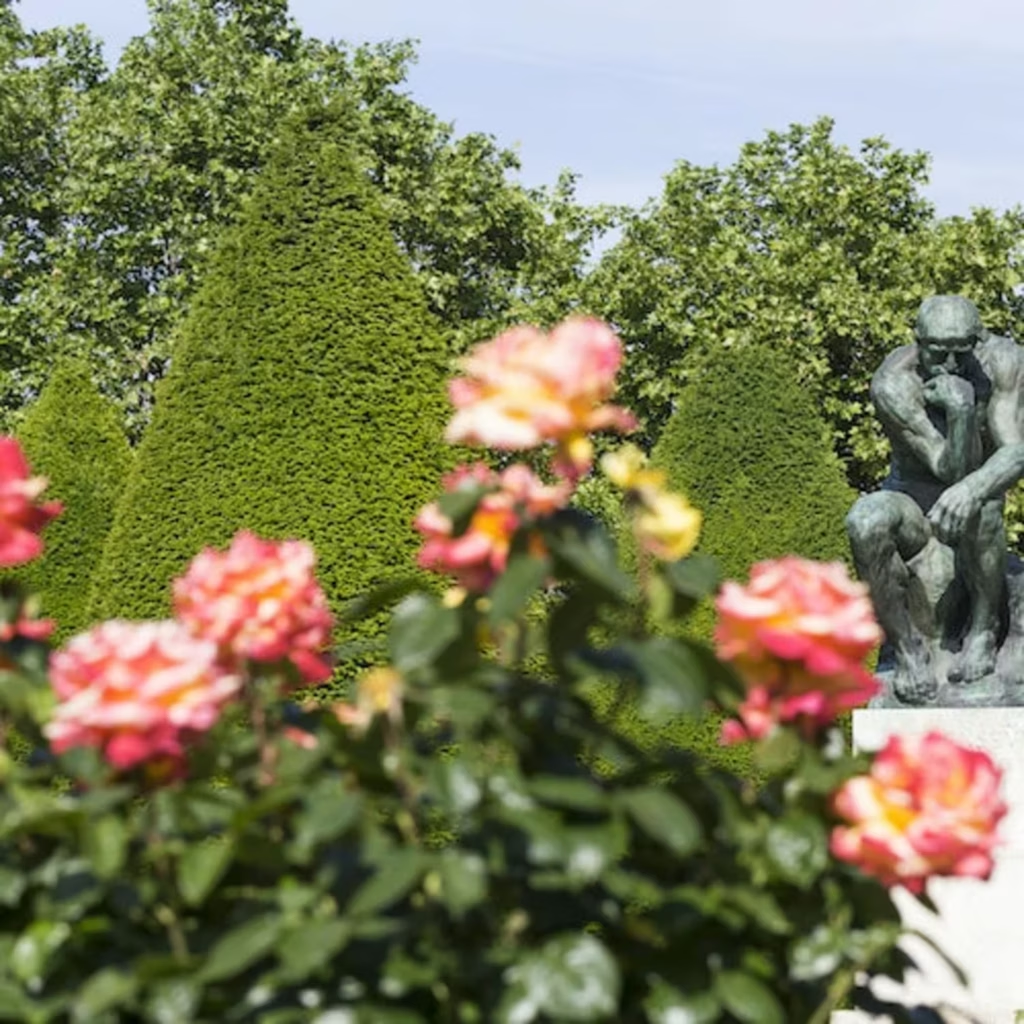
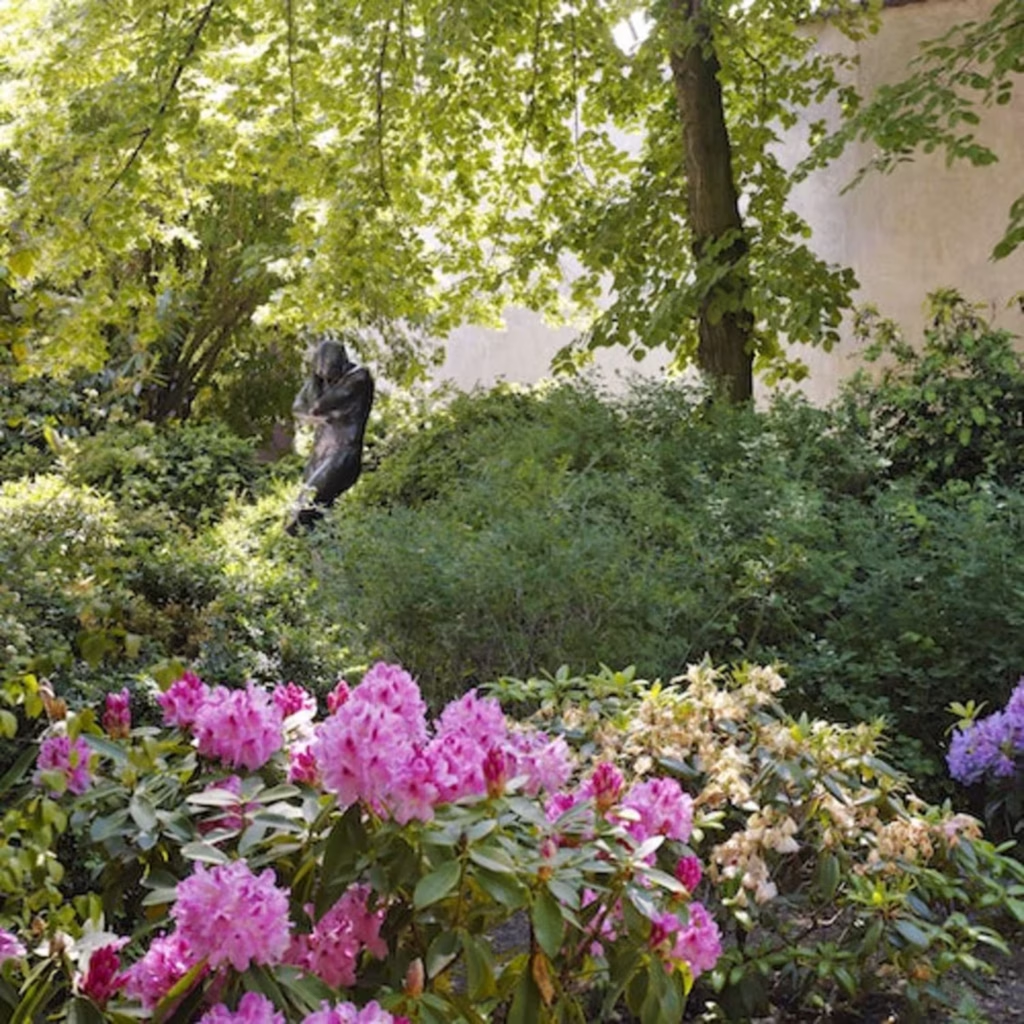
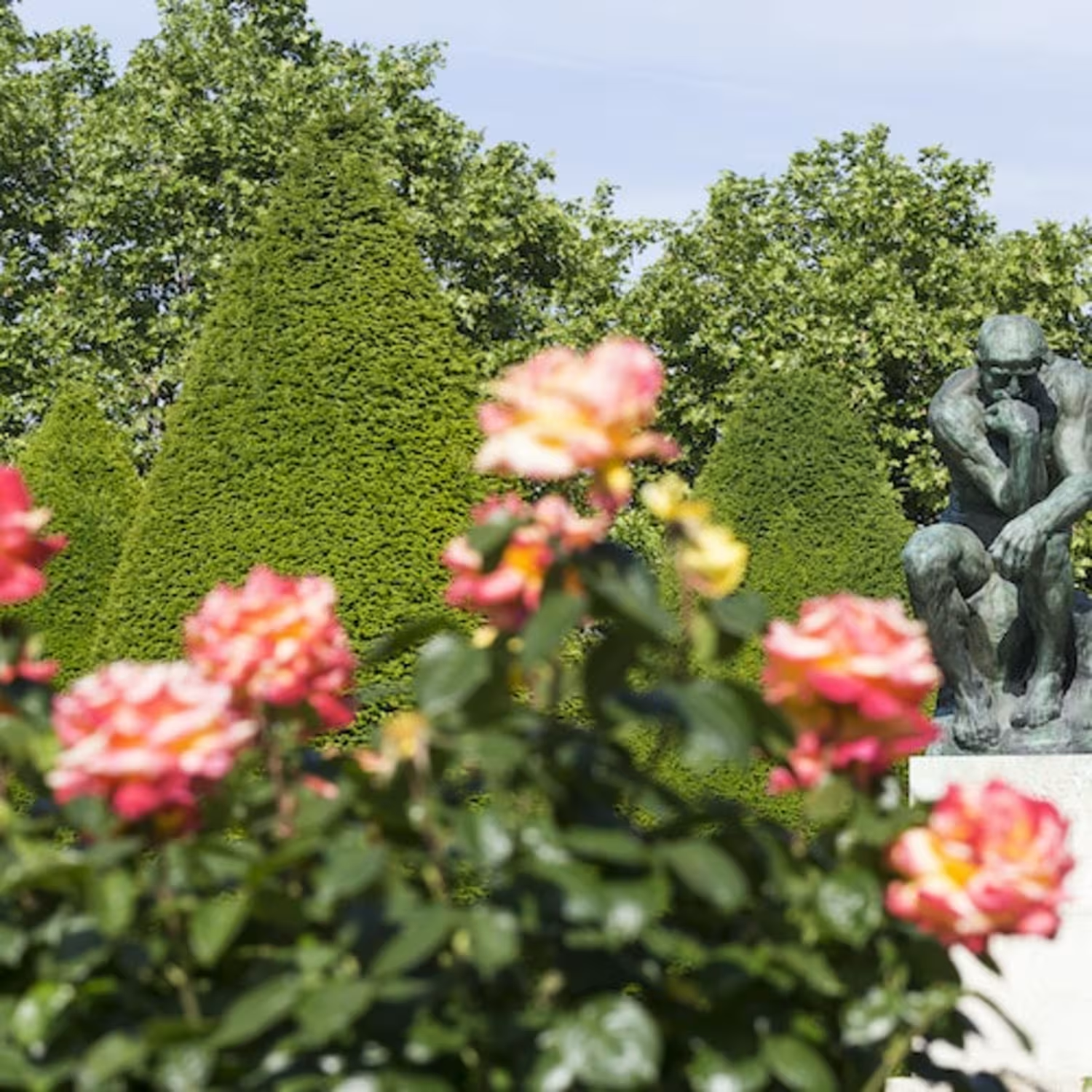
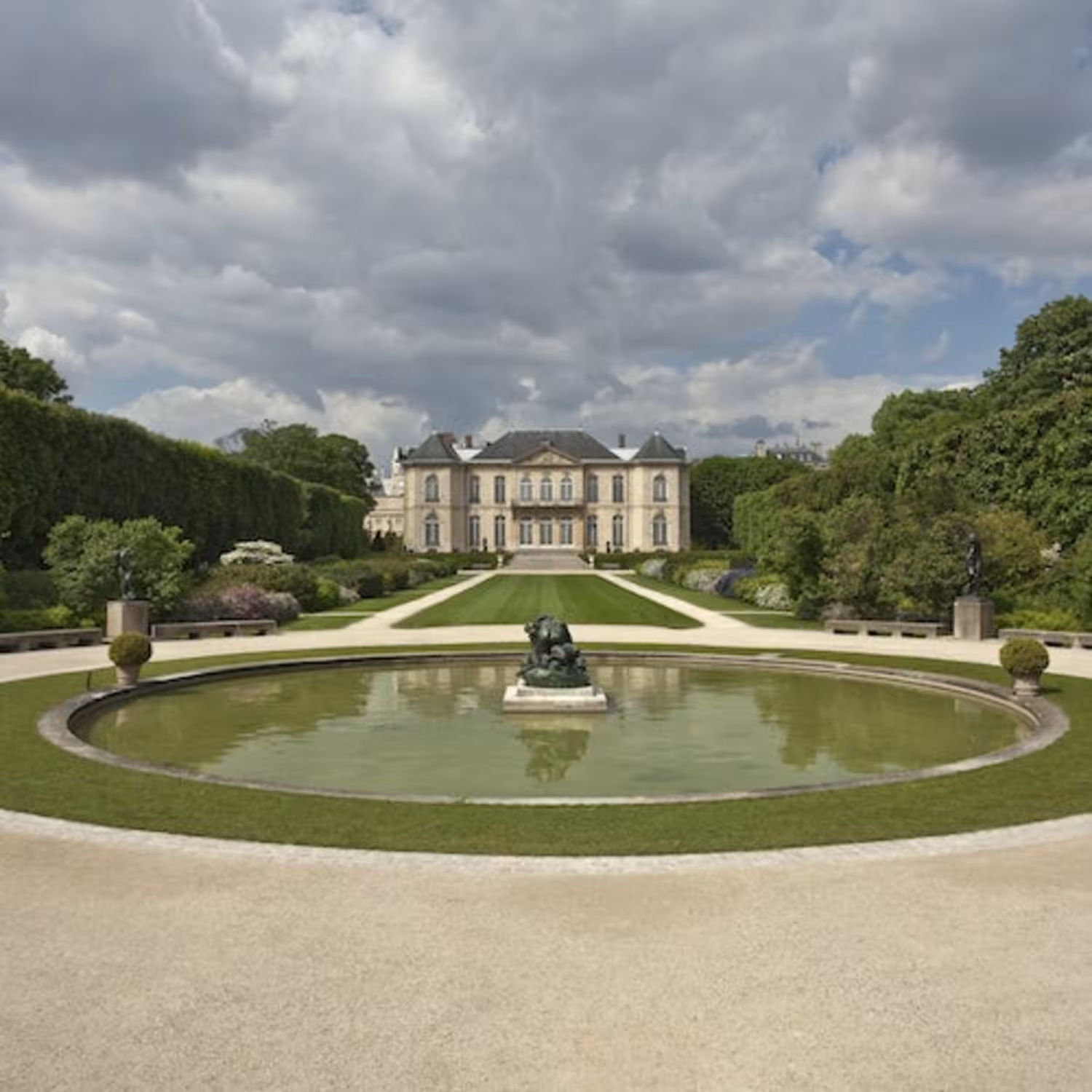
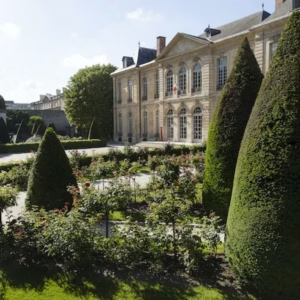
The garden path leading to The Thinker at the Musée Rodin, Paris
Photo: Andreal90, CC BY-SA 3.0, via Wikimedia Commons

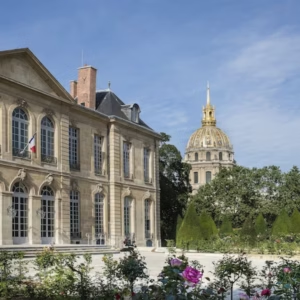
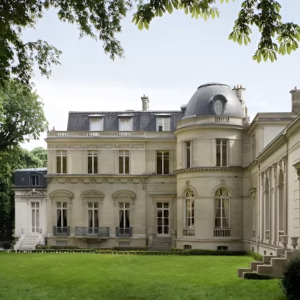
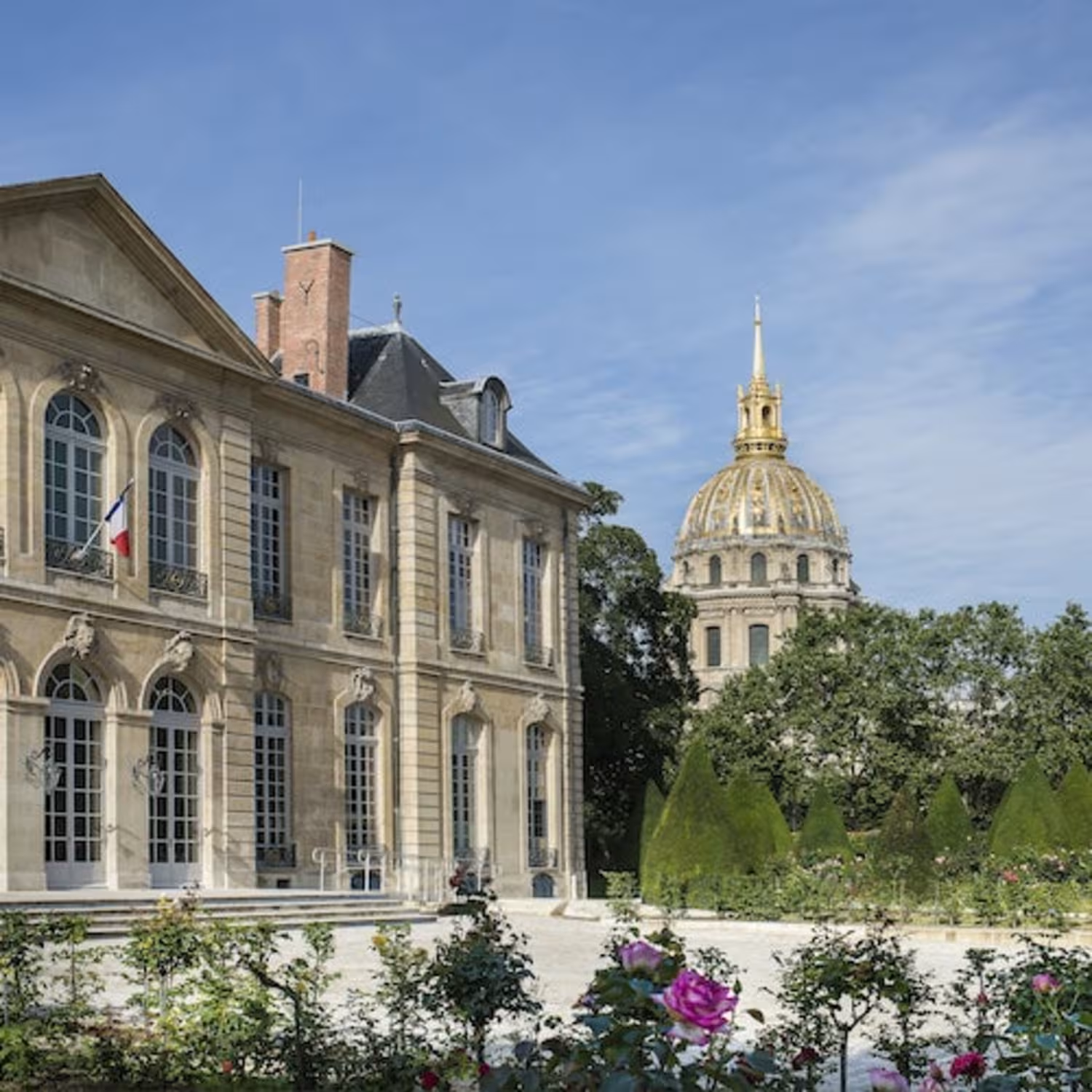
The 1904 bronze did not go to a museum. A public subscription paid for it and it was installed in front of the Panthéon in 1906, the first sculpture by Rodin to be put up in a public square in Paris. It stayed there sixteen years, through the war, before the state moved it in 1922 to the garden of the Hôtel Biron, which had just become his museum.

That is where it is now, outdoors, on the central axis of the garden with the hedges lined up behind it. Rodin himself is under another cast: when he died in 1917 he was buried at Meudon, outside Paris, and a bronze Thinker marks his grave.

See It Where Rodin Left It

The bronze sits out in the open in the garden, so you can walk right round it, which is the one thing photographs never give you. Go early if you want it to yourself. Sort out your timing first, then take the path straight through from the entrance and it is waiting at the end of it.
Musée Rodin: special tickets

Highlights

Avoid long entry lines for the museum.

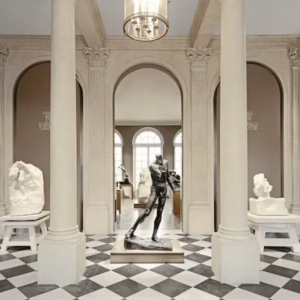
Discover Rodin’s most celebrated creations like The Thinker and The Kiss.

Explore both the permanent displays and special temporary exhibits.

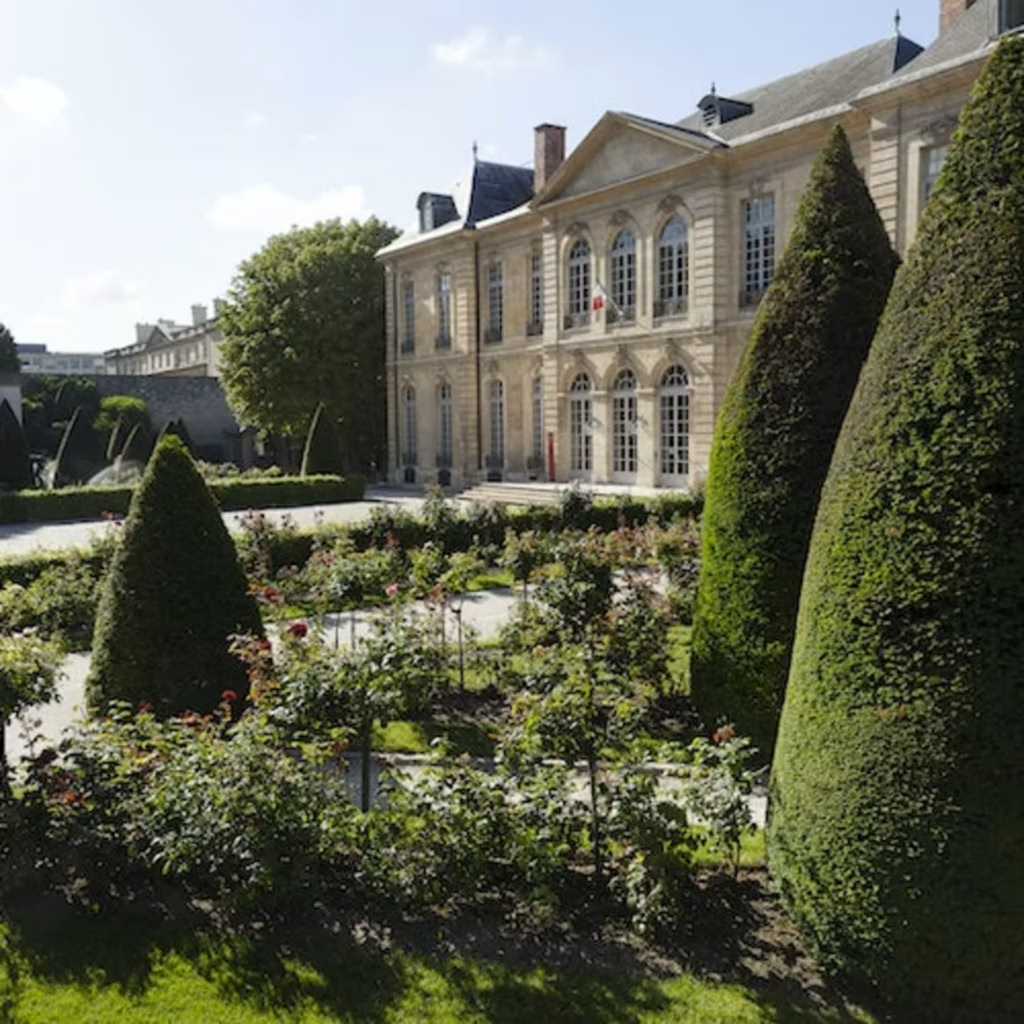
Stroll through the serene Sculpture Garden inside a historic 18th-century mansion.

Benefit from optional add-ons such as audio guides and interactive tablets at checkout.
Frequently Asked Questions About The Thinker

Who sculpted The Thinker?

The French sculptor Auguste Rodin, who modelled the first version around 1880 as part of a commission called The Gates of Hell.

Where is The Thinker?

The best-known bronze stands in the garden of the Musée Rodin in Paris, at 77 Rue de Varenne. More than twenty monumental casts exist worldwide, so several cities have one of their own.

Why is it called The Thinker?

Rodin called it The Poet, and meant it as Dante. The foundry workers who cast the bronze are said to have nicknamed it Le Penseur, after Michelangelo’s Il Pensieroso, and that name is the one that lasted.

What does The Thinker mean?

Rodin described a man thinking with his whole body rather than only his head, which is why the figure is tensed rather than relaxed. As Dante above his own Inferno, he is looking down at the suffering he wrote.

Is The Thinker in the Musée Rodin the original?

Rodin worked in bronze, so there is no single original in the way there is with a painting. The small first version of about 72 cm came first, the monumental size followed, and the museum holds casts made from Rodin’s own models.

What is The Thinker made of?

Bronze. Rodin also worked in marble and plaster, and plaster versions of the figure survive, but the ones people picture are cast in bronze.

How big is The Thinker?

The monumental version is roughly 180 cm tall, a little over life size. The figure Rodin first modelled for The Gates of Hell was about 72 cm.

How many casts of The Thinker are there?

More than twenty monumental bronzes, spread across museums and public spaces on several continents, plus a number of smaller versions.

Is The Thinker part of The Gates of Hell?

Yes. It sits above the doors, in the middle of the tympanum, and was conceived as part of that commission before it was ever shown on its own.

This website sells official tickets for this venue. Please note, however, that it is not the official website of the venue.

The images and videos on this website may contain visual elements that have been created or enhanced using AI technology. They are provided for illustrative purposes only.