We are processing your request.
Please, don’t close or refresh the page.

Bourse de Commerce and the Pinault Collection: From Grain Exchange to Art Museum

A round 18th-century grain market turned commodities exchange, now home to the Pinault Collection’s contemporary art, with Tadao Ando’s concrete cylinder set beneath an 1889 painted panorama and glass dome.

What the Pinault Collection Brought to the Bourse de Commerce

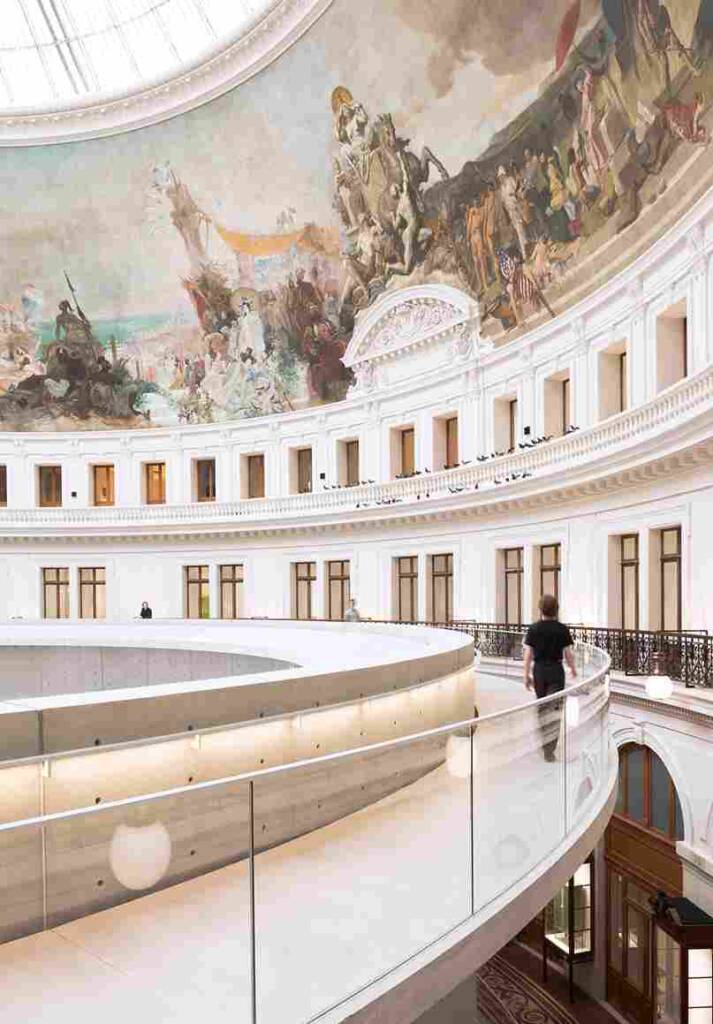
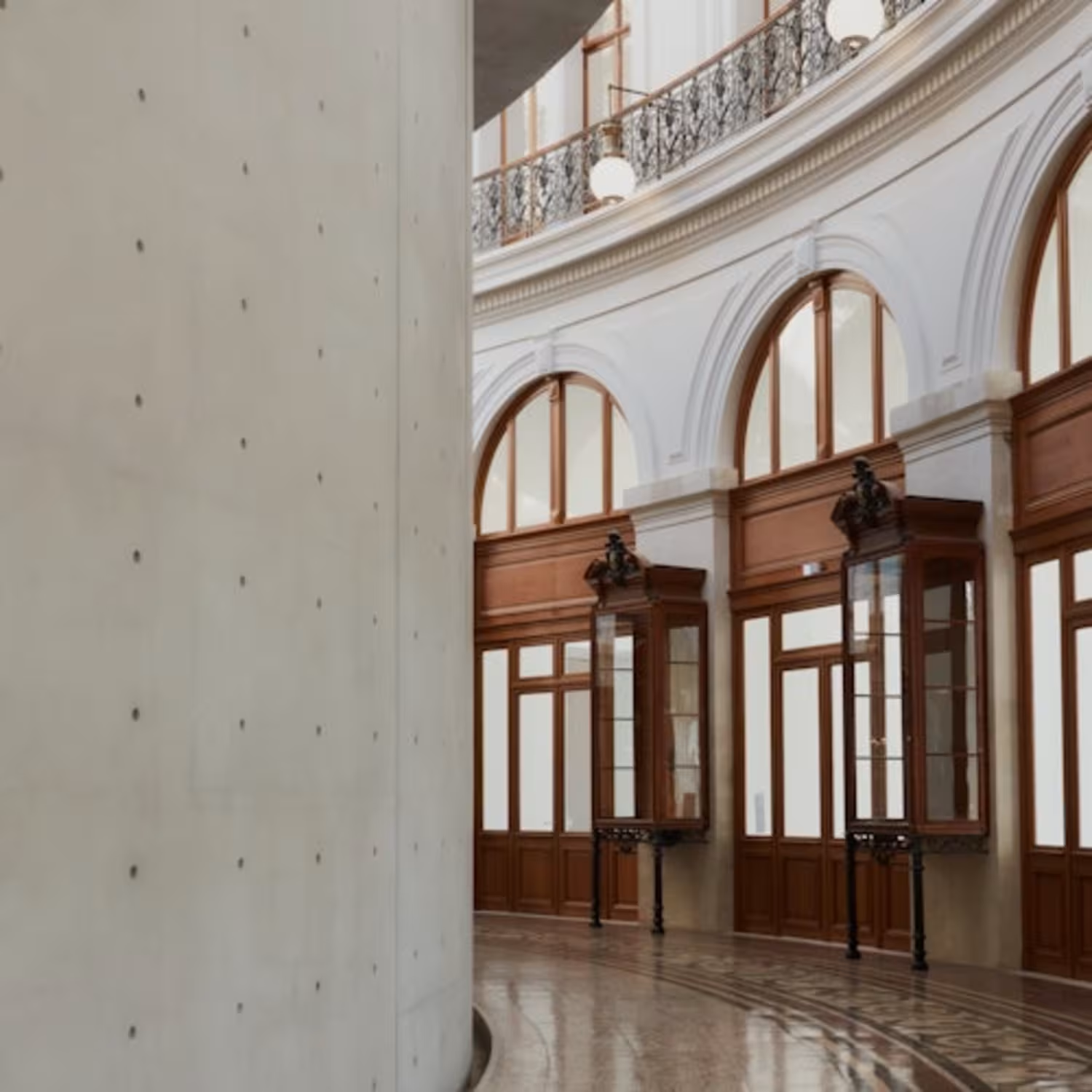
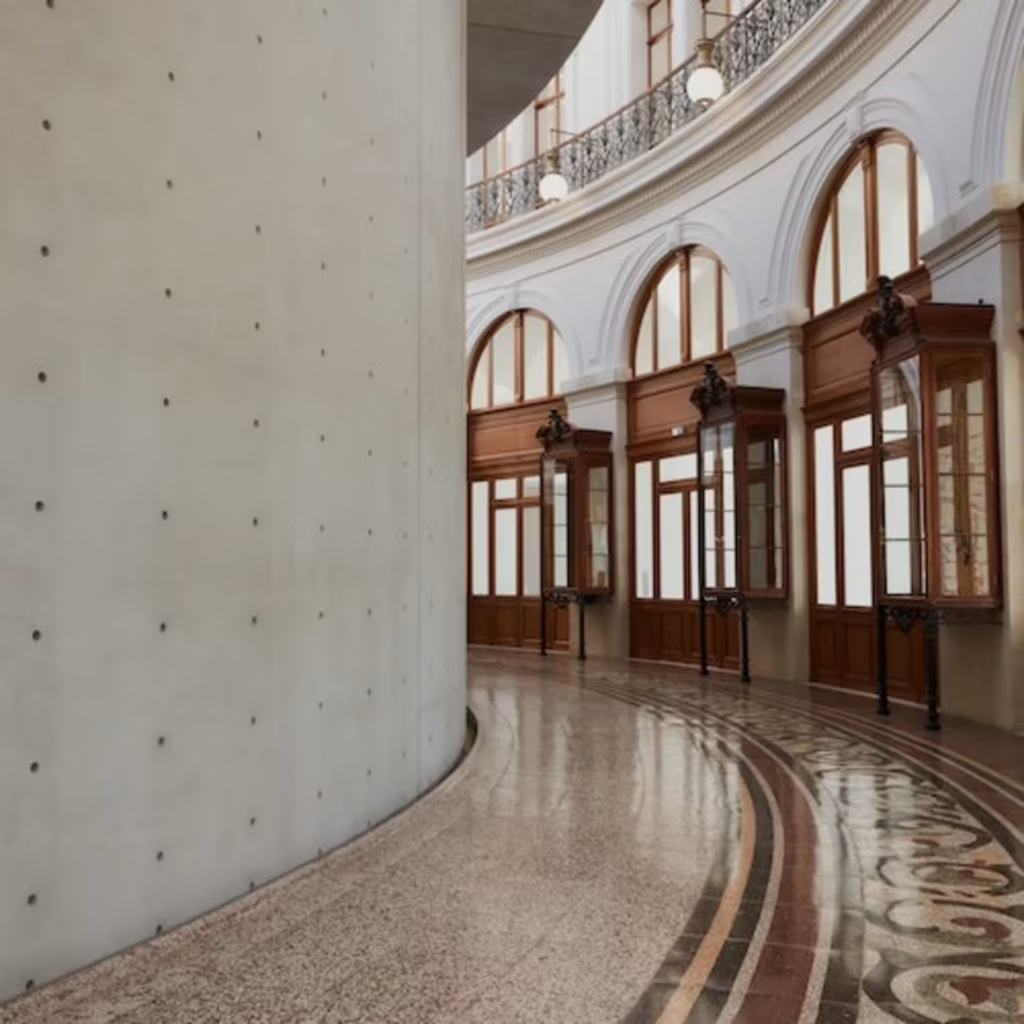
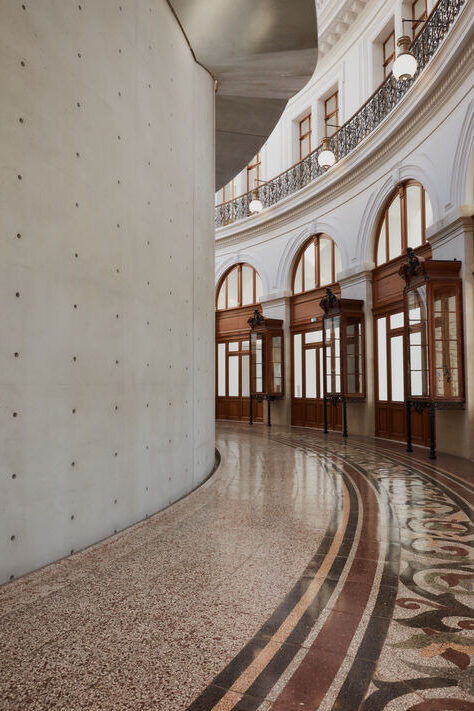
The Bourse de Commerce is the Paris home of the Pinault Collection, around 10,000 works of contemporary art gathered by François Pinault over some fifty years, from the 1960s to today. There is no fixed hang. The collection reaches visitors through exhibitions that change during the year, spread across the upper galleries, the Rotunda at the centre and a basement Studio given over to video and sound. The building takes up almost as much of the visit as the art does: it opened as a grain market in the 1760s, became a commodities exchange in 1889 and reopened as a museum in May 2021, after Tadao Ando set a concrete cylinder inside its old round hall.

Seven Things That Set the Bourse de Commerce Apart

The Pinault Collection counts around 10,000 works by some 350 artists, from painting and sculpture to video, sound and performance.

The Médicis column outside, 31 metres of Saint-Leu stone, is the last trace of Catherine de’ Medici’s 16th-century palace on the site.

The iron dome built between 1811 and 1813 was an early landmark of metal construction in Paris.

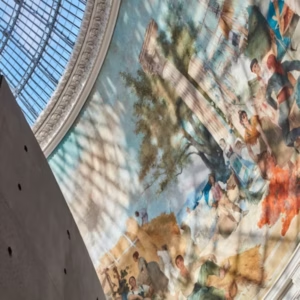
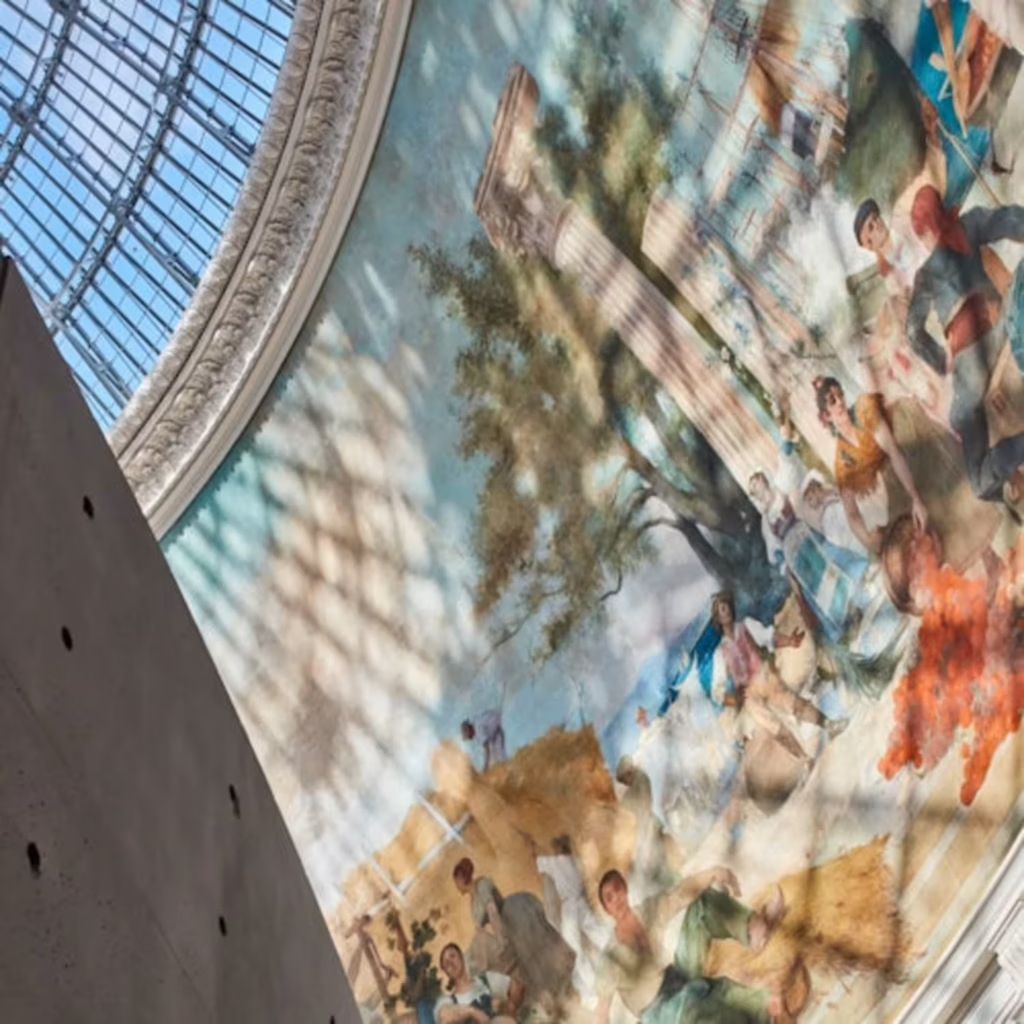
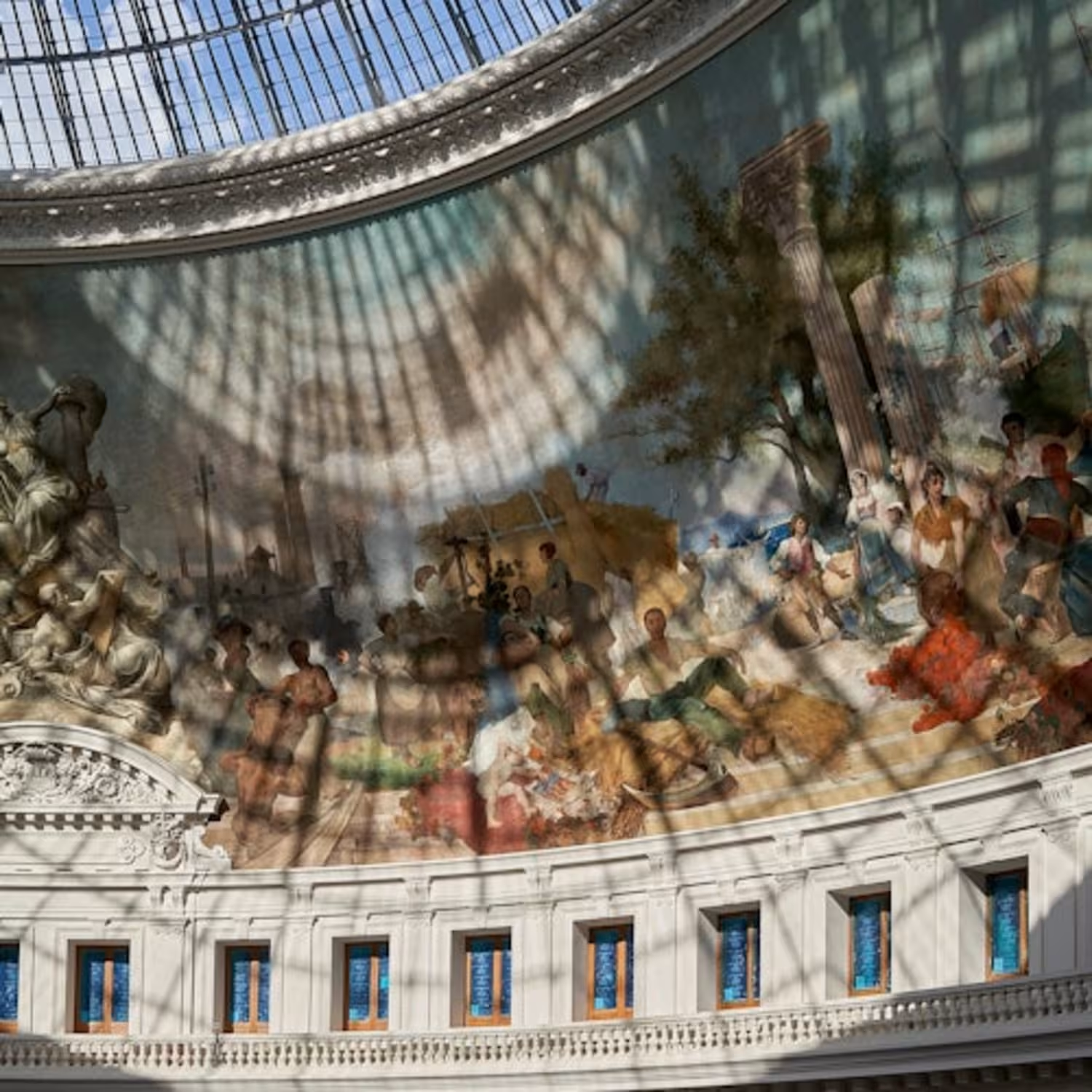
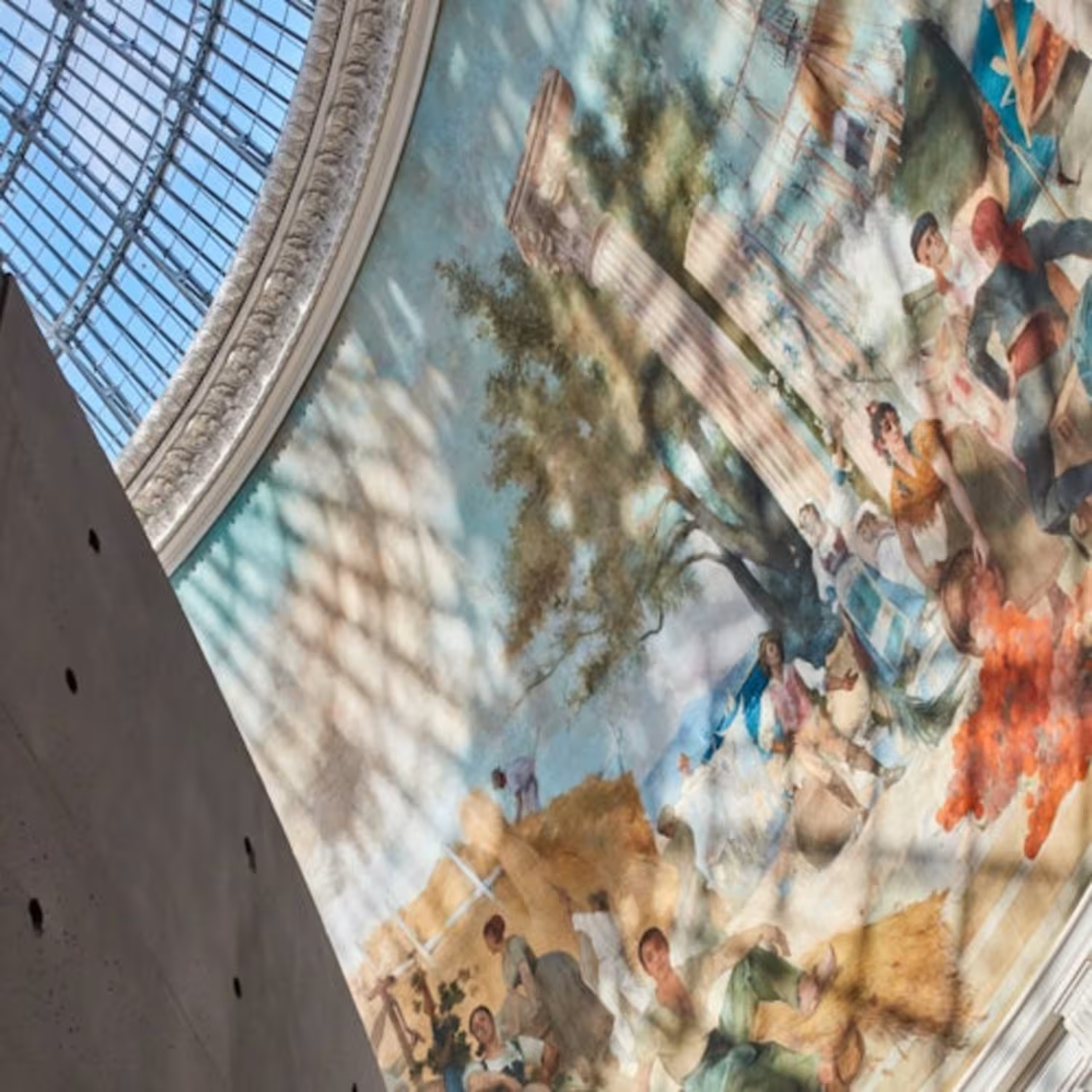
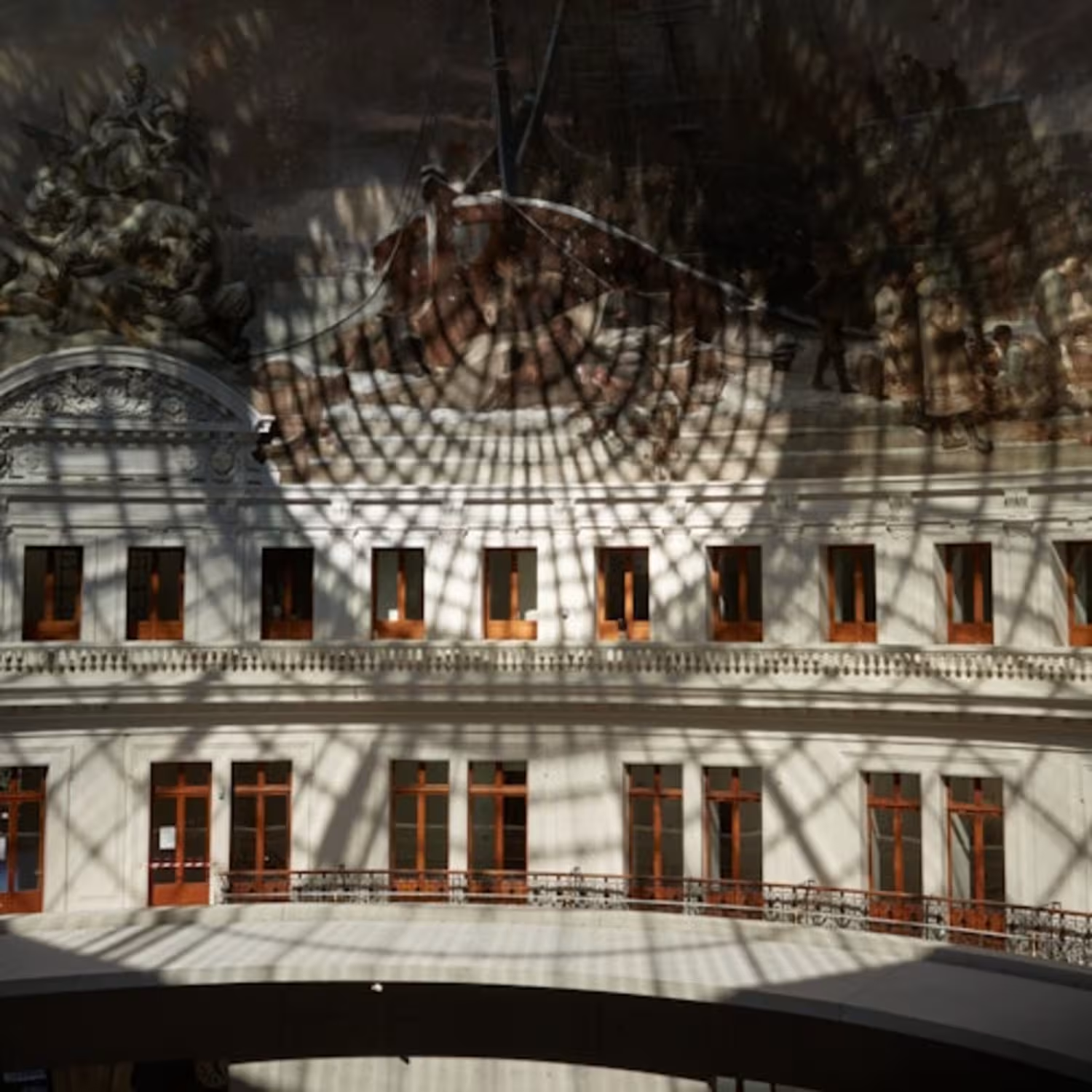
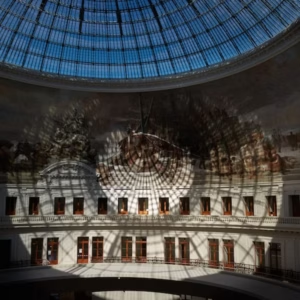
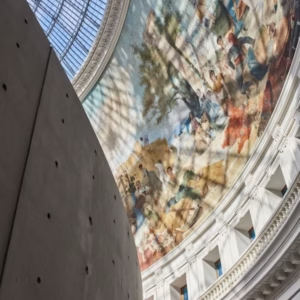
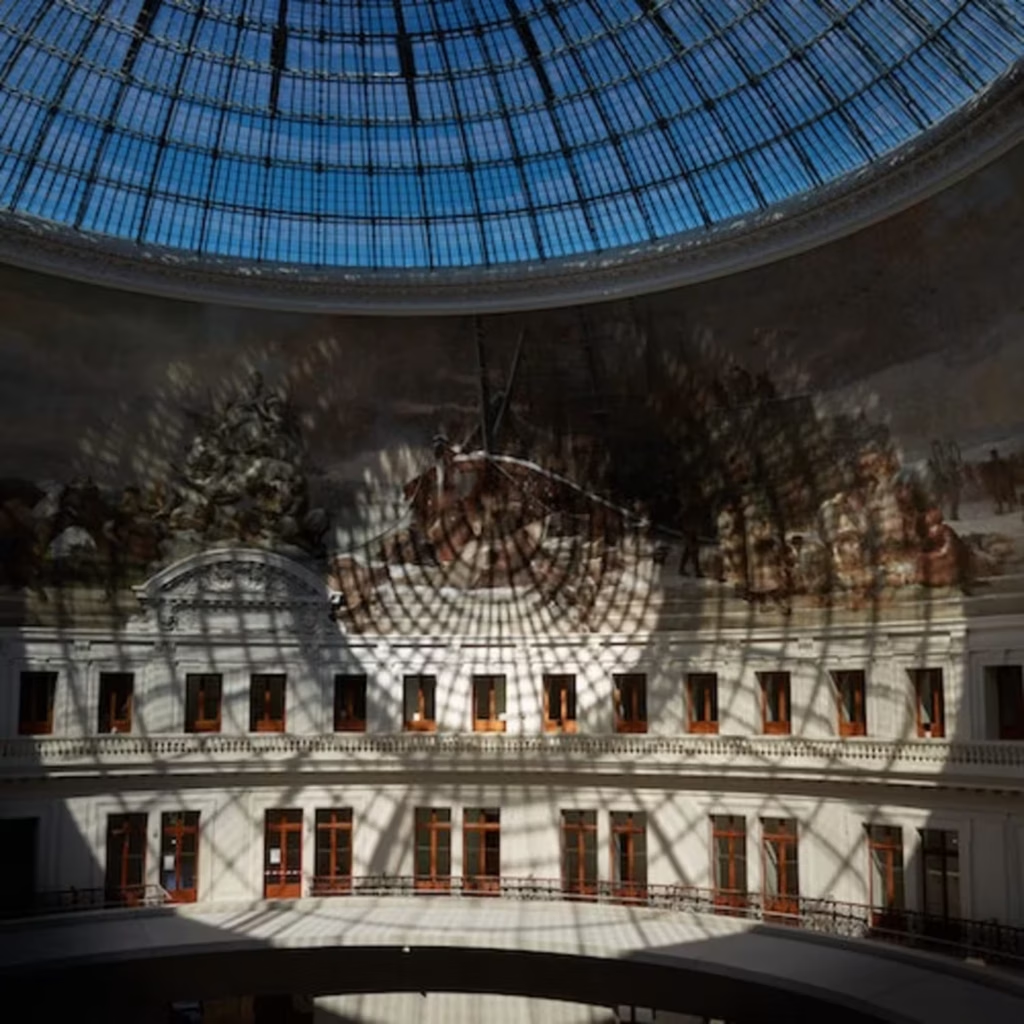
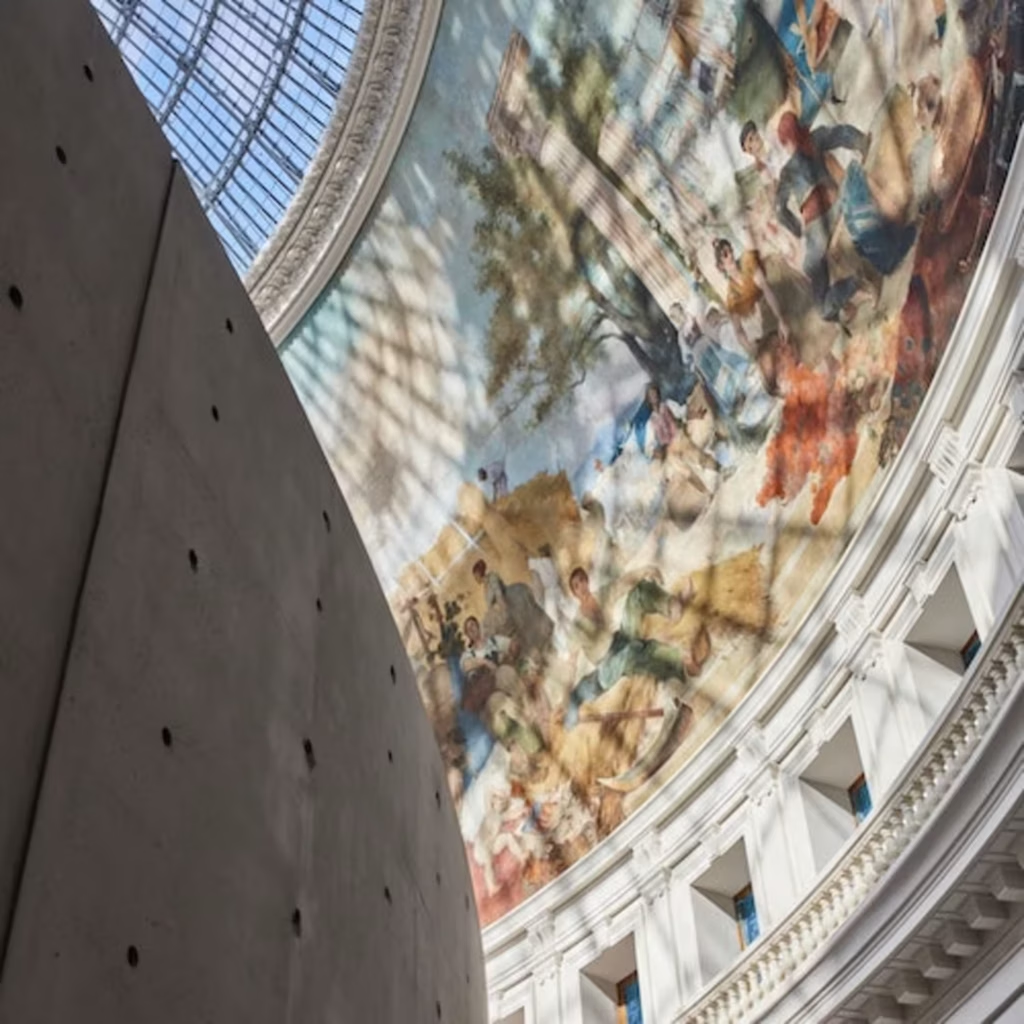
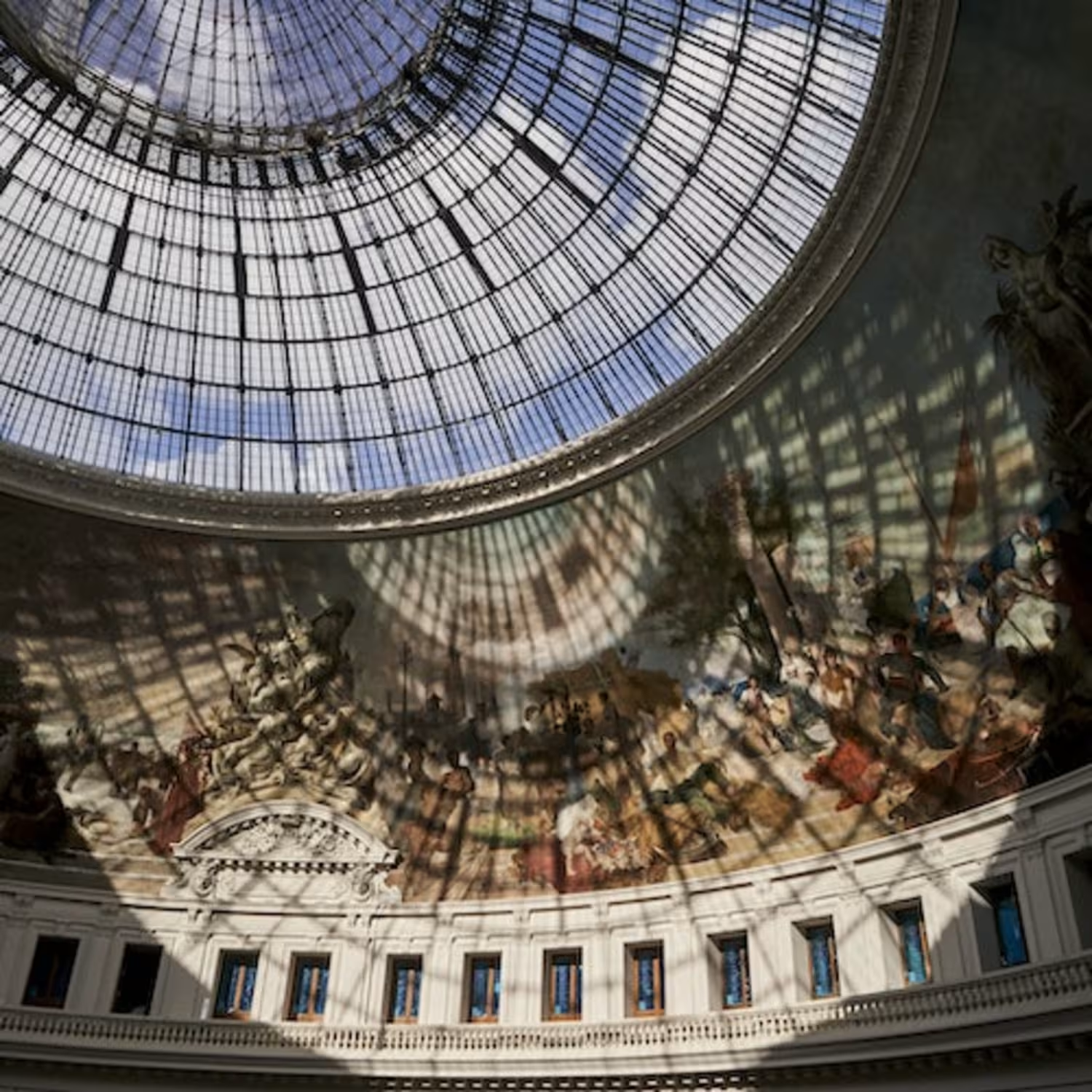
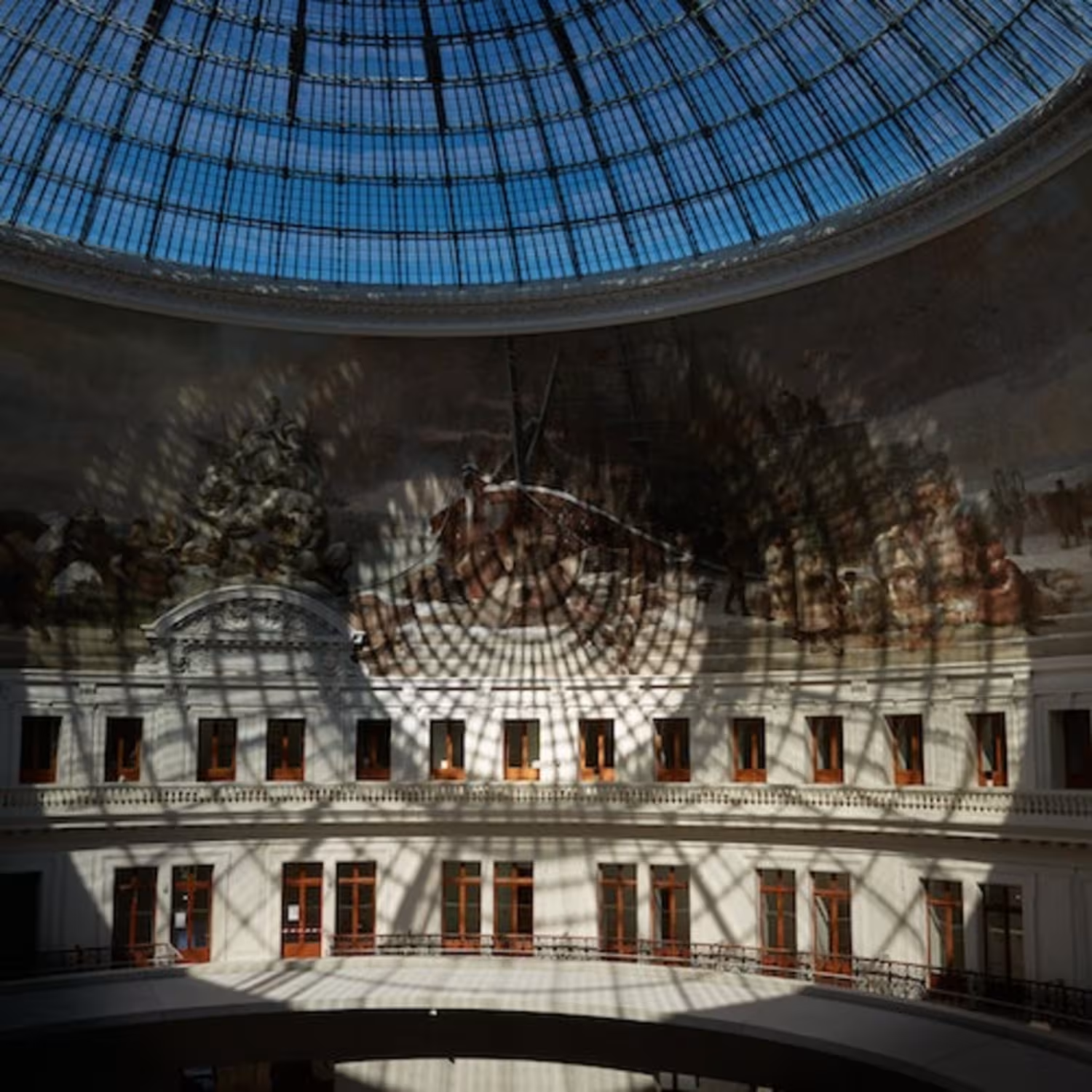
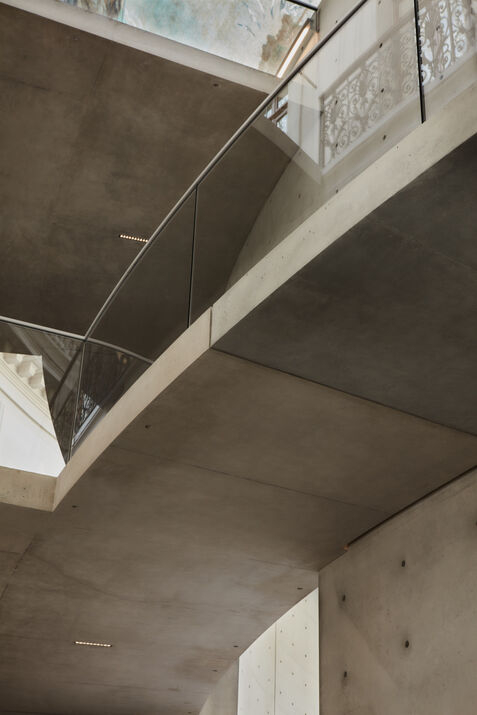
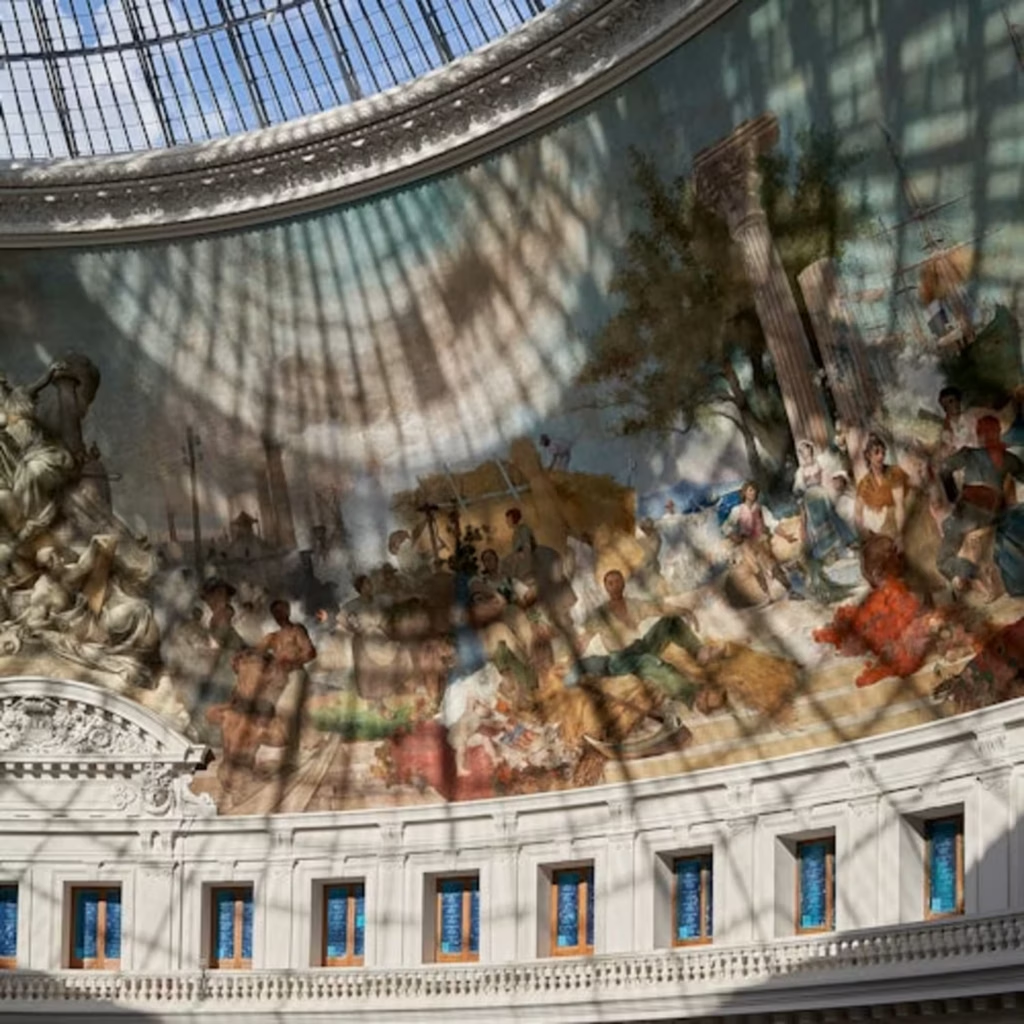
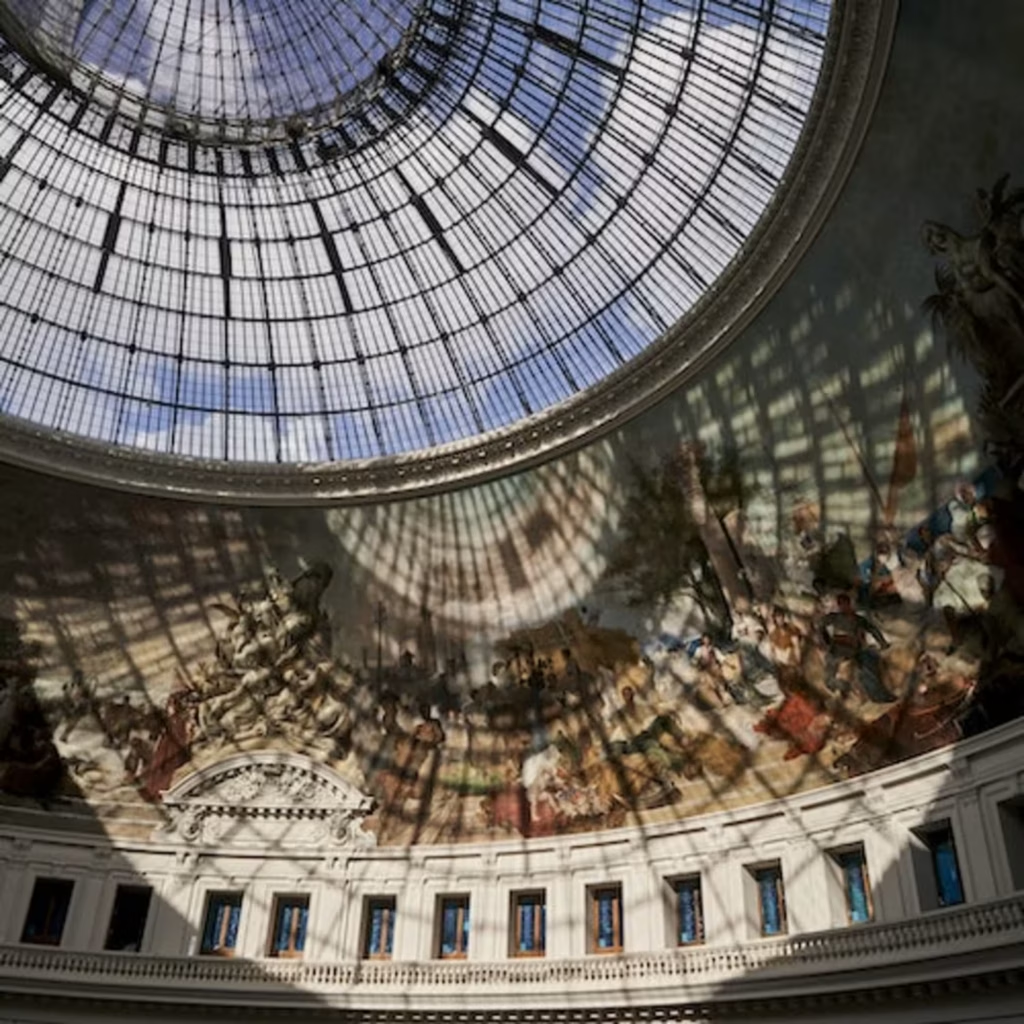
A painted panorama of 1,400 square metres circles the base of the dome, showing trade between the continents as 1889 imagined it.

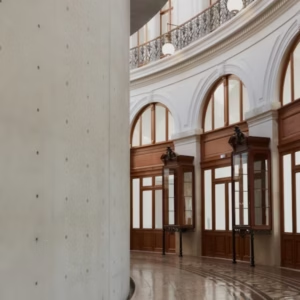
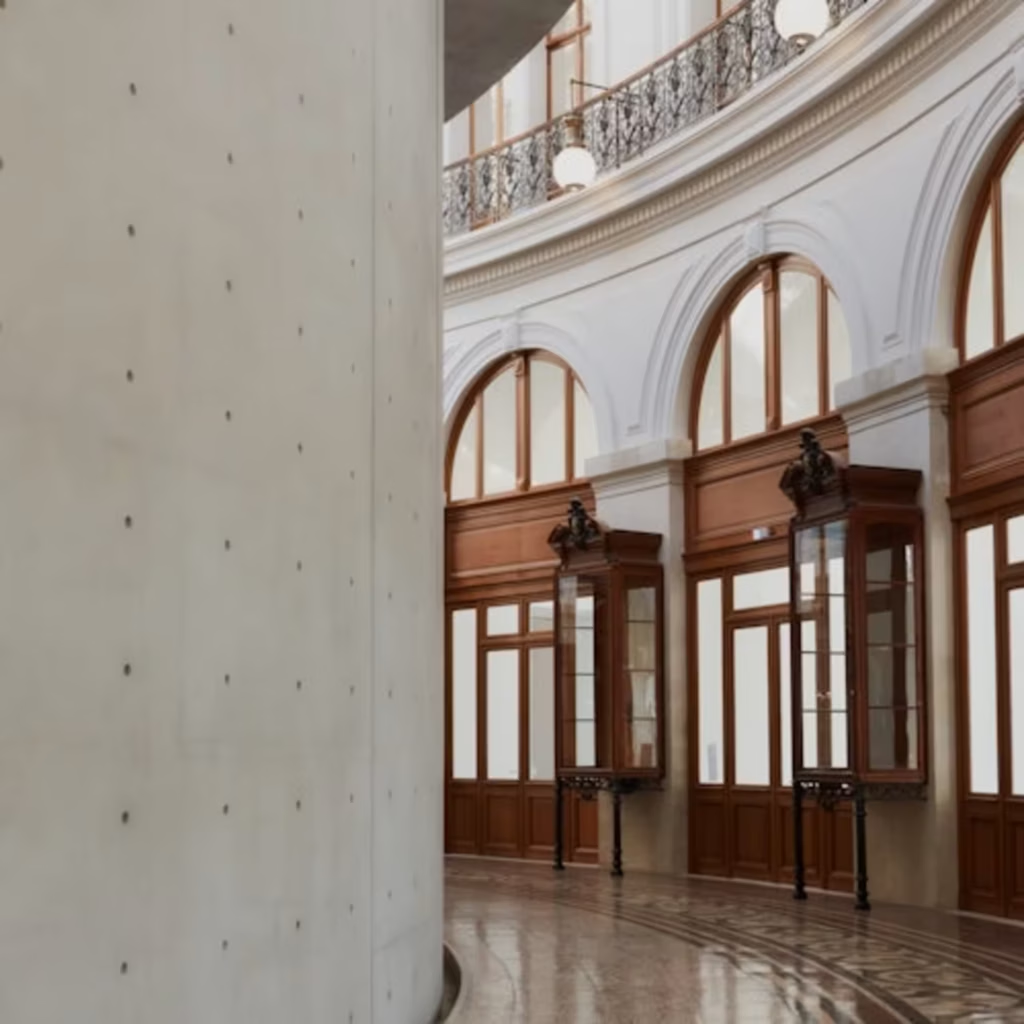
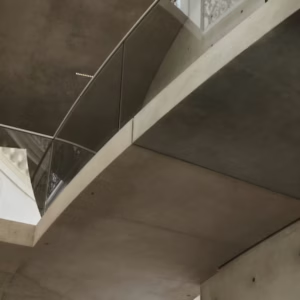
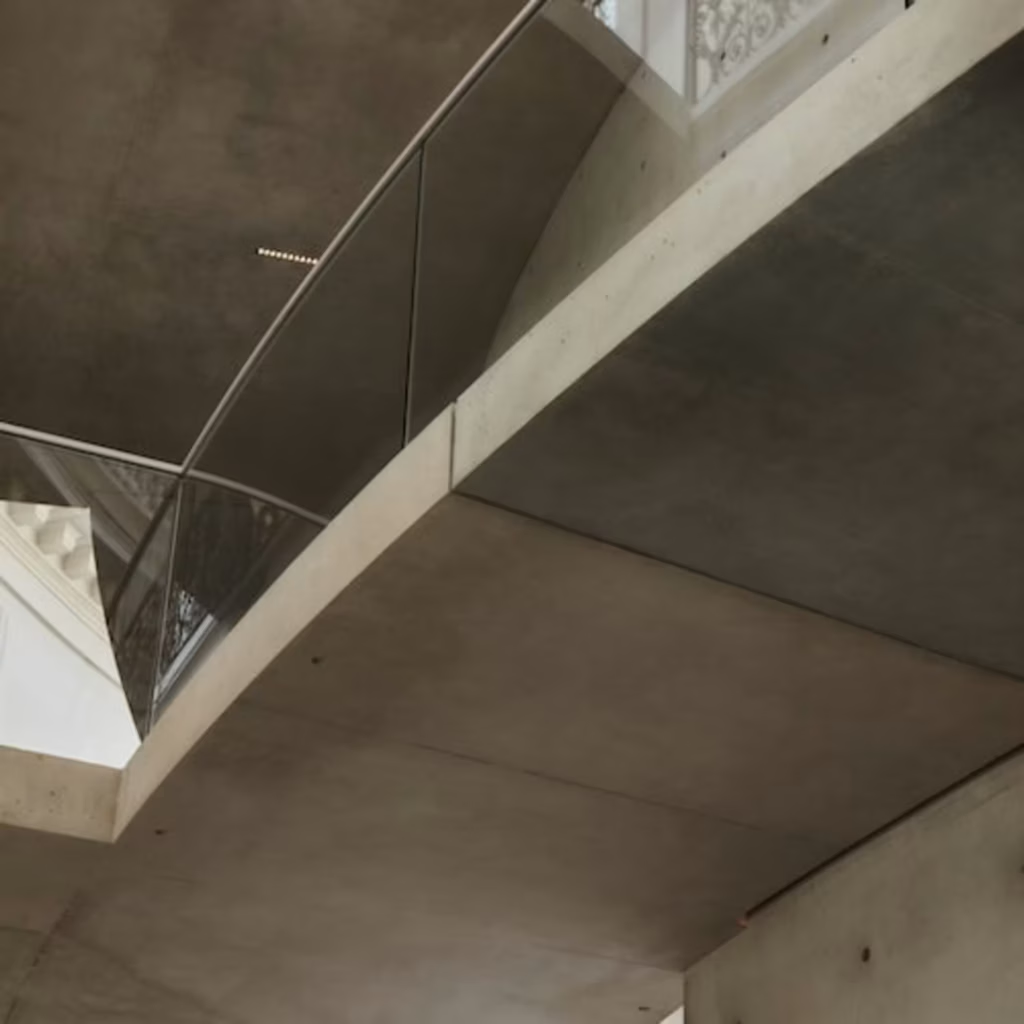
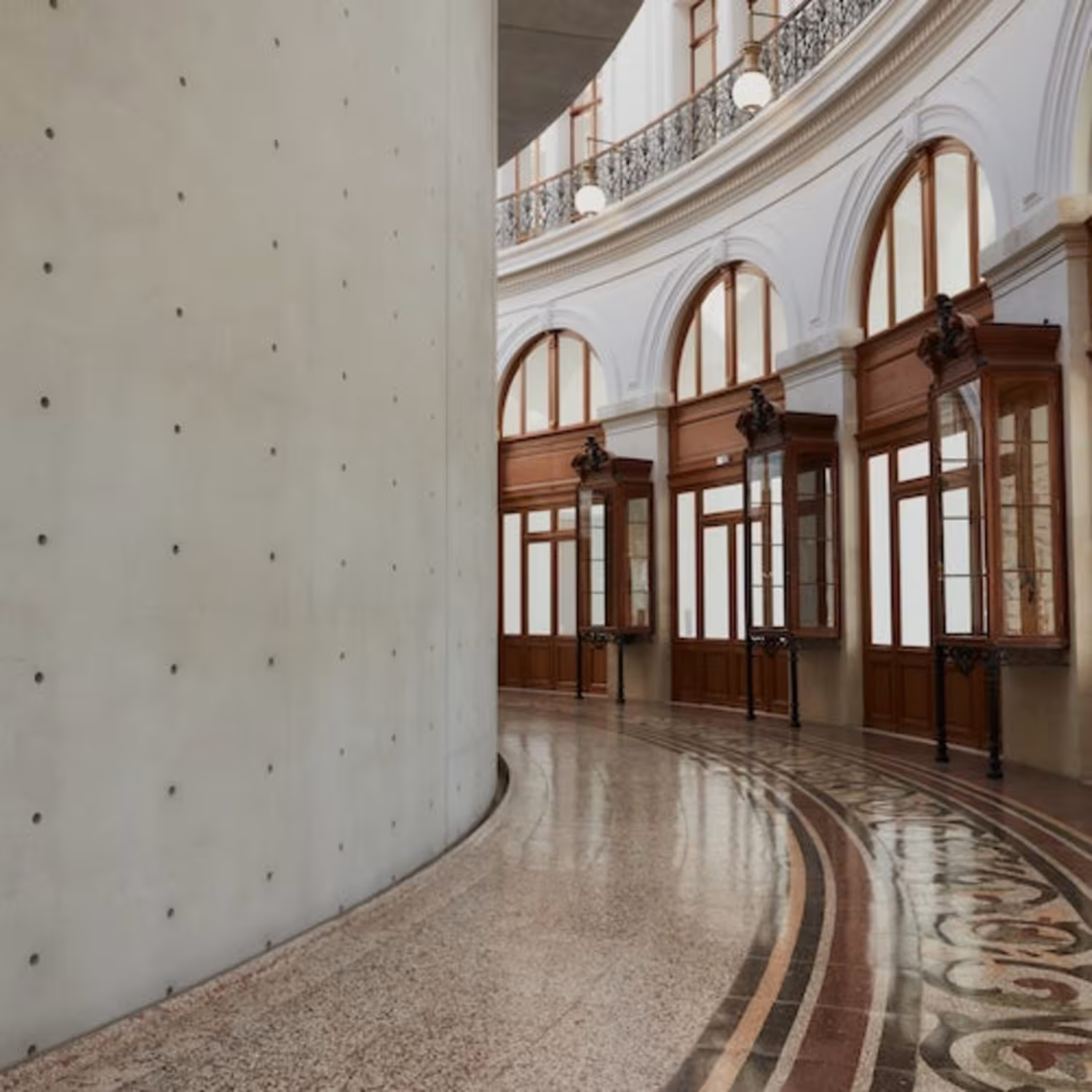
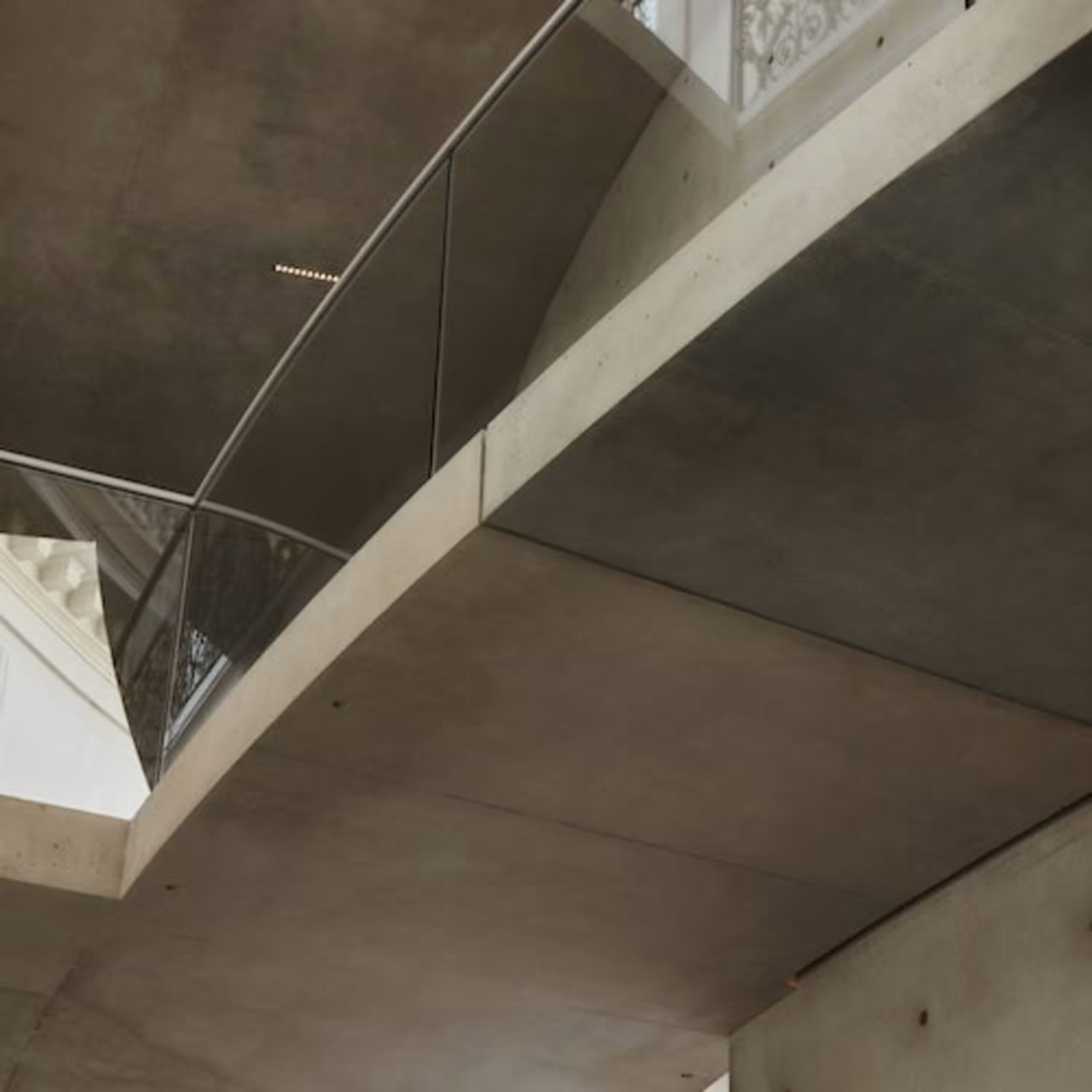
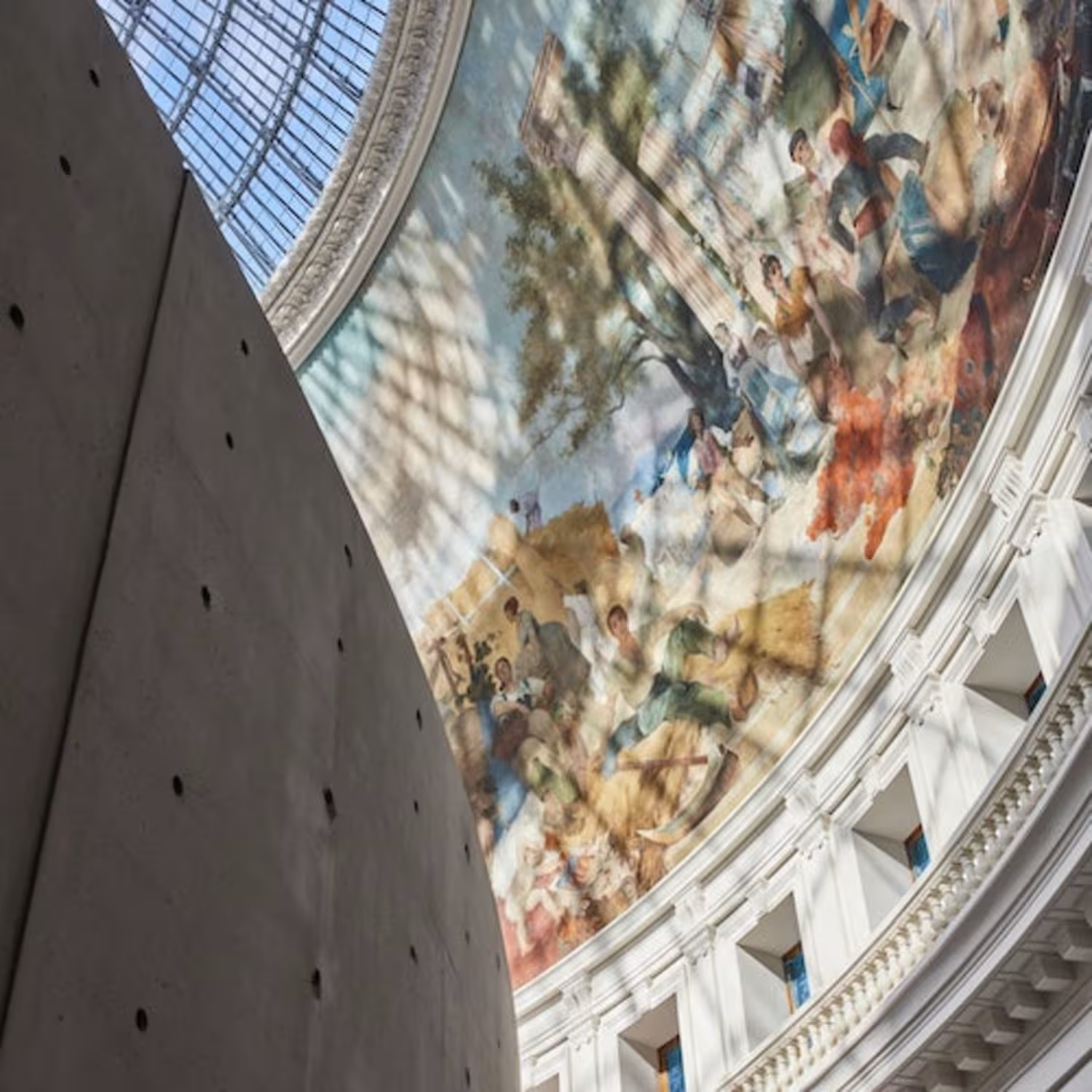
Tadao Ando’s cylinder, 9 metres high and about 30 metres across, stands clear of the historic walls in the middle of the Rotunda.

The building is a listed historic monument, and its dome and painted decor were classified in 1986.

Halle aux Grains, the restaurant run by chefs Michel and Sébastien Bras, sits inside the same building.

A Queen’s Column, Before Everything Else
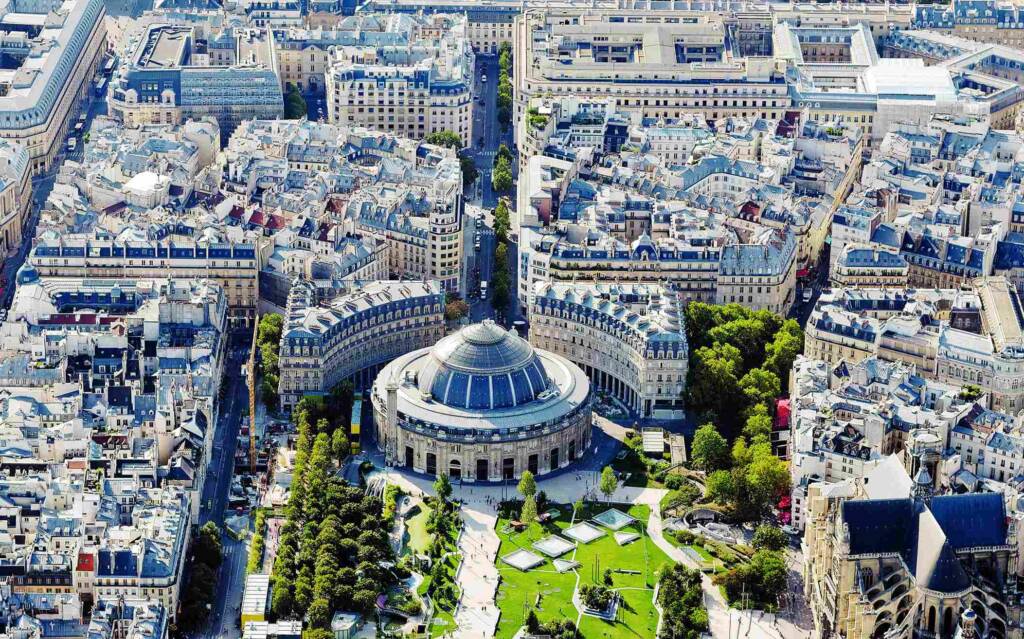
Aerial view of the Bourse de Commerce in Paris

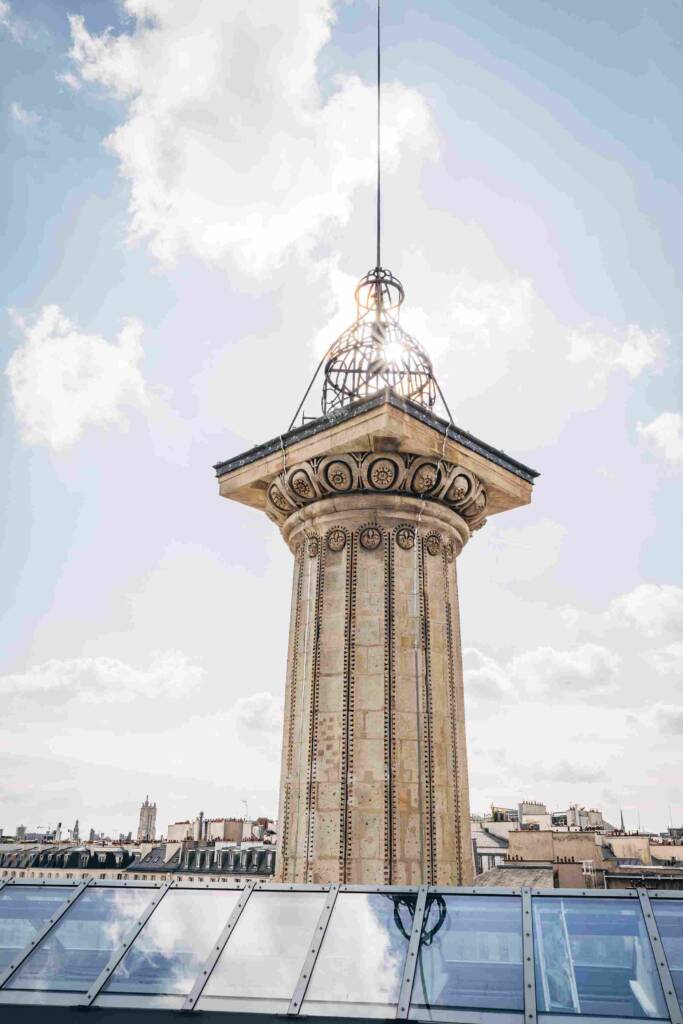
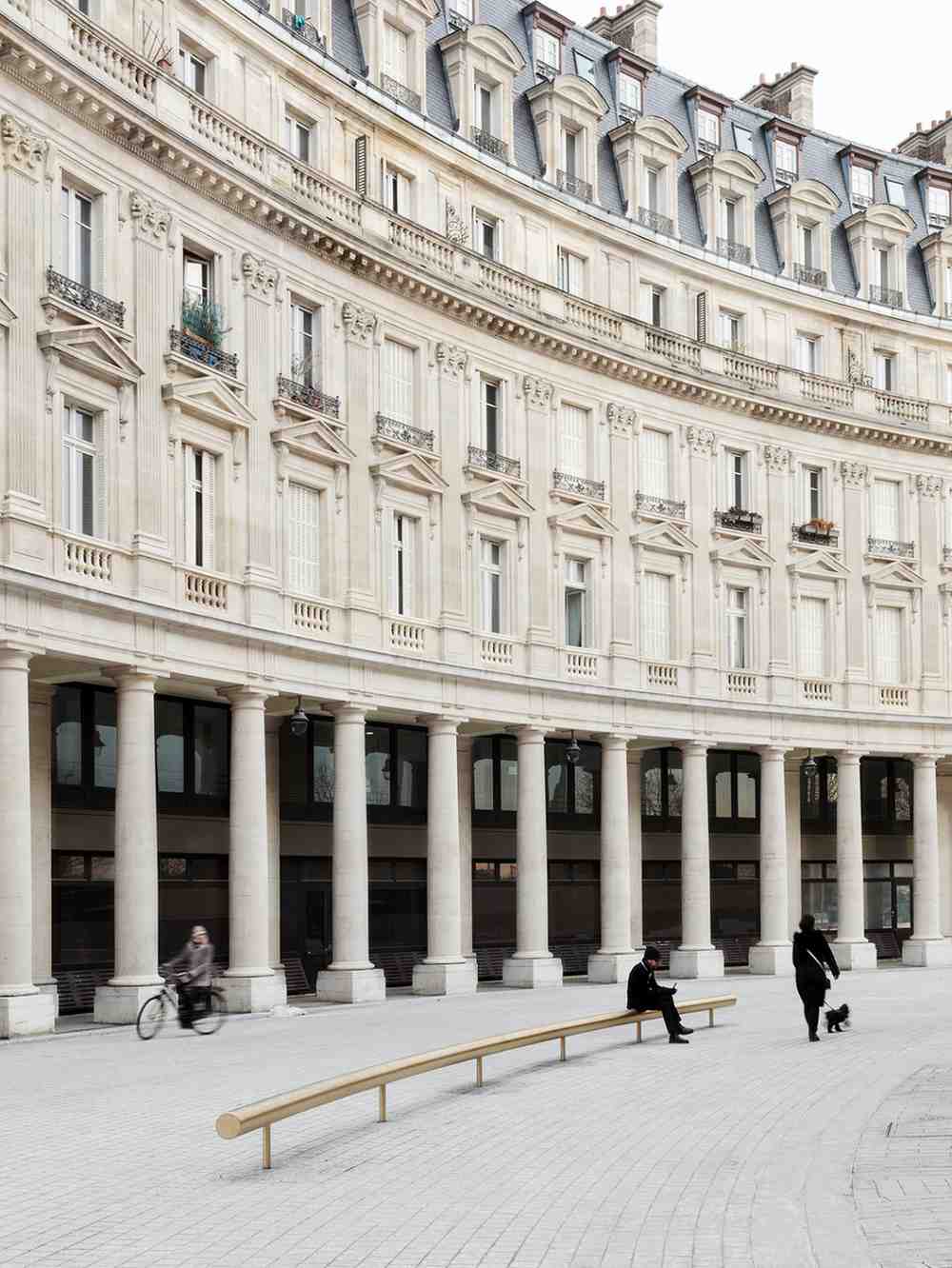
Long before grain or stocks, this corner of Paris belonged to Catherine de’ Medici. From 1574 her architect Jean Bullant built her a palace here, the Hôtel de la Reine, and between 1574 and 1584 he added a stand-alone stone column beside it, modelled on Trajan’s Column in Rome. Tradition ties it to the queen’s interest in astrology and to watching the stars.

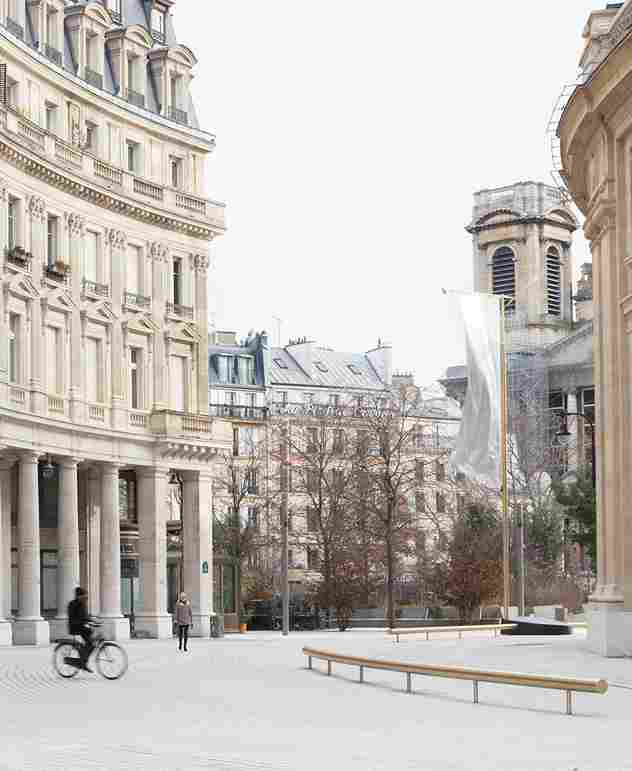
The palace did not last. It passed to new owners as the Hôtel de Soissons and was pulled down in 1748, but the column was bought and kept by the City of Paris and still stands against the curve of the building today. In 1764 the astronomer Alexandre-Guy Pingré fitted it with a sundial, and in 1812 a fountain was added at its base, since gone.

The column rises 31 metres in Saint-Leu stone and was classified as a historic monument in 1862. The oldest graffiti inside its stairwell dates from 1766, left by visitors who climbed it more than two and a half centuries ago.

The Halle aux Blés, Paris’s Round Grain Market
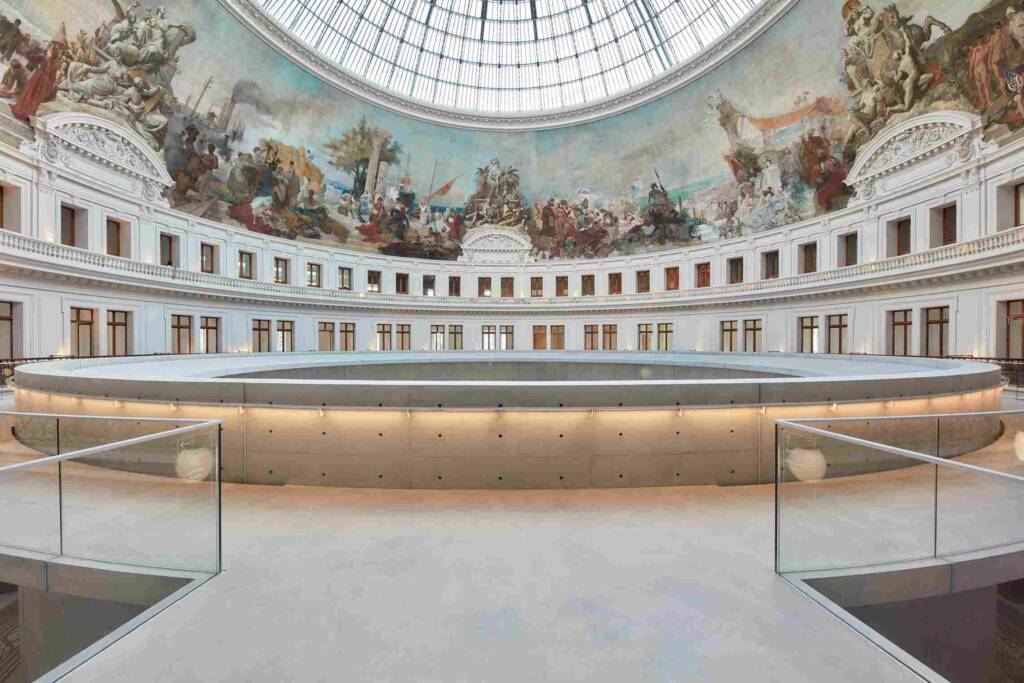
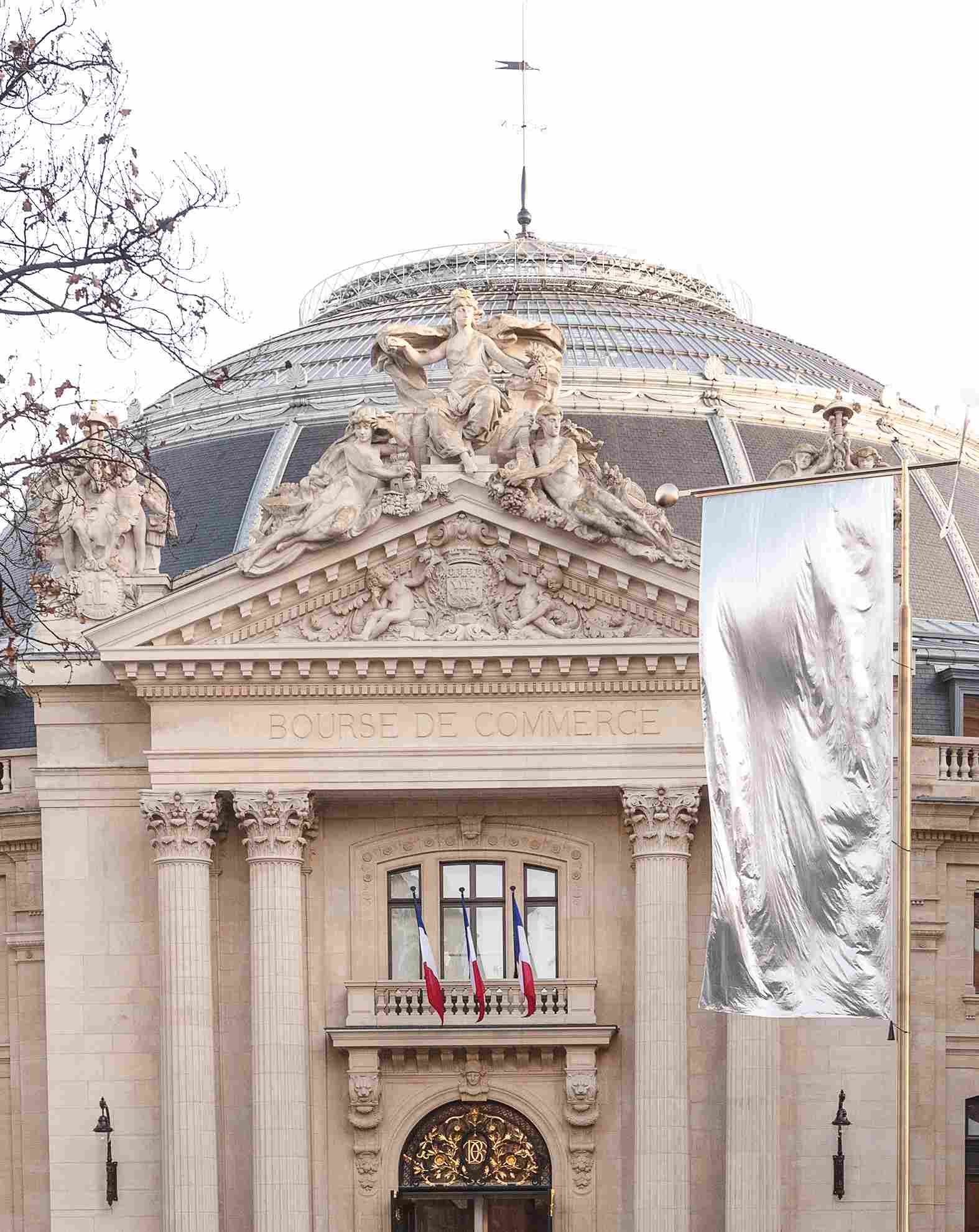
The Bourse de Commerce building, Paris

In 1763 the city chose the cleared site for a new grain market, the Halle au blé. The architect Nicolas Le Camus de Mézières drew a ring-shaped building around an open circular courtyard, with a double staircase inside, and it was finished in 1767. Its round plan is the one visitors still walk around.

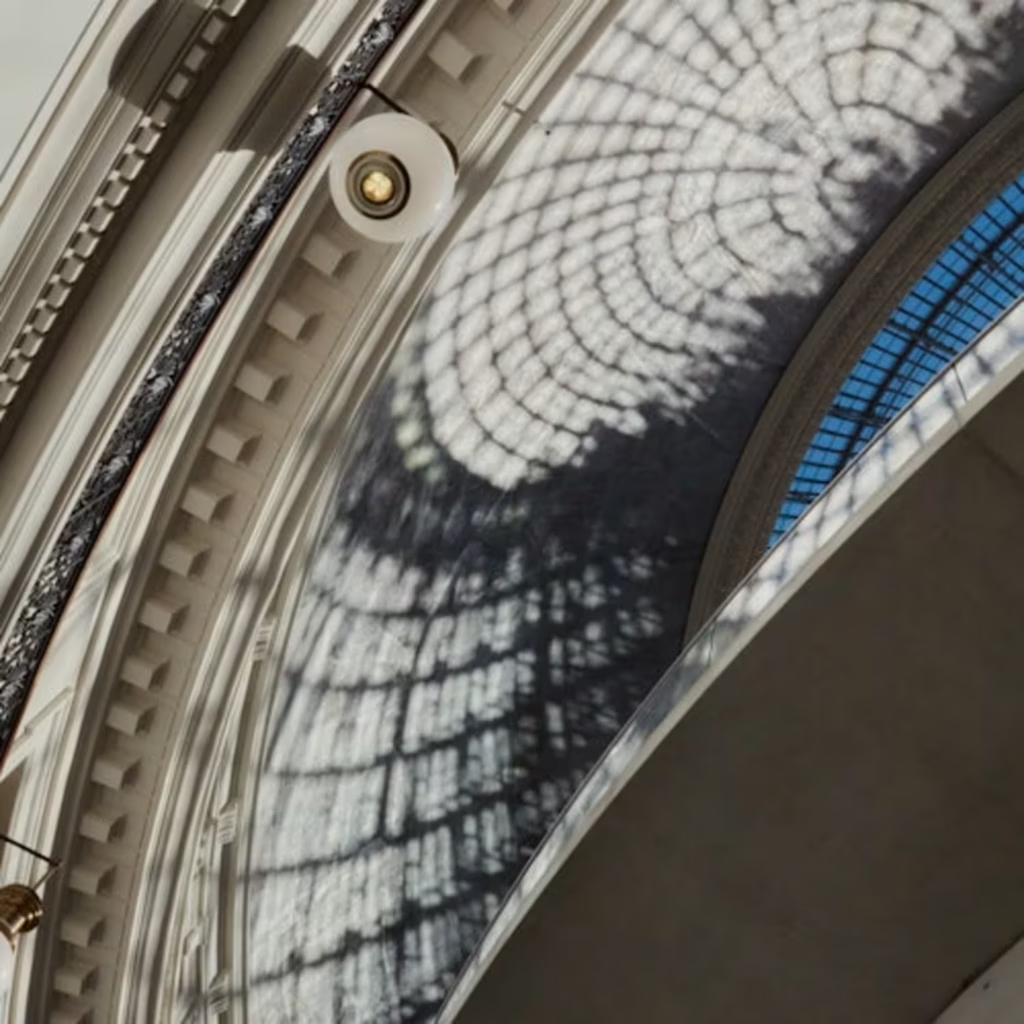
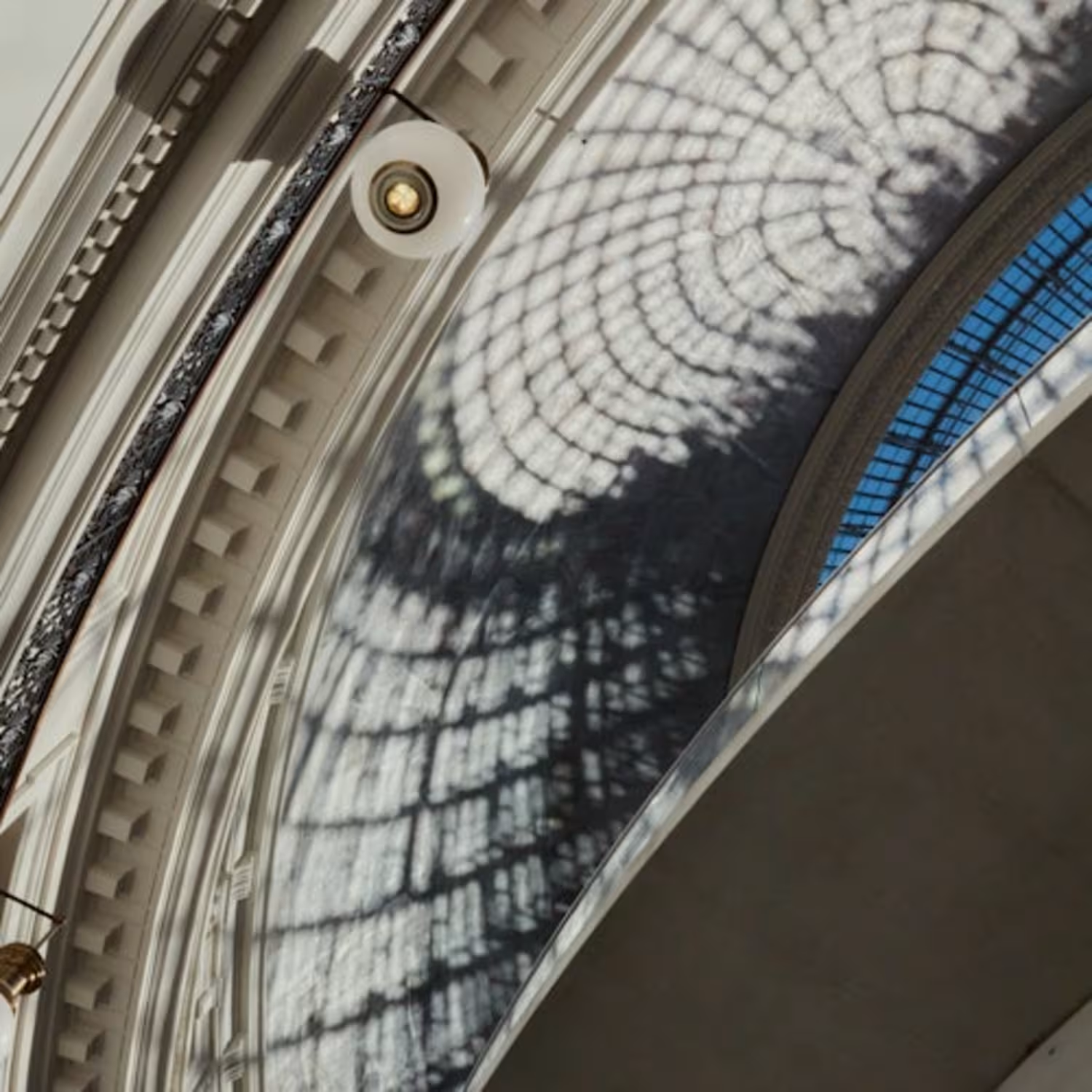
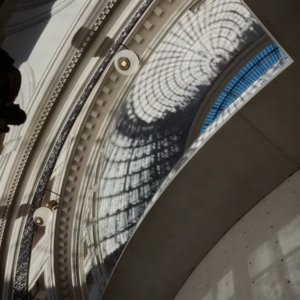
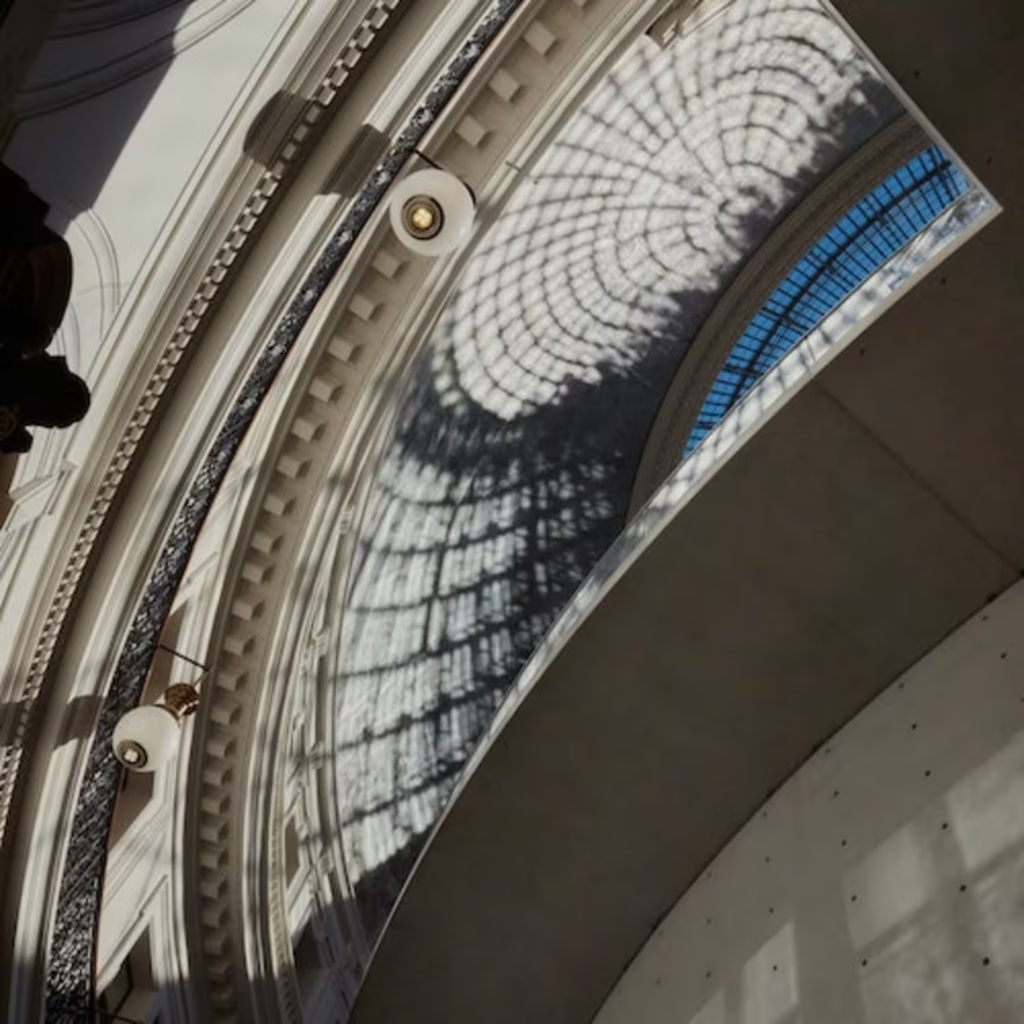
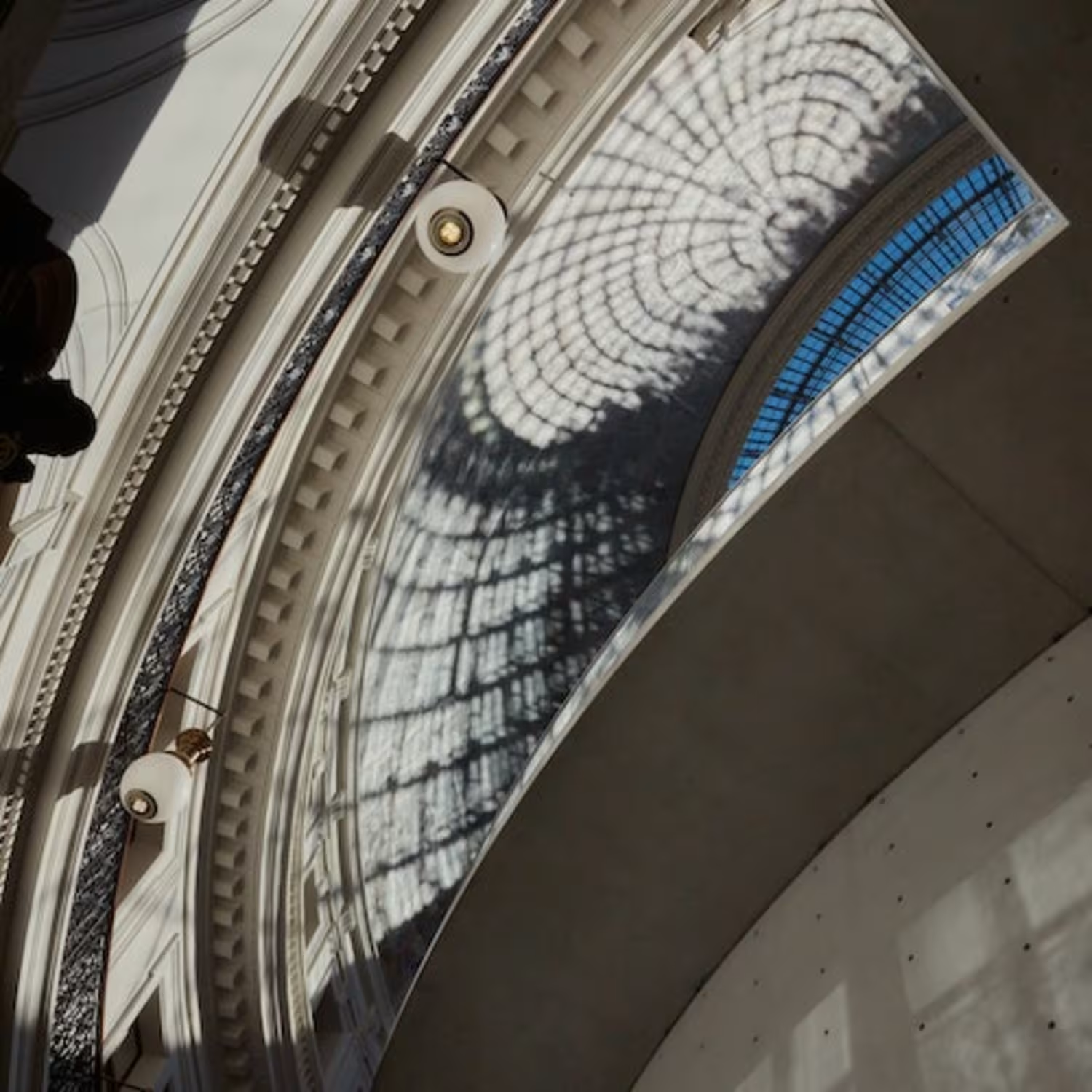
The courtyard was covered in 1782 and 1783 by a timber dome designed by Jacques-Guillaume Legrand and Jacques Molinos, the largest in France in its day. It burned on 16 October 1802. François-Joseph Bélanger replaced it between 1811 and 1813 with the engineer François Brunet, with Jacques Ignace Hittorff also involved, and the new dome was made of iron, a daring choice at the time.

Not everyone liked it. Victor Hugo mocked the dome in 1831 as an oversized English jockey cap. The building was badly damaged in 1854, yet the grain market kept trading beneath the iron dome until 1873, when it finally closed and left the hall empty.

Traders Under a Painted Sky, Then Artists
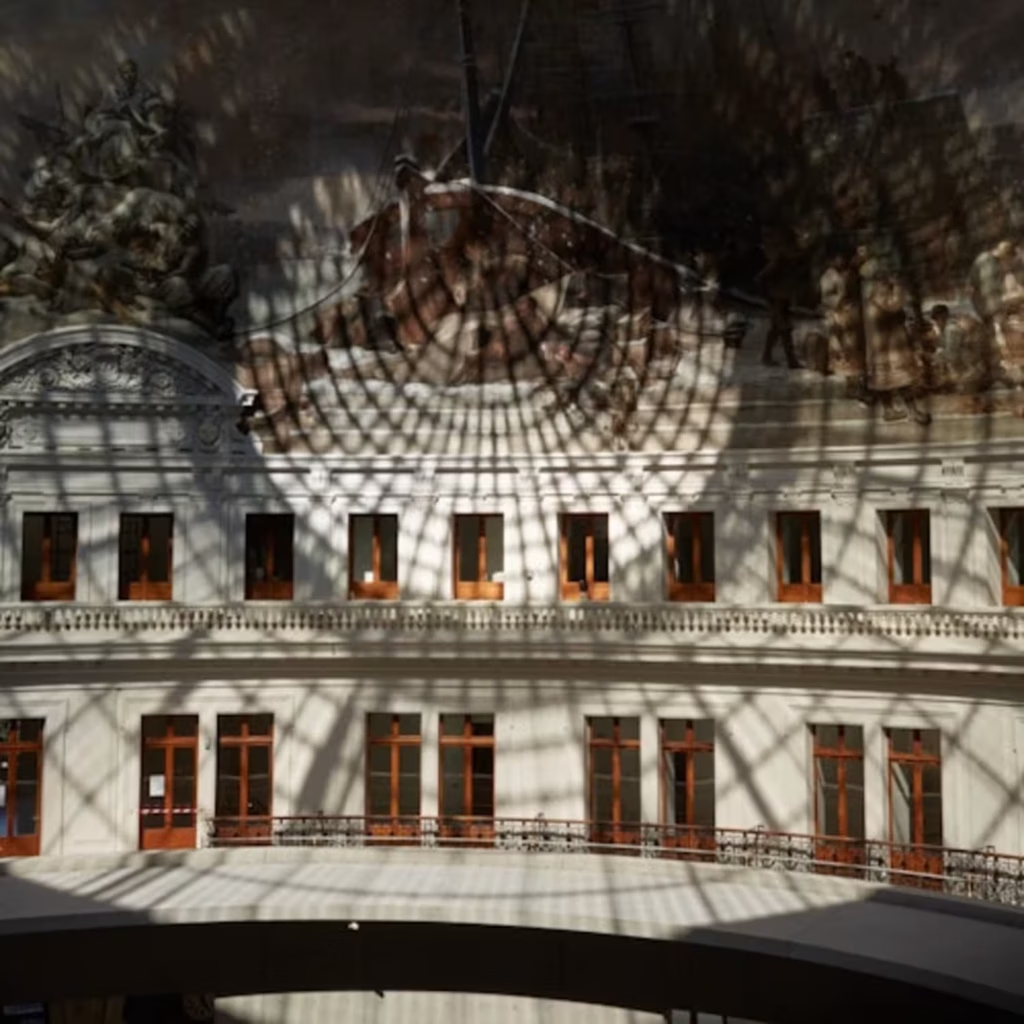
Inside the Bourse de Commerce, Paris

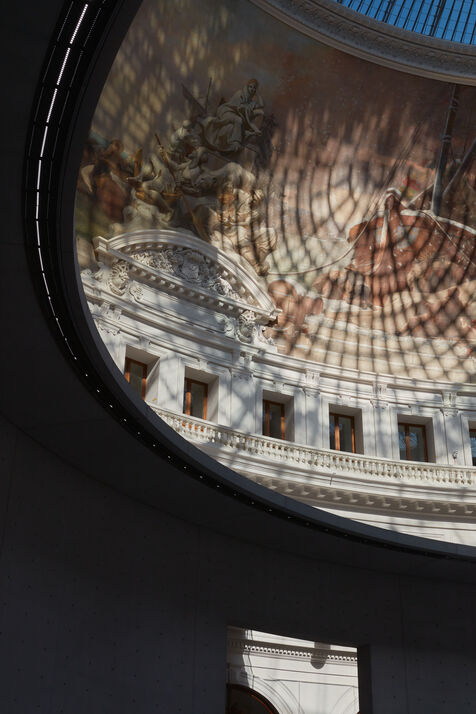
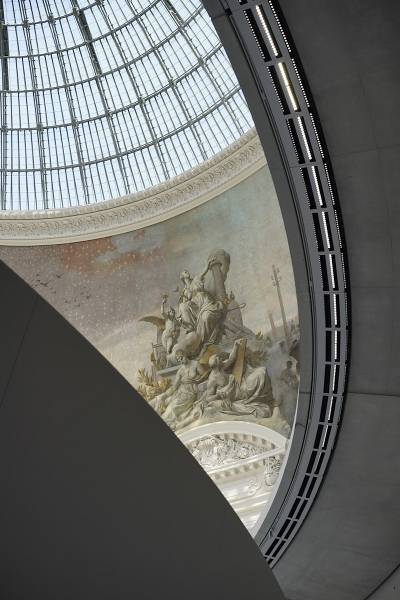
The empty hall got a second life in the 1880s. Henri Blondel rebuilt it as the Bourse de Commerce, a commodities exchange, and the new building opened on 24 September 1889, in time for the Universal Exhibition. Five painters, Alexis-Joseph Mazerolle, Évariste Vital Luminais, Désiré François Laugée, Georges Clairin and Hippolyte Lucas, covered the base of the dome with a panorama of trade across the Americas, Russia and the north, Asia and Africa, and Europe.

The building was protected as a historic monument in 1975, with the dome and decor classified in 1986. In 2016 the Pinault Collection took it on a long lease from the City of Paris, and works ran from June 2017 to March 2020. Tadao Ando led the transformation with Niney et Marca Architectes, while Pierre-Antoine Gatier, chief architect of historic monuments, restored the old fabric.

Restorers spent the first half of 2018 on the 1,400 square metres of painted canvas, and the dome was documented with 240 historic drawings and a laser survey. The museum opened to the public in May 2021.

Before You Step Into the Rotunda

What hangs in the galleries depends on when you come, because the exhibitions change during the year, but the building does not. Leave time for the Rotunda and the painted panorama before following the Passage up to the higher floors, and look for the Médicis column outside as you arrive or leave. Weekday mornings are usually the calmest part of the week. Pick a time slot or a day ticket, then come and see how the old exchange and Ando’s concrete fit together.
Bourse de Commerce - Pinault Collection: Admission with Time Slot

Highlights

Experience contemporary art within a historic and architecturally restored venue.

Gain access to multiple temporary exhibitions that rotate throughout the year.

Enjoy an audio guide app available in six different languages for a richer visit experience.

Benefit from a timed entry to manage your visit schedule effectively.

Located conveniently in central Paris, accessible by public transportation.
Day ticket for the Bourse de Commerce - Pinault Collection

Highlights

Skip waiting lines with priority entry.

Explore a prestigious collection of contemporary artworks.

Access an audio guide available in six languages via your smartphone.

Visit without a fixed entry time on the chosen day.

Admire rotating exhibitions that change multiple times a year.
Questions About the Bourse de Commerce and the Pinault Collection

What is the Bourse de Commerce?

A contemporary art museum in Paris’s 1st arrondissement and the Paris home of the Pinault Collection. It occupies a round building that began as an 18th-century grain market and became a commodities exchange in 1889.

What is the Pinault Collection?

Around 10,000 works by some 350 artists, from the 1960s to today, gathered by François Pinault over about fifty years. Besides Paris, it is shown in Venice at Palazzo Grassi and Punta della Dogana.

Does the Bourse de Commerce have a permanent collection on display?

No fixed hang. Exhibitions drawn from the Pinault Collection change during the year, and some works are installed for the building itself, so what you see depends on when you visit.

Who designed the museum?

Tadao Ando, working with Niney et Marca Architectes, while Pierre-Antoine Gatier, chief architect of historic monuments, restored the historic building.

When did it open as a museum?

In May 2021. Construction ran from June 2017 to March 2020.

What was the building before it became a museum?

The Halle au blé, a circular grain market built between 1763 and 1767 and closed in 1873. Henri Blondel then rebuilt it as the Bourse de Commerce, a commodities exchange, which opened in 1889.

What is the Médicis column?

A 31-metre stone column built between 1574 and 1584 beside Catherine de’ Medici’s palace, the Hôtel de la Reine. It survived the palace’s demolition in 1748, gained a sundial in 1764 and was classified as a historic monument in 1862.

What is painted inside the dome?

A panorama from 1889 by five painters, covering about 1,400 square metres of canvas. It shows trade between France and the other continents and was restored in 2018.

How big is Tadao Ando’s concrete cylinder?

It is 9 metres high and about 30 metres in diameter, set in the middle of the old courtyard under the glass dome.

Who owns the building?

The City of Paris. The Pinault Collection runs it under a long lease signed in 2016.

Is there a restaurant inside?

Yes. Halle aux Grains is run by the chefs Michel and Sébastien Bras.

This website sells official tickets for this venue. Please note, however, that it is not the official website of the venue.

The images and videos on this website may contain visual elements that have been created or enhanced using AI technology. They are provided for illustrative purposes only.