We are processing your request.
Please, don’t close or refresh the page.
Paris Tickets Musee Marmottan Monet Berthe Morisot

Berthe Morisot’s Paintings at the Musée Marmottan Monet

The first woman Impressionist, seen through the largest public collection of her work: 25 paintings, 75 watercolours and pastels left by her family, from Normandy seascapes to portraits of her daughter Julie Manet.

The Painter Behind the Collection

Berthe Morisot (1841-1895) trained with Corot, posed for Manet and exhibited with Monet, Renoir and Degas, yet sold fairly little in her lifetime, which is why so few museums hold much of her work. The Marmottan is the exception. Her descendants left it the largest public collection of her art, and it traces her whole career in one house. For the Monets, Impression, Sunrise and the Empire rooms around them, see the Monet museum in Paris that holds Impression, Sunrise.

Berthe Morisot Facts Worth Knowing Before You Go

She was born in Bourges on 14 January 1841 and moved to Paris with her family in 1852.

She was the only woman in the first Impressionist exhibition of 1874, showing ten works.

She took part in every Impressionist exhibition but one, missing 1879, just after her daughter Julie was born.

She married Eugène Manet, brother of the painter Édouard Manet, in 1874.

She destroyed nearly all her early work, everything before 1869, so her surviving output starts late.

She was a great-niece of the Rococo painter Jean-Honoré Fragonard.

She died in Paris on 2 March 1895 and is buried in the Cimetière de Passy.

The First of the Women Impressionist Painters
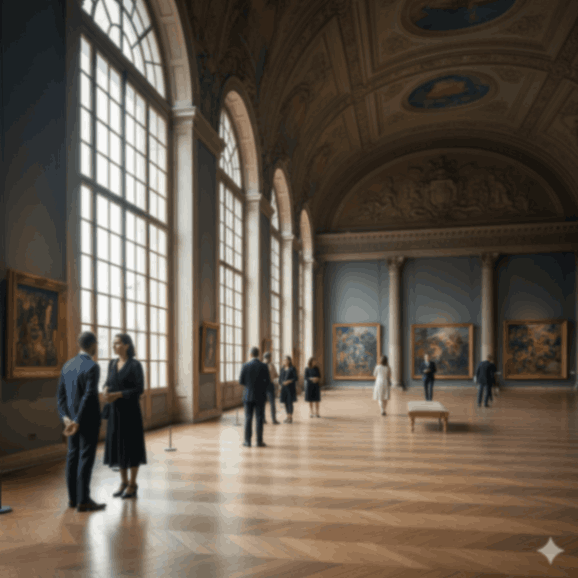
Inside the Musée Marmottan Monet

Morisot came from a comfortable family that expected its daughters to draw, not to become painters. She and her sister Edma copied paintings in the Louvre from 1858, always chaperoned and barred from formal training. In 1861 she met Camille Corot, who led her towards painting outdoors, and in 1864 she showed at the Salon for the first time.

Ten years later she left the Salon behind. In 1874 she hung ten works at the first Impressionist exhibition, in the photographer Nadar’s studio, the only woman in the show, and one critic sneered at a group of lunatics, one of whom was a woman. By 1877 another called her the one real Impressionist in the group.

She exhibited under her maiden name rather than her married one. In a notebook in 1890 she wrote that she had never met a man who treated a woman as an equal, which was all she had ever asked for.

Manet and Berthe Morisot

Inside the Musée Marmottan Monet

Henri Fantin-Latour introduced her to Édouard Manet in 1868. They became close friends and colleagues, and she posed for several of his best-known portraits, including Repose and Berthe Morisot with a Bouquet of Violets. The Marmottan holds one of them too: Manet’s Portrait of Berthe Morisot Reclining, painted in 1873.

In 1874 she married his younger brother, Eugène Manet, who appears in some of her paintings. Their only child, Julie, was born on 14 November 1878 and became her mother’s most frequent model, painted in gardens, indoors and with her greyhound.

Julie also sat for Renoir, whose Portrait of Julie Manet from 1894 belongs to the same museum. Morisot died of pneumonia in 1895 after nursing Julie through the same illness, leaving her daughter an orphan at sixteen.

How Her Work Came Home to the 16th Arrondissement
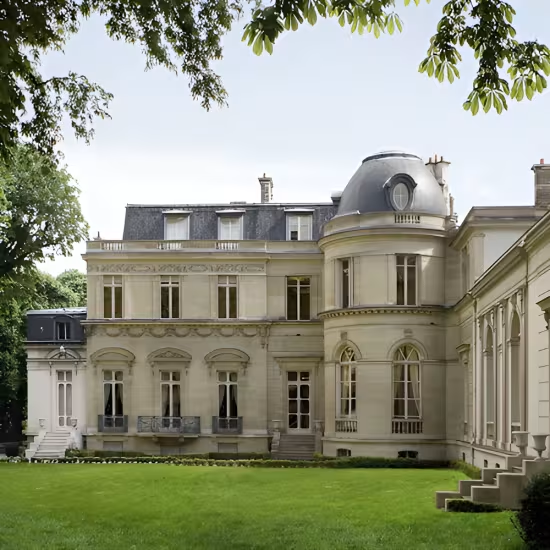
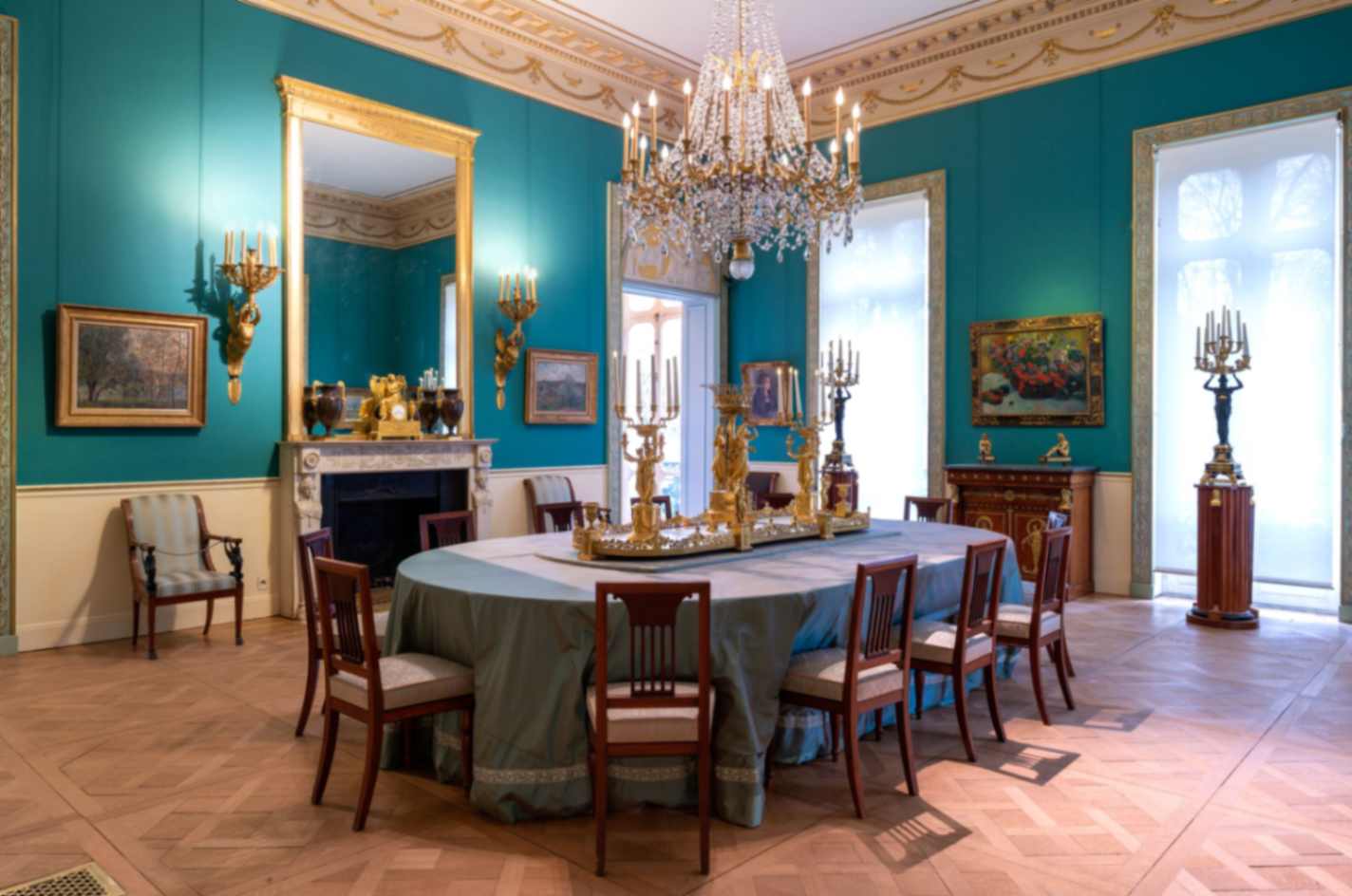
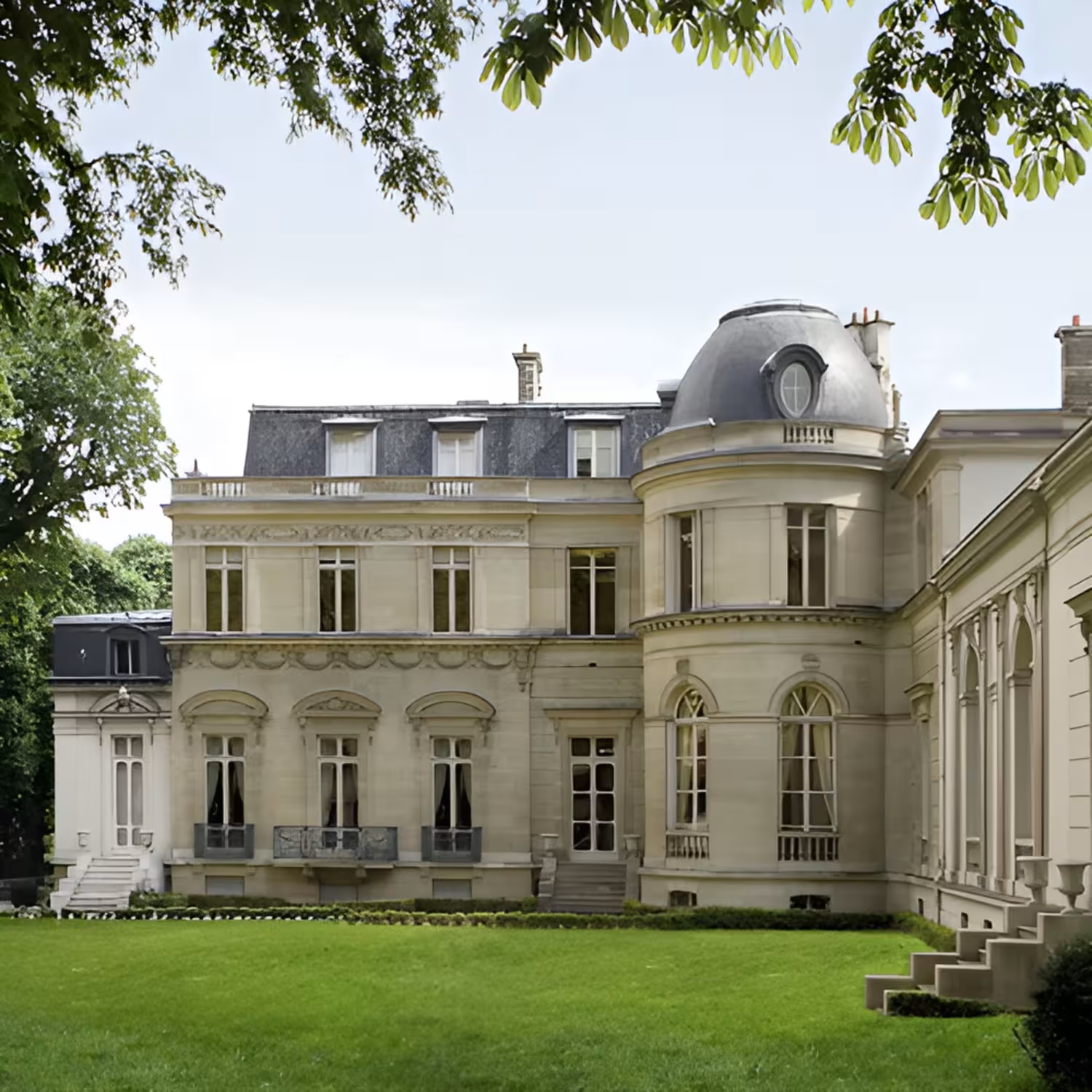
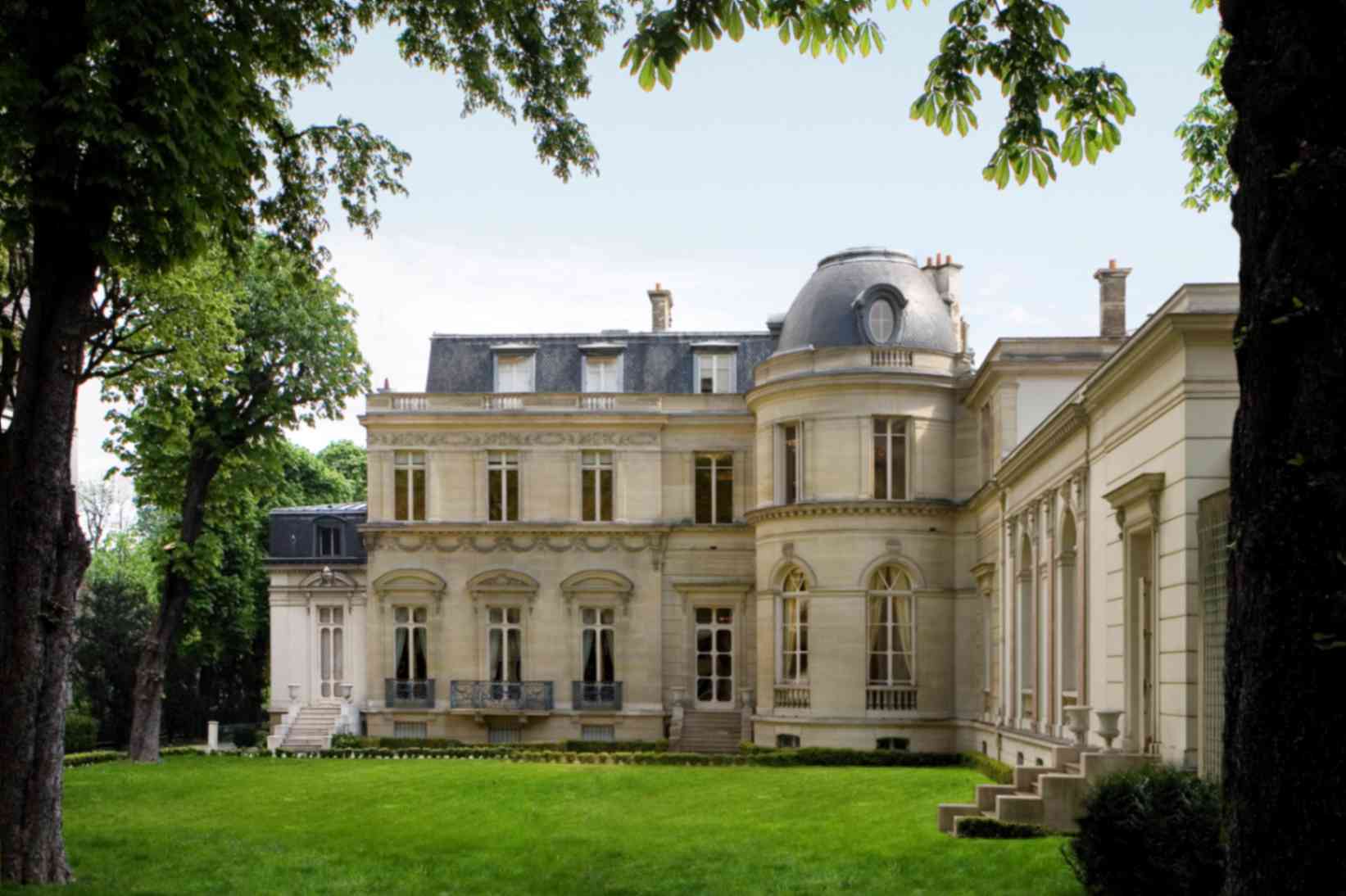
The Musée Marmottan Monet, Paris

The Morisot and Manet family house stood near the Étoile, and the painter moved there with Eugène in 1883, the same year Paul Marmottan moved into his house on Avenue Raphaël. Julie later lived there with her husband Ernest Rouart, alongside her cousin Jeannie Gobillard and Jeannie’s husband, the poet Paul Valéry.

The families were neighbours of the museum from the start: Julie and Ernest Rouart attended its opening in 1934. Decades later, the friendship between their son, the art historian Denis Rouart, and Daniel Wildenstein, a member of the Académie des Beaux-Arts, helped seal the bequest.

In 1993 the Rouart family left the museum twenty-five paintings by Berthe Morisot, together with prints, drawings and paintings by Manet, Degas and Corot. Portraits of Julie, Jeannie and her sister Paule returned to the neighbourhood where many of them were painted.

Seeing Morisot in Person

Her paintings are small and quiet, and they reward slowing down more than the big Monet room downstairs does. Look for the thin, fast strokes critics described as barely touching the canvas, and for the white she used to make light seem to pass through a scene. Watercolours and pastels are fragile, so which ones are out can change, but the paintings above belong to the museum’s own collection. Book your entry, then give the Morisot rooms as long as you give Monet.
Musée Marmottan Monet - Skip the line ticket

Highlights

Avoid waiting in line with priority access.

Discover an unparalleled assortment of Monet paintings.

Enjoy entry to both permanent and rotating exhibitions.

Visit special areas such as the Galerie Temporaire and Salle Monet.

Immerse yourself in works by artists like Gauguin, Renoir, and Degas.
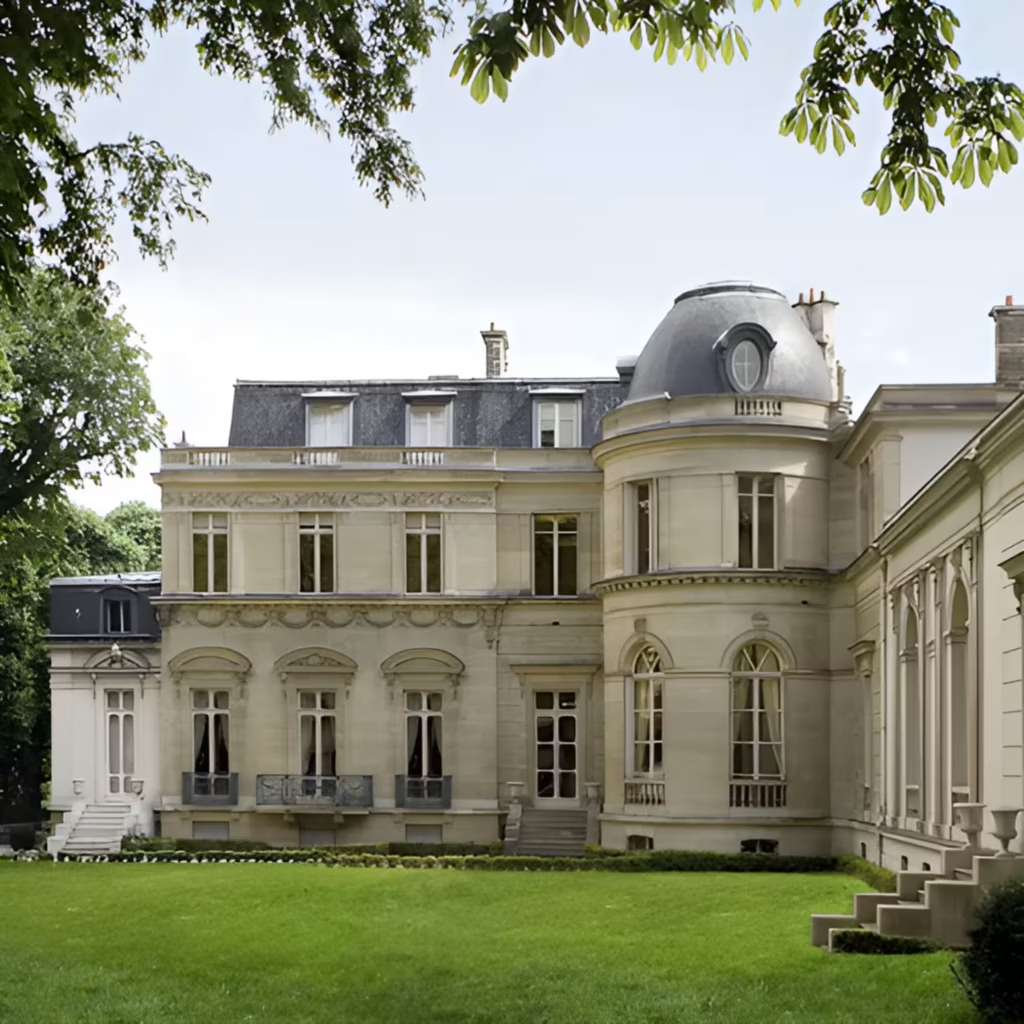
Questions About Berthe Morisot

Who was Berthe Morisot?

A French painter (1841-1895) and a founding member of the Impressionist group, known for domestic scenes, portraits of women and children, gardens and landscapes.

Why is she called the first woman Impressionist?

She was the only woman to exhibit at the first Impressionist exhibition in 1874 and went on to show at all but one of the group’s exhibitions.

How many works by Morisot does the Musée Marmottan Monet hold?

25 oil paintings, 75 watercolours and many pastels and drawings, the largest public collection of her work.

What are Berthe Morisot’s most famous paintings?

The Cradle, at the Musée d’Orsay, is among the best known. At the Marmottan, look for Eugène Manet on the Isle of Wight, The Cherry Tree and Julie Manet and Her Greyhound Laërte.

Is there a Berthe Morisot self-portrait at the Marmottan?

Yes. The collection includes her Self-Portrait from 1885.

Did Morisot paint watercolours?

Yes, and early on she worked mostly in watercolour because it was easy to carry outdoors. The Marmottan holds 75 of them.

What was her relationship with Édouard Manet?

They were close friends and colleagues from 1868, she posed for several of his portraits, and in 1874 she married his brother Eugène.

Who was Julie Manet?

Morisot’s only daughter, born in 1878, her most frequent model and later a painter and collector herself. She also sat for Renoir.

Who were the other women Impressionist painters?

In 1894 the critic Gustave Geffroy named Morisot, Marie Bracquemond and Mary Cassatt as the three great ladies of Impressionism.

Are there other women artists in the Marmottan collection?

Yes. Its highlights also include Little Girl Eating Cherries (1817) by Jeanne Élisabeth Chaudet and The Studio of Abel de Pujol (1822) by Adrienne Grandpierre-Deverzy.

How did the collection reach the museum?

Morisot’s descendants, the Rouart family, bequeathed it in 1993. The family had lived near the museum since the 19th century.

This website sells official tickets for this venue. Please note, however, that it is not the official website of the venue.

The images and videos on this website may contain visual elements that have been created or enhanced using AI technology. They are provided for illustrative purposes only.