We are processing your request.
Please, don’t close or refresh the page.

Musée Marmottan Monet, the Monet Museum in Paris: Impression, Sunrise and the Water Lilies

A 19th-century townhouse by the Bois de Boulogne holding the world’s largest Monet collection, Impression, Sunrise among it, alongside Empire salons, medieval illuminations and the leading Berthe Morisot collection.

What You Find Inside the Monet Museum in Paris

The Musée Marmottan Monet is a private house turned museum, and it still feels like one. Paul Marmottan left his home and his collection of Empire art to the Académie des Beaux-Arts in 1932, and a run of gifts over the following decades turned it into the world’s largest collection of works by Claude Monet. Upstairs you walk through Empire salons, portraits and furniture; downstairs, in a room built under the garden, hang Monet’s late Water Lilies. In between sit Impression, Sunrise, the painting that gave Impressionism its name, the leading collection of Berthe Morisot’s work and 322 medieval and Renaissance illuminations.

Why This Townhouse Holds So Much Monet

It holds the world’s largest collection of Monet’s work, built largely on the bequest of his son Michel.

Impression, Sunrise, shown in 1874, prompted a critic to coin the word impressionist.

More than a hundred Monet canvases arrived in 1966, many of them large Water Lilies never exhibited in his lifetime.

The museum describes itself as the only institution to hold the last paintings of The Japanese Bridge and The House Seen from the Rose Garden.

The Rouart family bequest of 1993 made it home to the world’s leading collection of Berthe Morisot.

Its 322 miniatures from the Wildenstein collection form one of the finest groups of illuminations in France.

Paul Marmottan’s Empire rooms include a bed that belonged to Napoleon I and a geographic clock in Sèvres porcelain.

A Duke’s House on the Edge of the Ranelagh
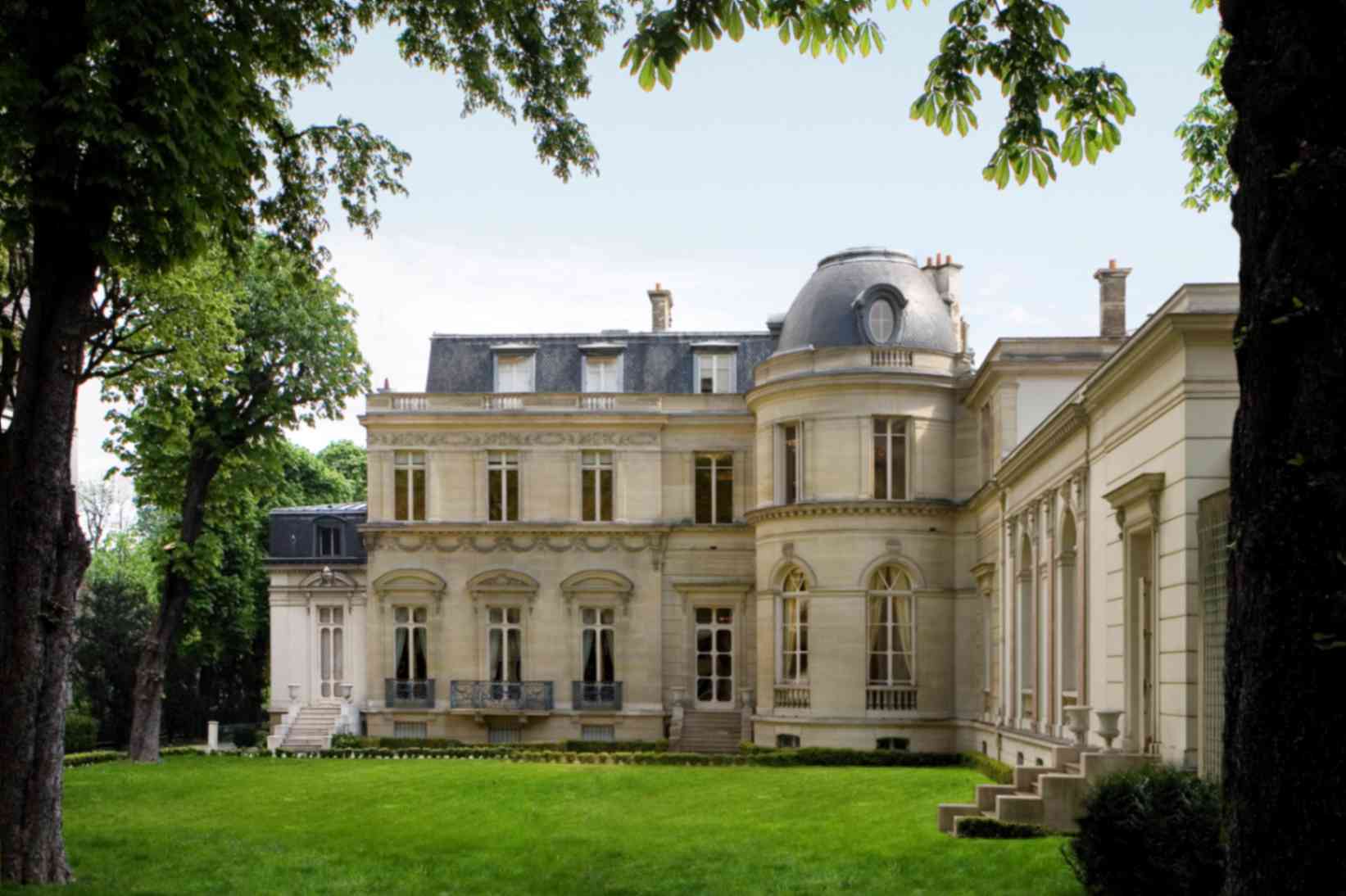
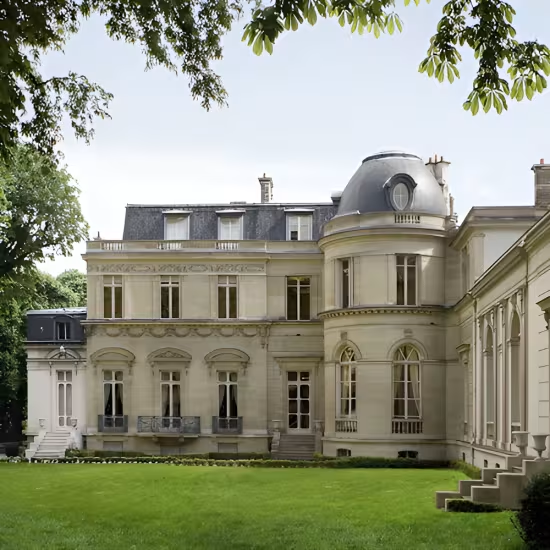
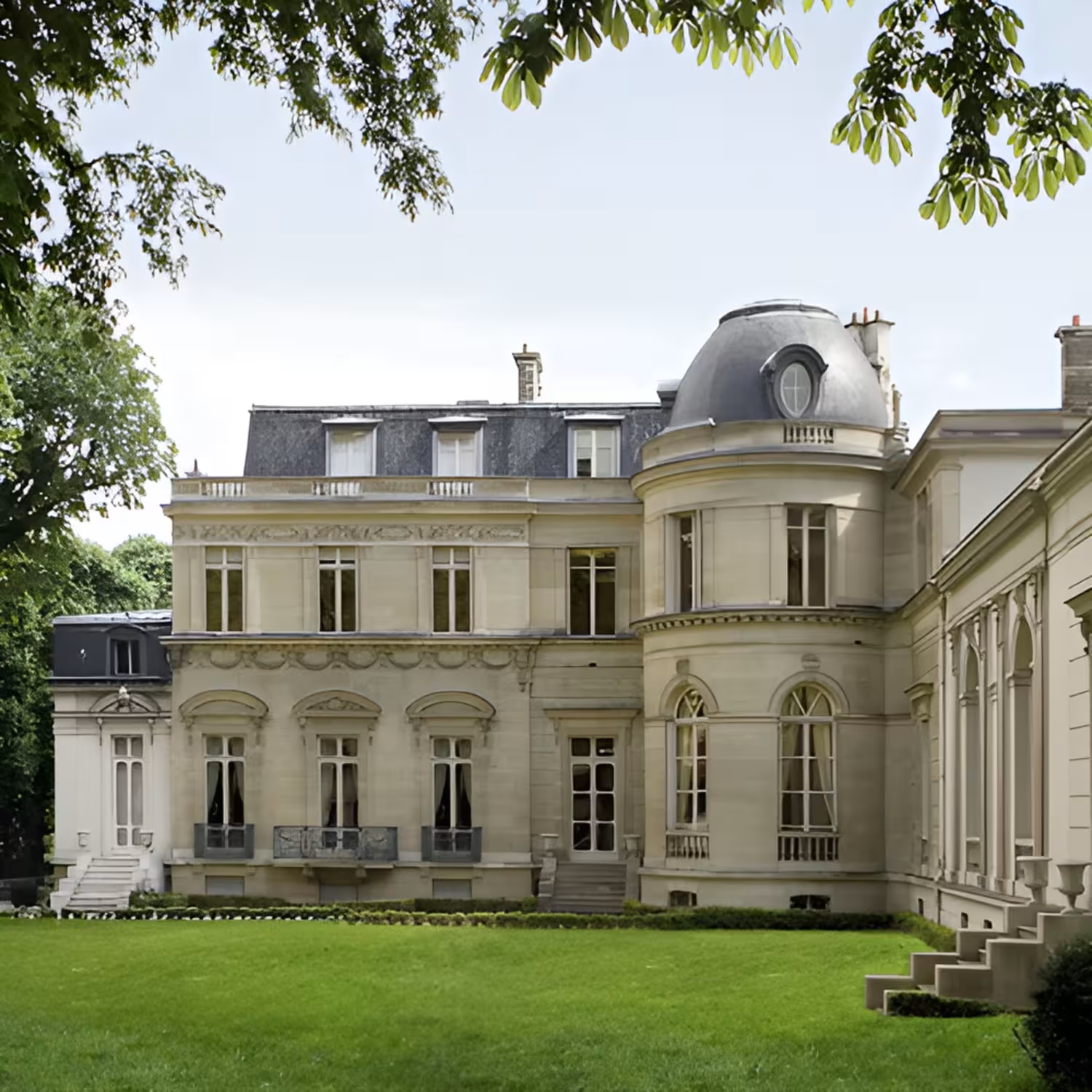
The Musée Marmottan Monet building, Paris

The house began as a speculation. In 1863 François Christophe Edmond Kellermann, duke of Valmy, bought a plot beside the new Ranelagh garden in Passy and planned three townhouses on it, keeping the largest for himself, with an English-style garden behind it. After his death in 1868 his wife and daughter could not afford the upkeep, and on 7 June 1882 the property was sold to Jules Marmottan for 260,000 francs.

Marmottan, born in Valenciennes in 1829, had made his name running the Bruay mining company in northern France. He was also a collector, and through the dealer Antoine Brasseur he bought some forty paintings by pre-Renaissance artists from Italy, Flanders and Germany, among them a rare Descent from the Cross by Hans Muelich.

He barely lived to enjoy the house. Jules died in Bordeaux on 10 March 1883, less than a year after the purchase, and left the mansion on Avenue Raphaël and all his collections to his only son, Paul, who would give them a very different direction.

Paul Marmottan and His Empire Rooms

Inside the Musée Marmottan Monet

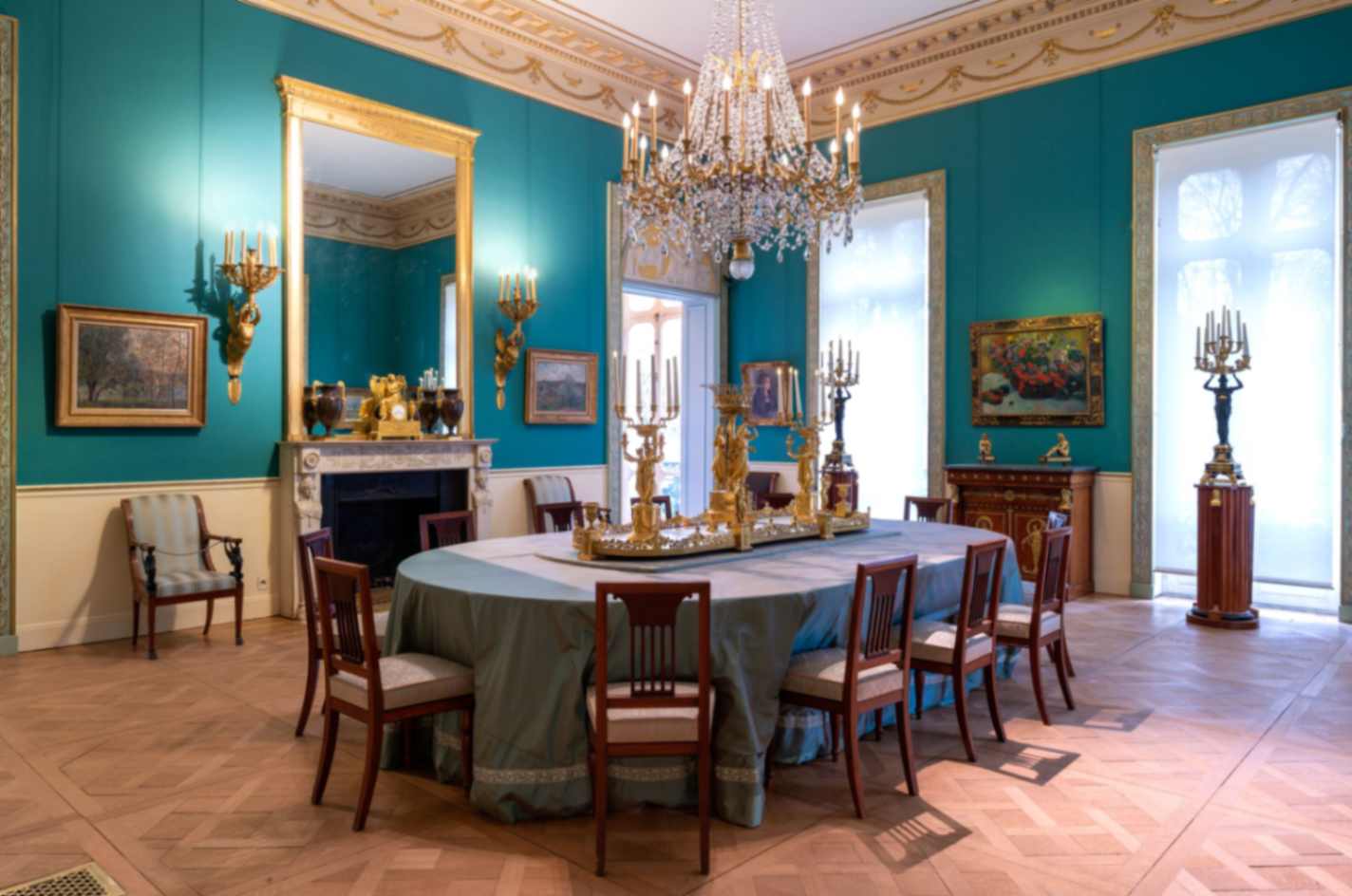
Paul Marmottan, born in Paris in 1856, gave up a career in public service after his father’s death and devoted himself to the art of 1789 to 1830. He became a recognised specialist of the Consulate and Empire years, wrote a monograph on the painter Louis Léopold Boilly and redecorated his rooms in the Empire style himself, filling them with furniture from the Tuileries Palace and from the Neapolitan palace furnished for Napoleon’s sister Caroline.

Around 1910 he extended the house and redesigned its salons, adding a bed that once belonged to Napoleon I, the Chandelier with Musicians and a Sèvres geographic clock. The street along the side of the house was named after Boilly in 1913.

Marmottan left no heirs. At his death on 15 March 1932 the house and its collections passed to the Académie des Beaux-Arts, which opened them to the public as the Musée Marmottan on 21 June 1934, after clearing the kitchens and bathrooms to make room for visitors.

How Impressionism Got Through the Door
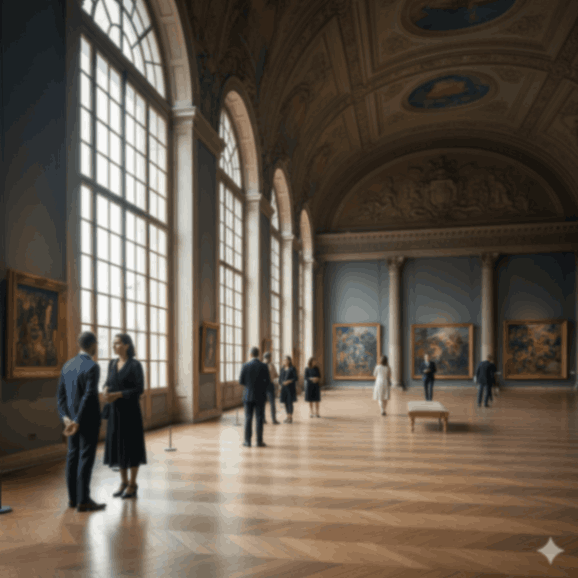
Inside the Musée Marmottan Monet

The irony is that Paul Marmottan disliked the Impressionists. In 1886 he complained that painters no longer drew but sketched, and the Académie had shut them out of the Salon. Then, between 1940 and 1947, Victorine Donop de Monchy gave the museum works from the collection of her father, Georges de Bellio, one of Monet’s first supporters, and Impression, Sunrise arrived with ten other Impressionist canvases.

The biggest change came in 1966. Michel Monet, the painter’s only surviving son, had struggled to interest French museums in his father’s late Water Lilies and left more than a hundred Monets to the Marmottan instead. A room was dug under the garden to show the large canvases, which went on display in 1970, and the museum took the name Marmottan Monet.

Other gifts followed: Daniel Wildenstein’s illuminations in 1981, Nelly Sergeant-Duhem’s Impressionist and Post-Impressionist works in 1985, and in 1993 the Rouart family’s Berthe Morisot bequest, which brought the painter’s work back to the neighbourhood where she had lived.

An Afternoon in Passy

The museum sits in a quiet residential corner of the 16th arrondissement, so it rarely feels rushed. Start downstairs with the Water Lilies while your eyes are fresh, then work up through Impression, Sunrise, the Morisot rooms and the Empire salons. Thursday evenings stay open later, and the Ranelagh gardens outside are the obvious place to sit down afterwards.
Musée Marmottan Monet - Skip the line ticket

Highlights

Avoid waiting in line with priority access.

Discover an unparalleled assortment of Monet paintings.

Enjoy entry to both permanent and rotating exhibitions.

Visit special areas such as the Galerie Temporaire and Salle Monet.

Immerse yourself in works by artists like Gauguin, Renoir, and Degas.
Questions About the Musée Marmottan Monet

What is the Musée Marmottan Monet famous for?

For the world’s largest collection of Claude Monet’s work, including Impression, Sunrise and a large group of late Water Lilies, and for the leading collection of Berthe Morisot.

Is Impression, Sunrise at the Marmottan?

Yes. It entered the museum in 1940 with the gift of Victorine Donop de Monchy and has been part of the collection since, apart from the years after the 1985 theft.

How many Monet paintings does the museum have?

More than a hundred canvases came from Michel Monet alone in 1966, and further Monets arrived with later gifts, including Taking a Walk in Argenteuil from the Duhem donation.

Who was Paul Marmottan?

A Paris historian and collector (1856-1932) who specialised in the art of the Consulate and Empire and left his house and collections to the Académie des Beaux-Arts.

When did the museum open?

On 21 June 1934, two years after Paul Marmottan’s death.

What happened in the 1985 theft?

On 27 October 1985 armed men stole nine paintings, including Impression, Sunrise. They were recovered in Corsica in December 1990.

Why does the museum have so many Water Lilies?

Michel Monet inherited most of his father’s late canvases and left them to the Marmottan in 1966, after national museums showed little interest in buying them.

Is it related to the Water Lilies at the Orangerie?

They are separate museums. Monet gave the Orangerie murals to the French state himself, while the Marmottan’s Water Lilies came from his son. The Marmottan’s Monet room was inspired by the Orangerie’s Water Lilies hall.

What else is in the collection besides Impressionism?

Empire furniture and paintings, pre-Renaissance works collected by Jules Marmottan, and 322 illuminated miniatures from the Wildenstein collection.

Who runs the museum?

The Académie des Beaux-Arts, which has owned the house and collections since 1932.

This website sells official tickets for this venue. Please note, however, that it is not the official website of the venue.

The images and videos on this website may contain visual elements that have been created or enhanced using AI technology. They are provided for illustrative purposes only.