We are processing your request.
Please, don’t close or refresh the page.
Paris Tickets Pantheon Paris Germaine Tillion
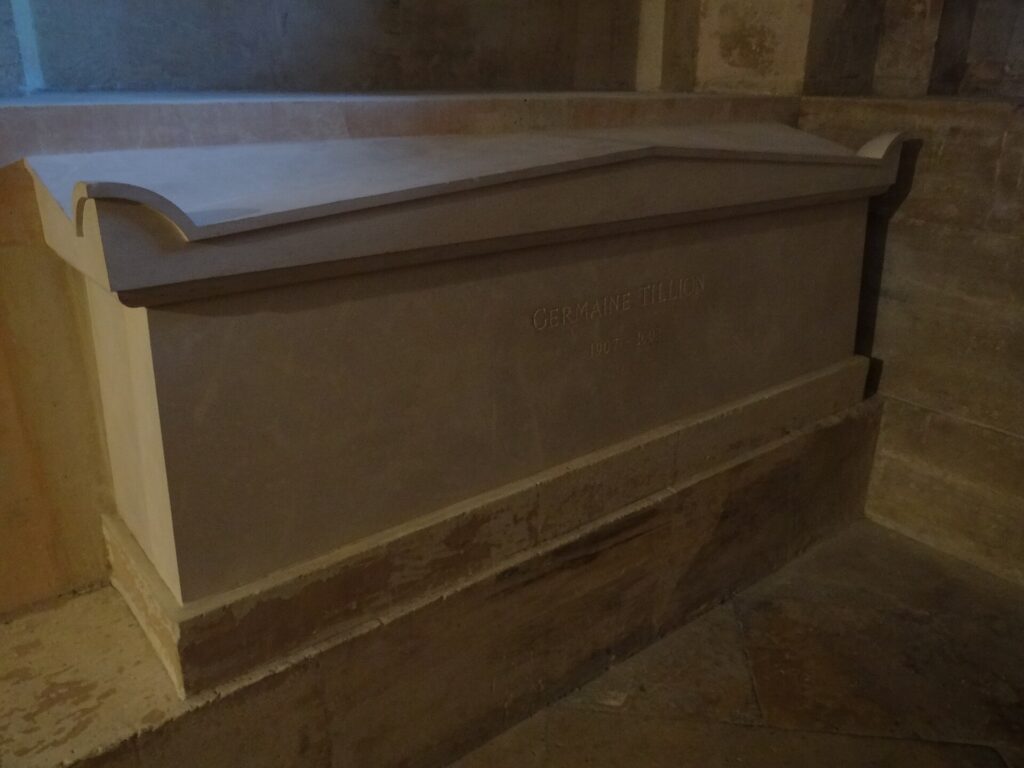
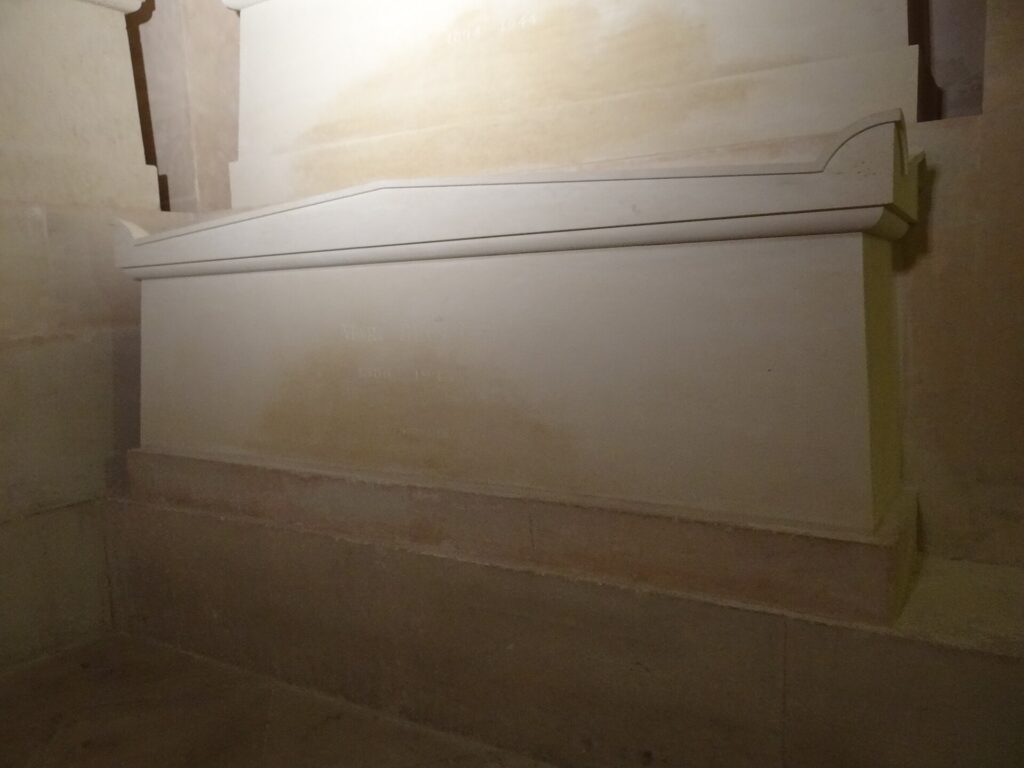
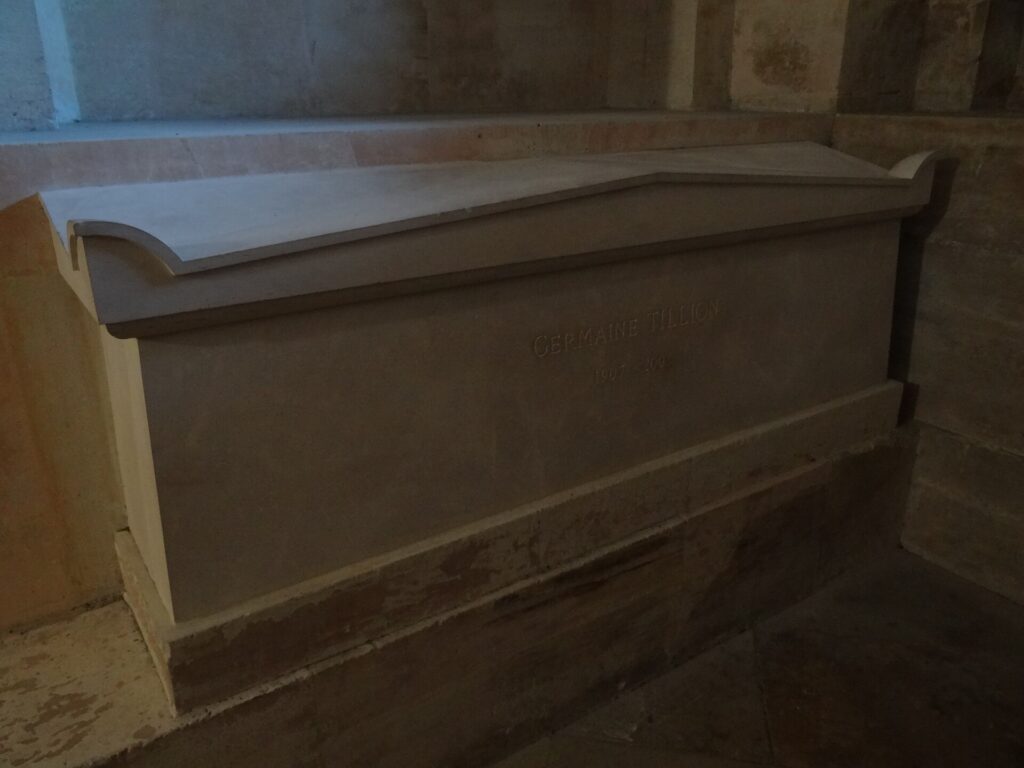
The tomb of Germaine Tillion in vault IX of the Panthéon crypt, Paris

Germaine Tillion in the Panthéon: Ethnologist, Resistance Fighter and Survivor of Ravensbrück

An ethnologist of the Aurès mountains, a member of one of the first Resistance networks and the author of an operetta written in Ravensbrück, Germaine Tillion was honoured in the Panthéon in 2015.

Who Was Germaine Tillion?

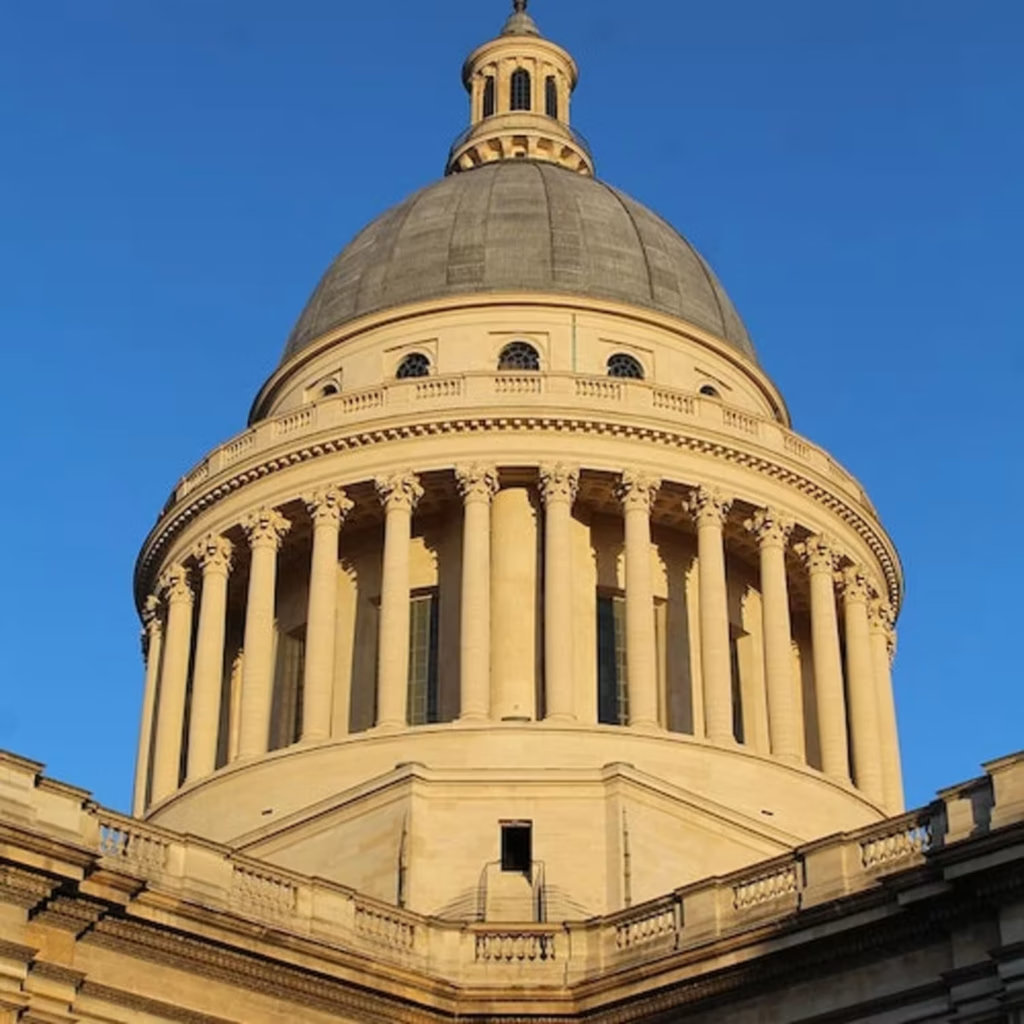
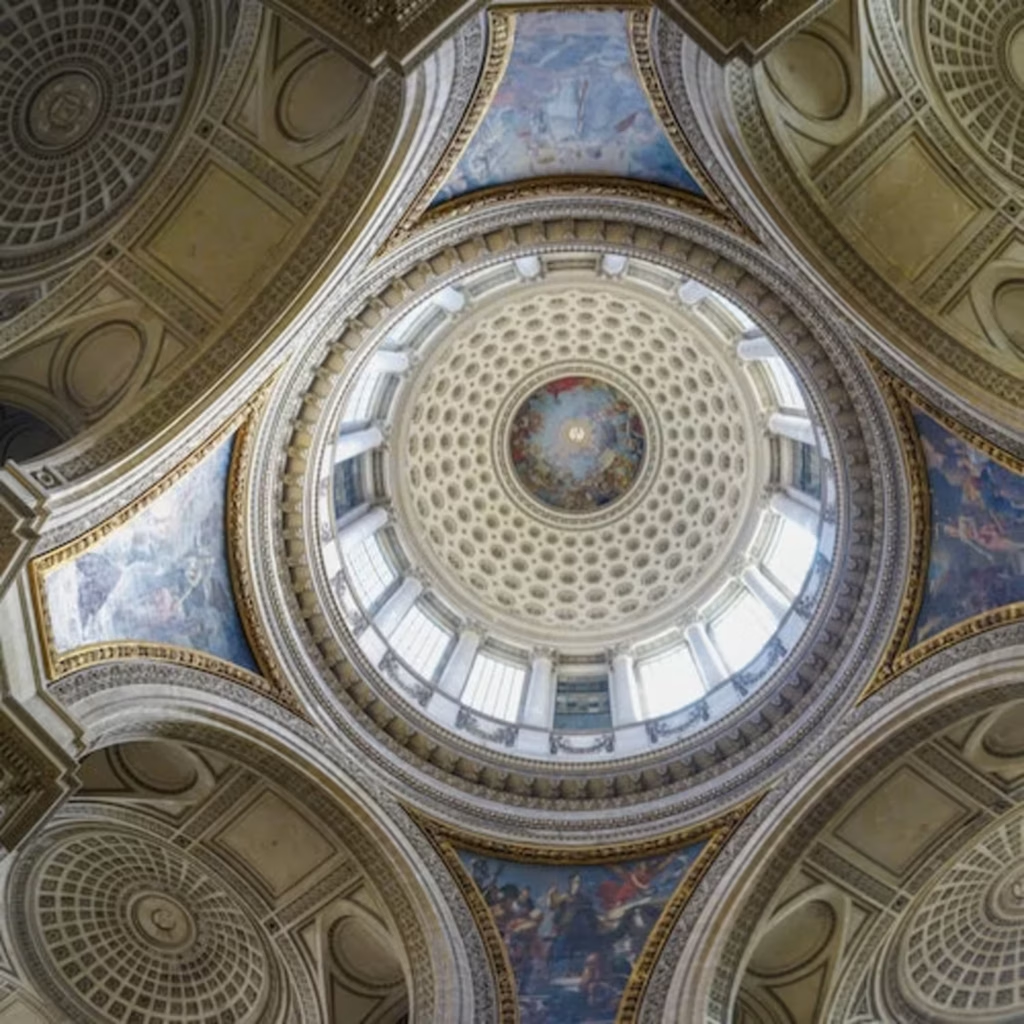
Germaine Tillion lived through almost the whole of the 20th century and took part in its darkest chapters as a witness and a fighter. A trained ethnologist, she joined the Resistance in 1940, was betrayed and deported, and turned her scholar’s eye on the camp that held her. After the war she spoke out against torture in Algeria. She died aged 100 and entered the crypt of the Panthéon in France, from its crypt to its dome, alongside three other figures of the Resistance.

What to Know About Germaine Tillion

She was born on 30 May 1907 in Allègre, in the Haute-Loire, the daughter of a magistrate and an art historian.

She studied ethnology under Marcel Mauss and Louis Massignon, and did fieldwork among the Chaoui of the Aurès, in Algeria, four times between 1934 and 1940.

She was betrayed by a priest working for German military intelligence and arrested at the Gare de Lyon on 13 August 1942.

In 1999 she became the second Frenchwoman made grand-croix of the Légion d’honneur, after Geneviève de Gaulle-Anthonioz.

Her operetta, written in the camp, was staged for the first time in 2007 at the Théâtre du Châtelet, to mark her hundredth birthday.

She died in April 2008 and is buried in the Condé cemetery at Saint-Maur-des-Fossés.

Germaine Tillion and the Musée de l’Homme Network

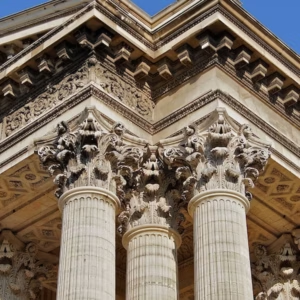
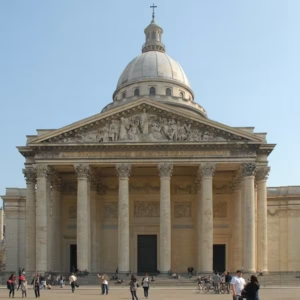
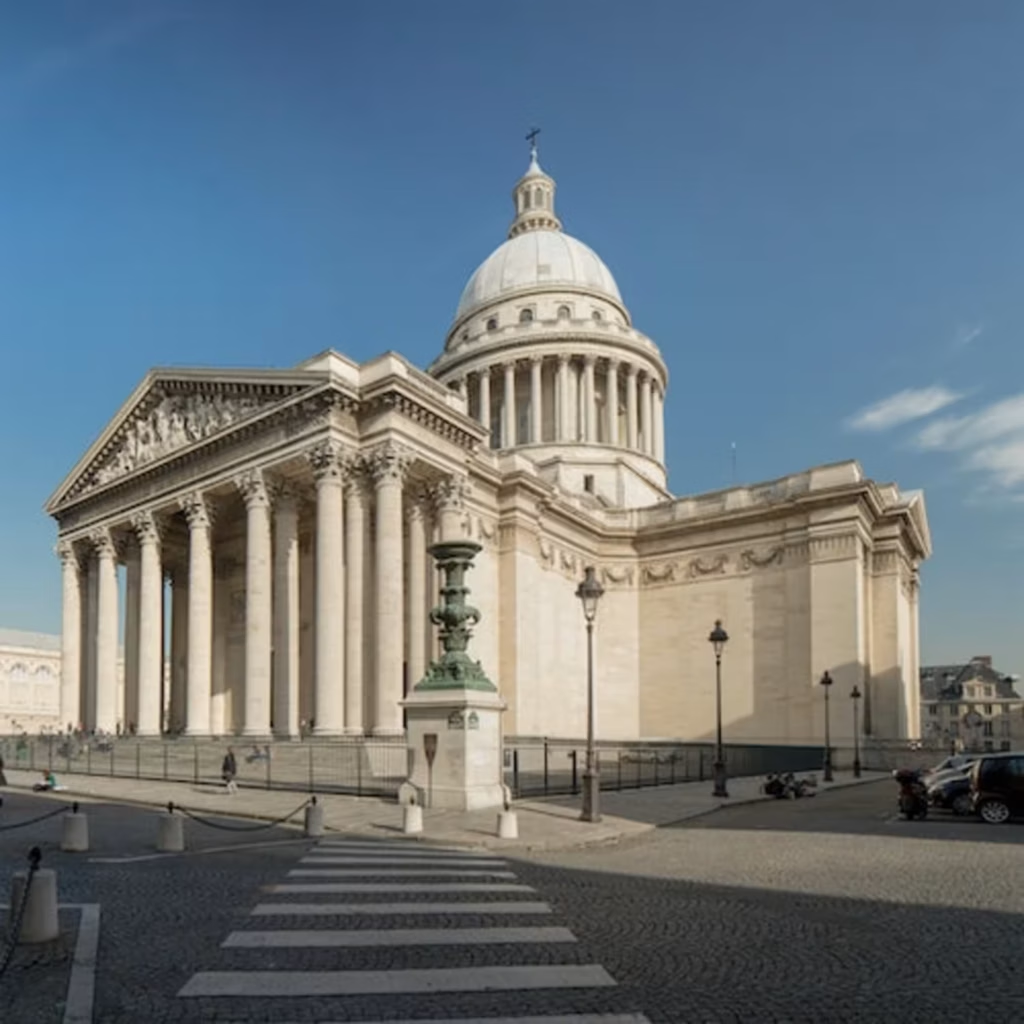
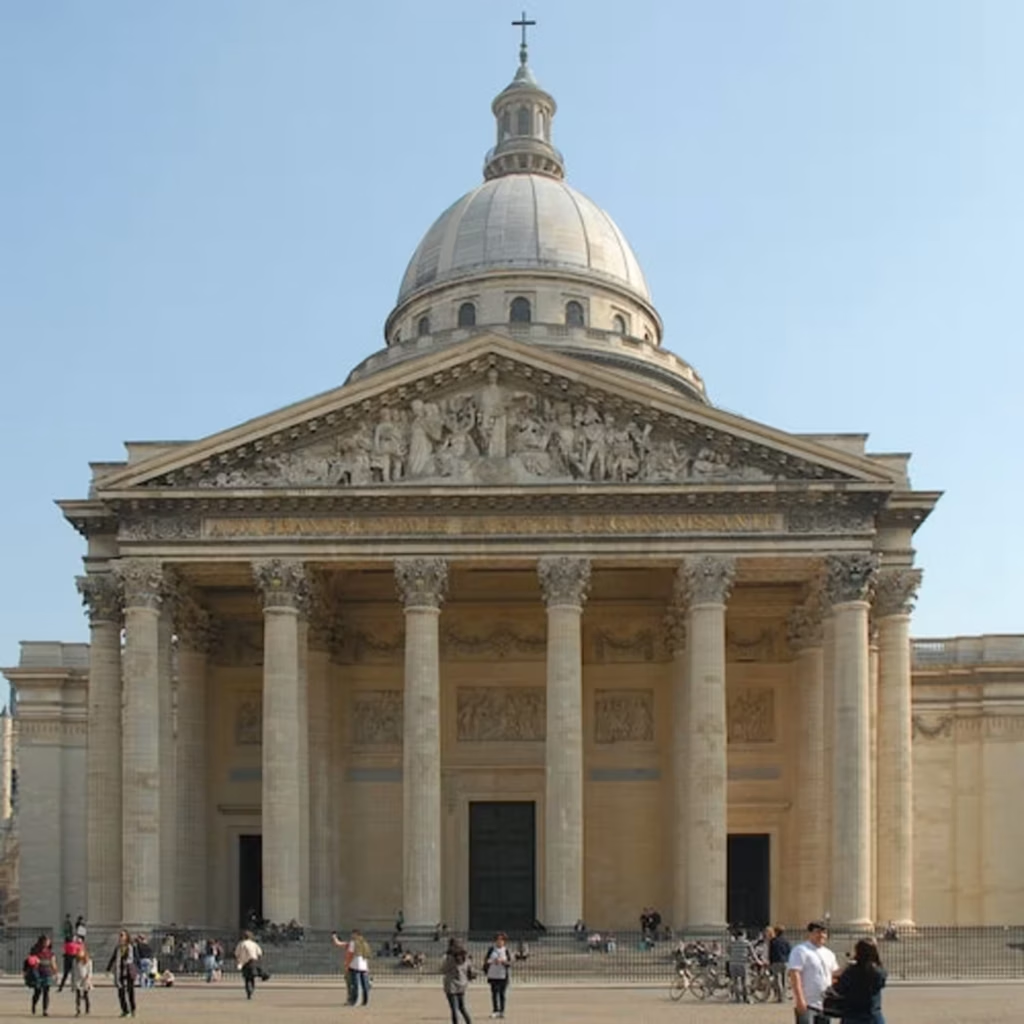
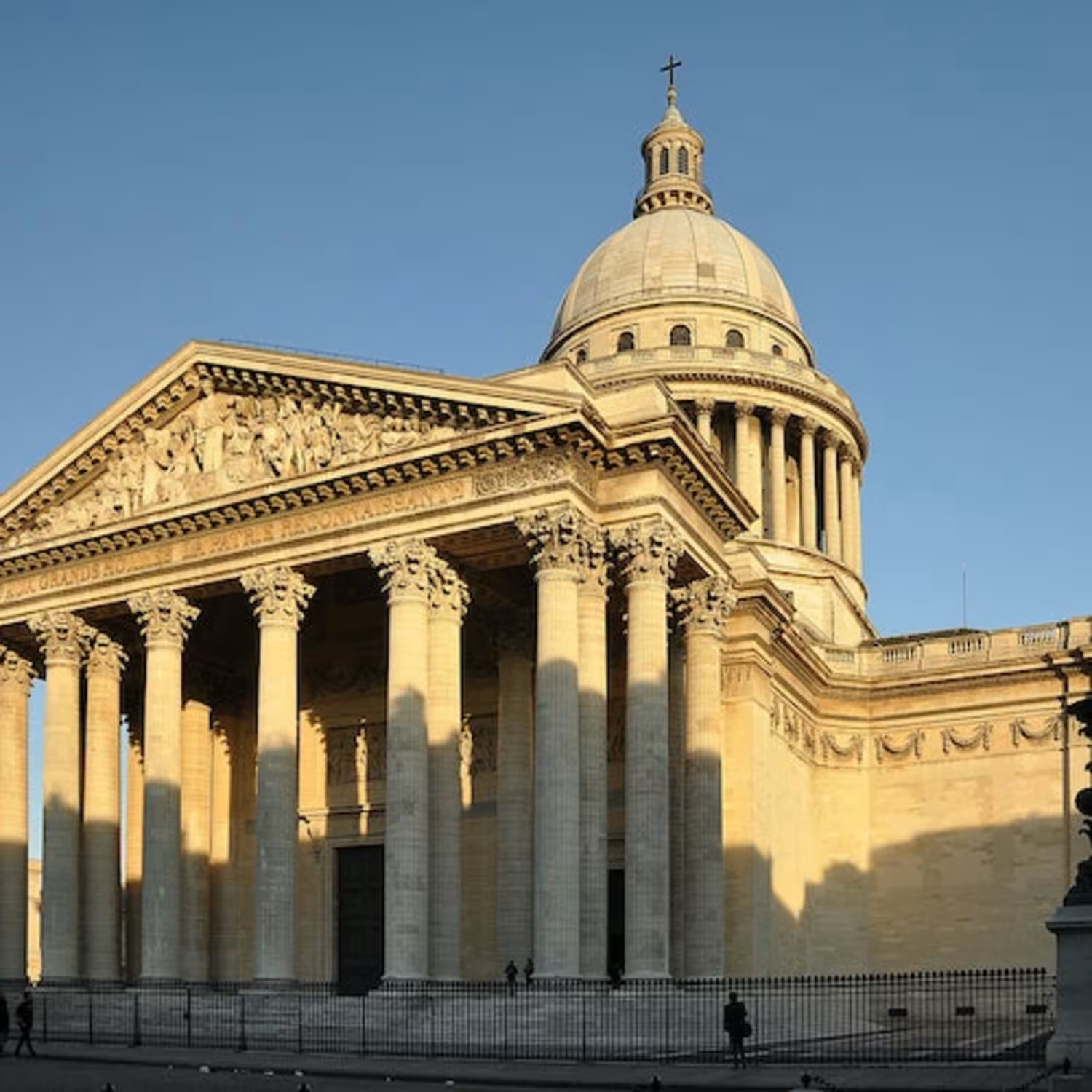
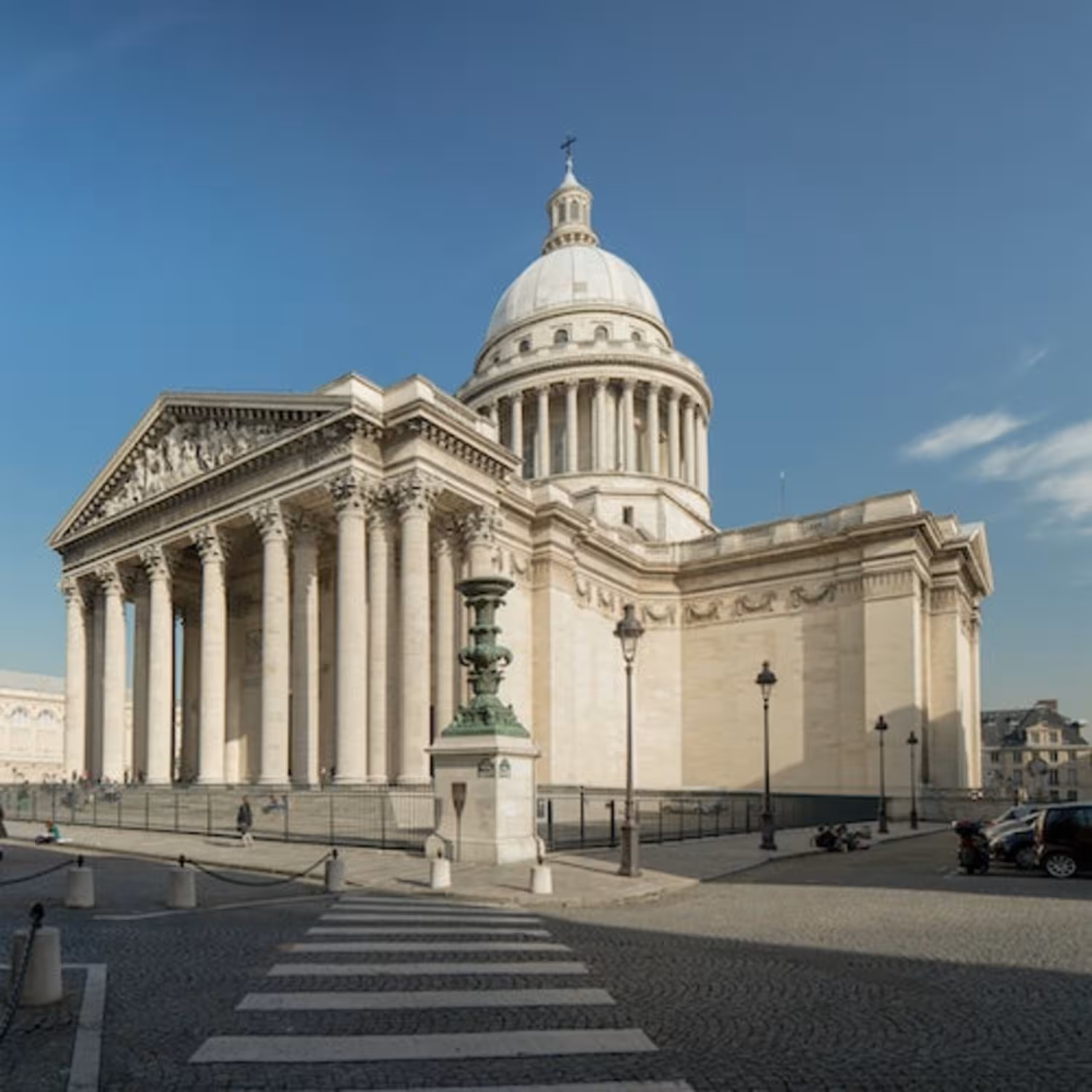
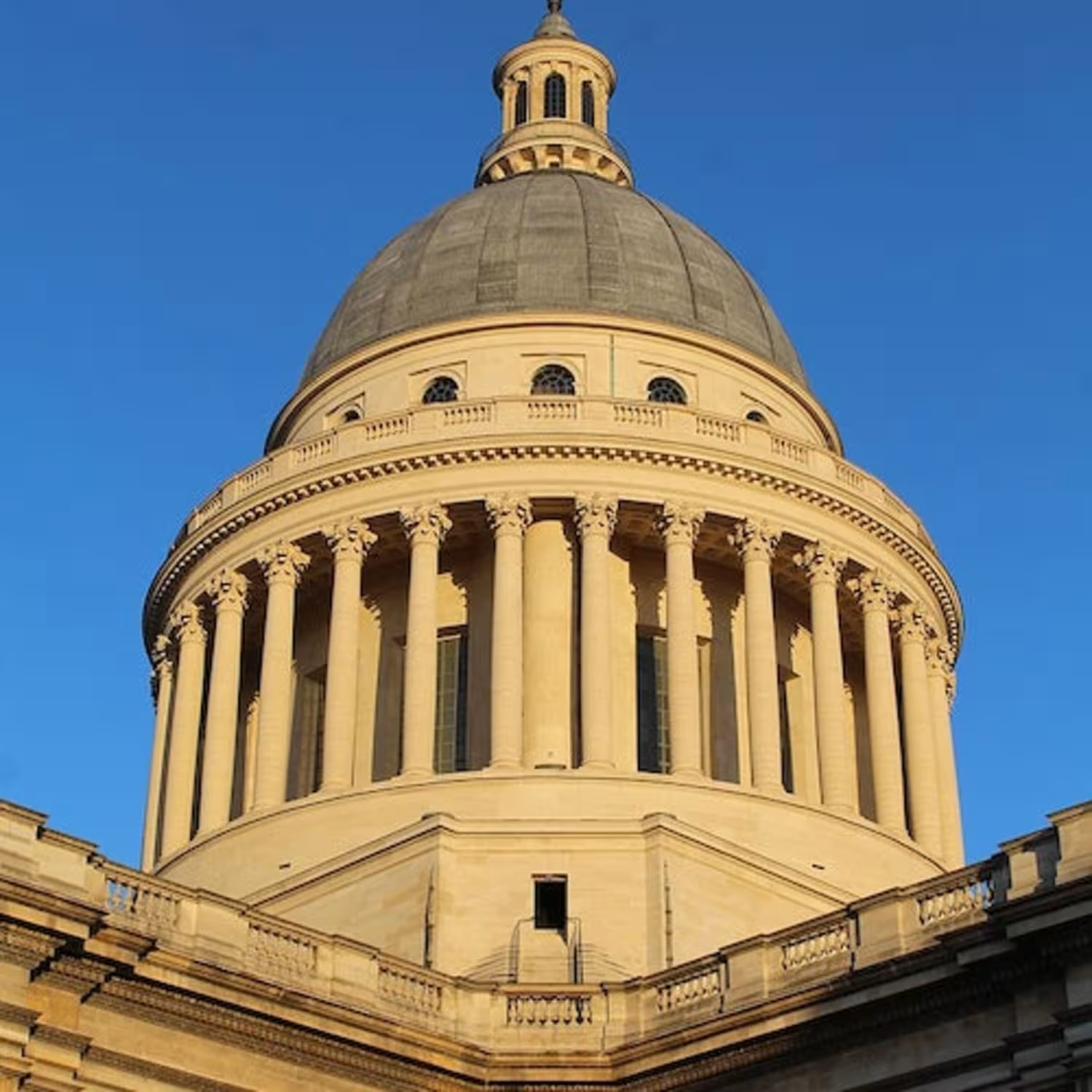
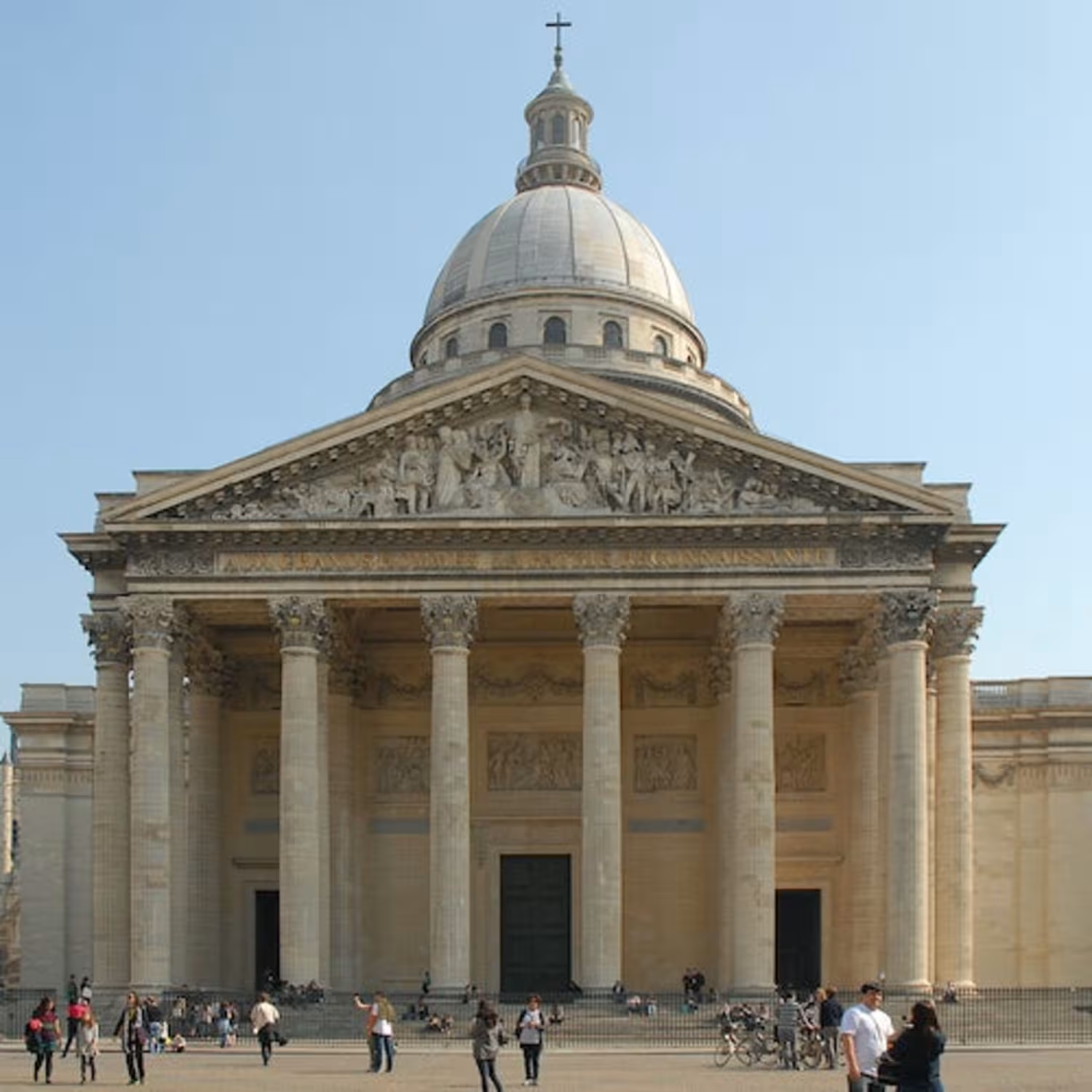
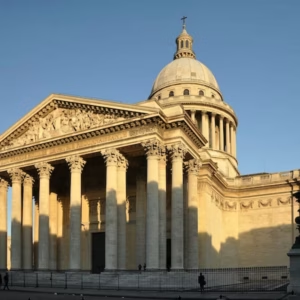
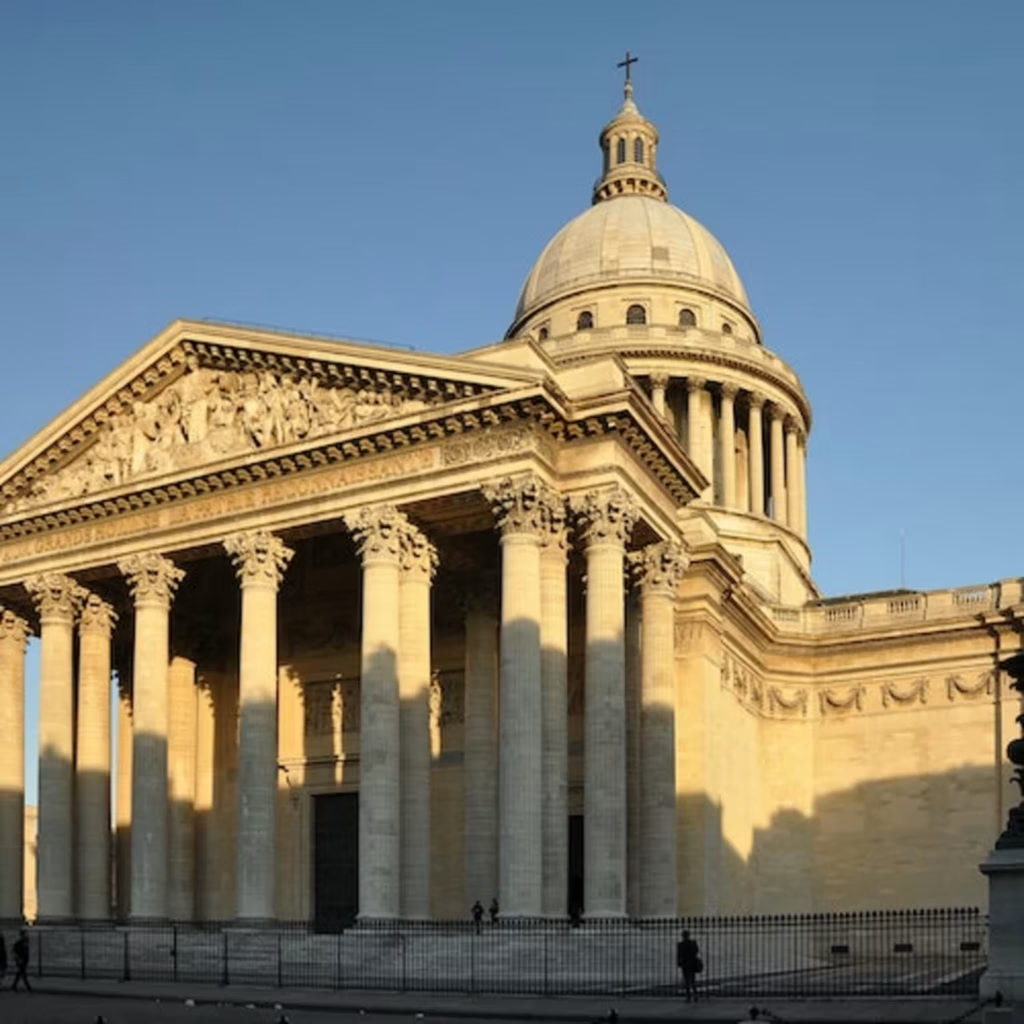
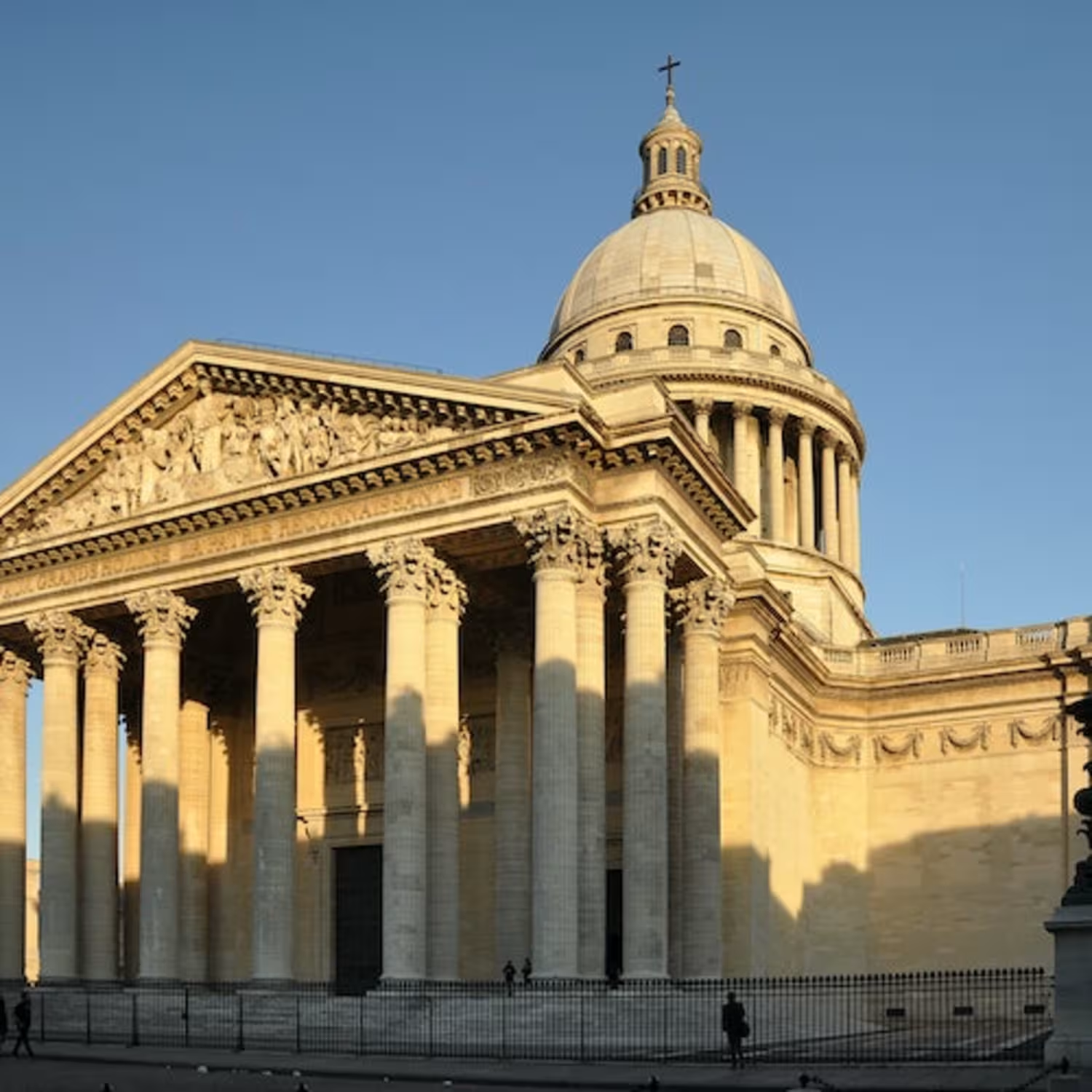
The Panthéon, Paris

Tillion arrived back in Paris from Algeria in June 1940, just as the German army was reaching the city. Her first act of resistance was to give her family’s papers to a Jewish family. She then joined a group formed around the retired colonel Paul Hauet and the ethnologist Boris Vildé, the network later known by the name of the Musée de l’Homme.

From 1940 to 1942 she helped prisoners to escape and gathered intelligence for the Allies. The circle she worked with was infiltrated by Robert Alesch, a priest who was an agent of the Abwehr, and on 13 August 1942 he handed her over at the Gare de Lyon.

She was held at La Santé, then at Fresnes, where in January 1943 she learned that her mother, Émilie, had been arrested too. She kept working on her thesis in prison.

An Operetta in Ravensbrück

Germaine Tillion’s tomb in the crypt of the Panthéon

On 21 October 1943, classed as a Nacht und Nebel prisoner, Tillion was deported without trial to Ravensbrück, north of Berlin. Her mother was deported there in 1944 and killed in the camp in March 1945.

Classed among the Verfügbar, prisoners available for the worst chores, Tillion studied the camp as an ethnologist would, and secretly wrote Le Verfügbar aux Enfers, an operetta that set the horrors of camp life to popular tunes to make her fellow prisoners laugh.

In April 1945 she was among the French women evacuated by the Swedish Red Cross after negotiations with Himmler. The group smuggled out documents, including photographs of medical experiments and the text of the operetta, and her study of the camp later appeared as Ravensbrück.

Algeria, and the Road to the Panthéon
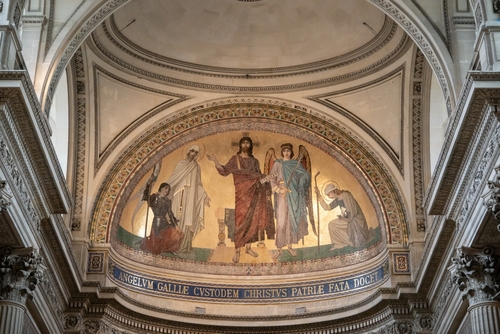
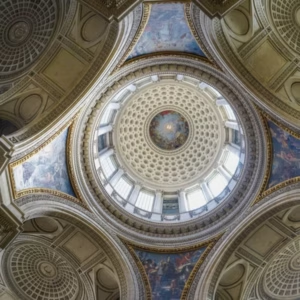
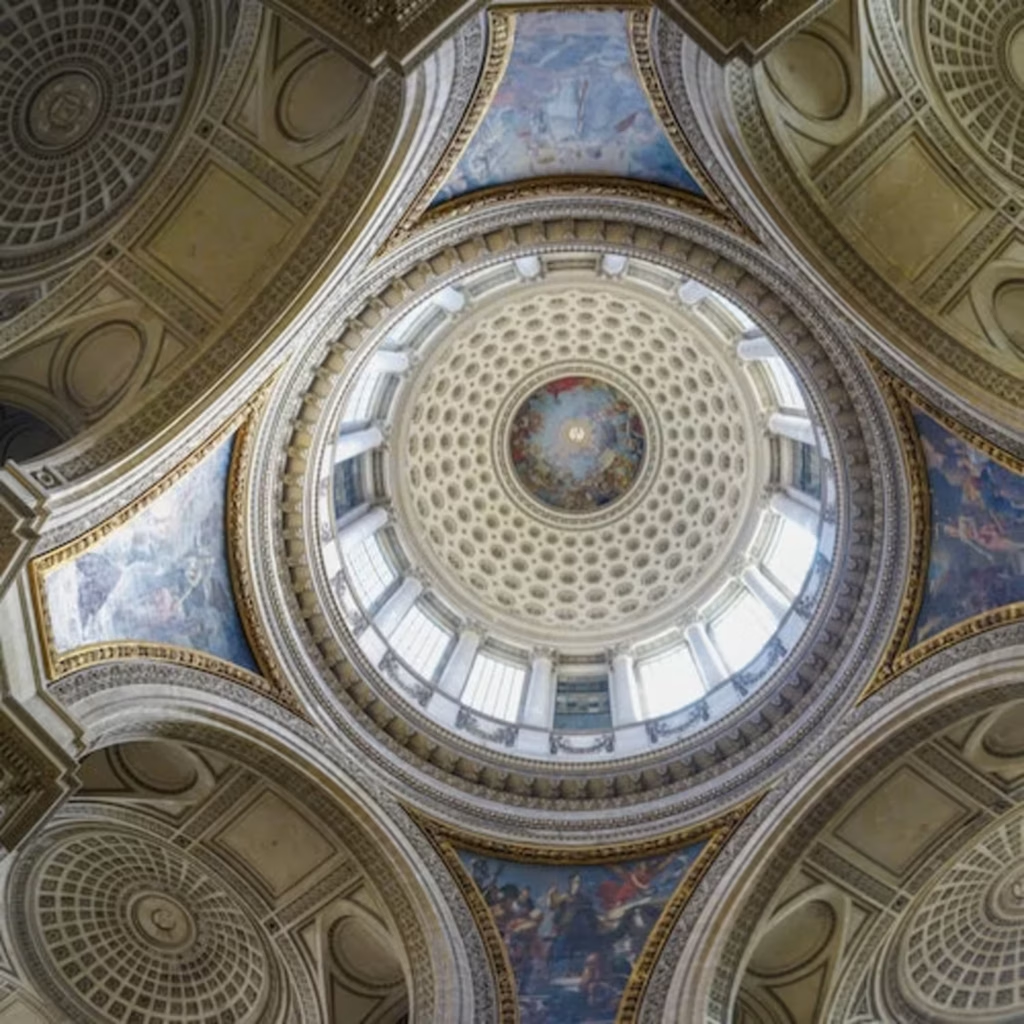
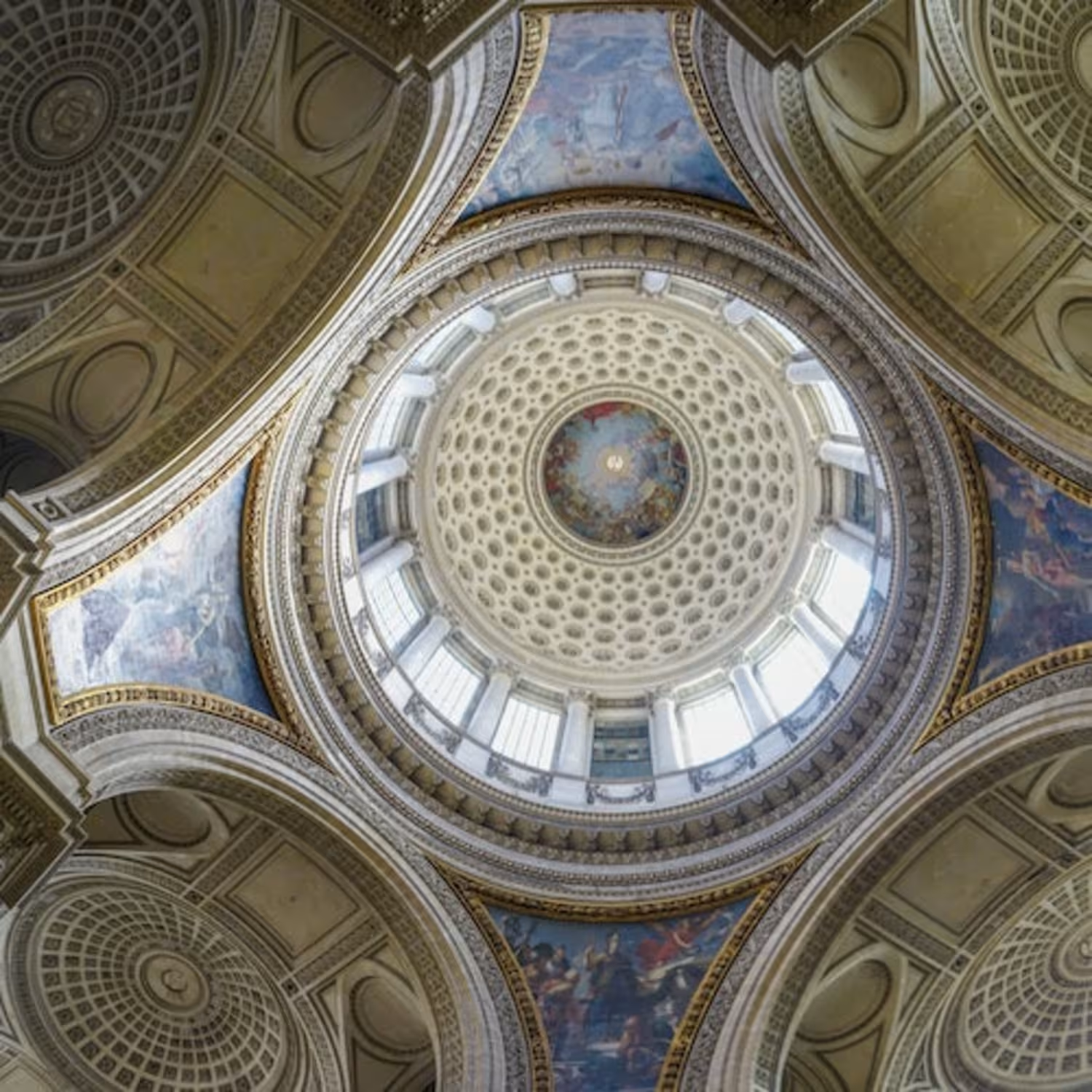
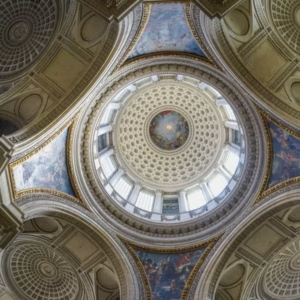
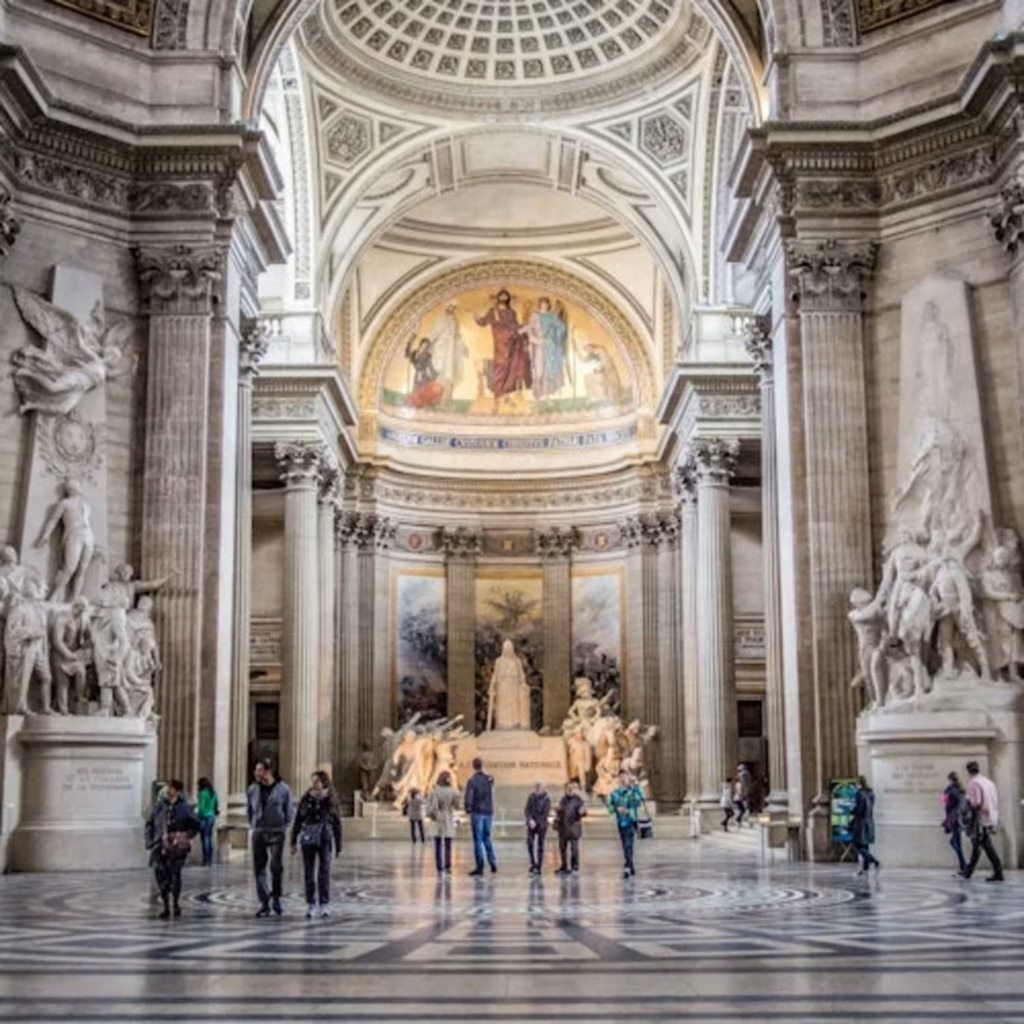
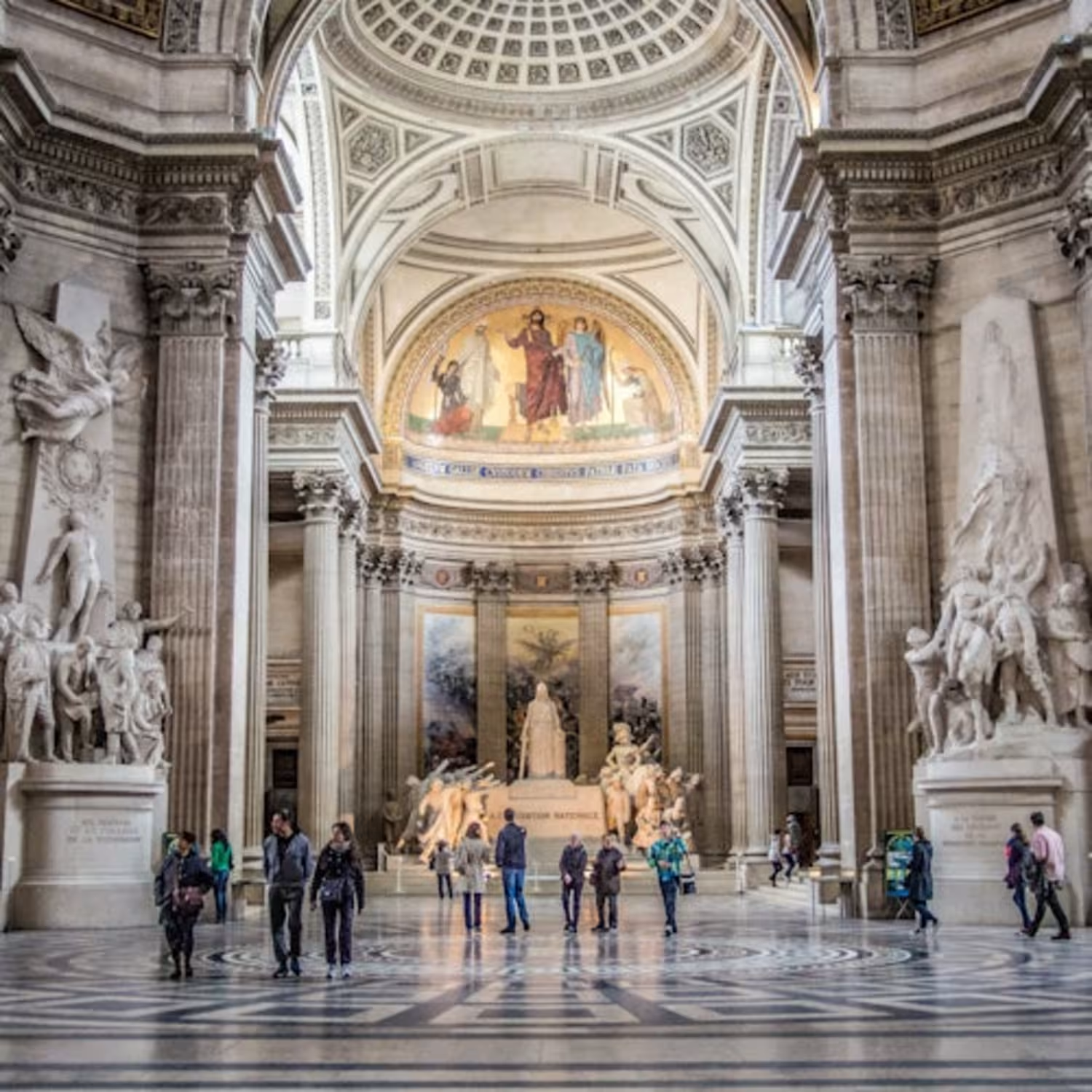
Inside the Panthéon, Paris

Tillion went back to Algeria in 1954, as the war of independence began, and blamed the conflict above all on the impoverishment of the rural population. In October 1955 she launched social centres offering education and vocational training.

On 4 July 1957, in the Casbah of Algiers, she met the FLN leader Yacef Saadi in secret to try to stop the cycle of executions and bombings, and she was among the first to denounce torture by French forces.

She died in 2008, aged 100. On 21 February 2014 President François Hollande announced her entry into the Panthéon; her family wanted her to stay at Saint-Maur, so soil was taken from her grave, and she entered the crypt on 27 May 2015.

Finding Vault IX

The four people honoured together in 2015 share vault IX, so a single stop in the crypt tells the whole story of that ceremony. A standard visit covers the crypt, and the two women’s tombs sit side by side with those of Brossolette and Zay, a reminder that the Resistance was not only a men’s story.
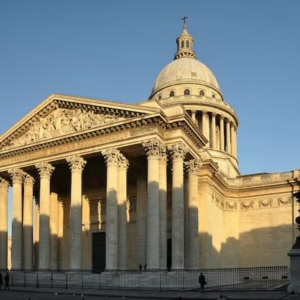
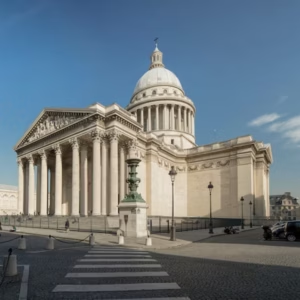
Visit the Paris Pantheon

Highlights

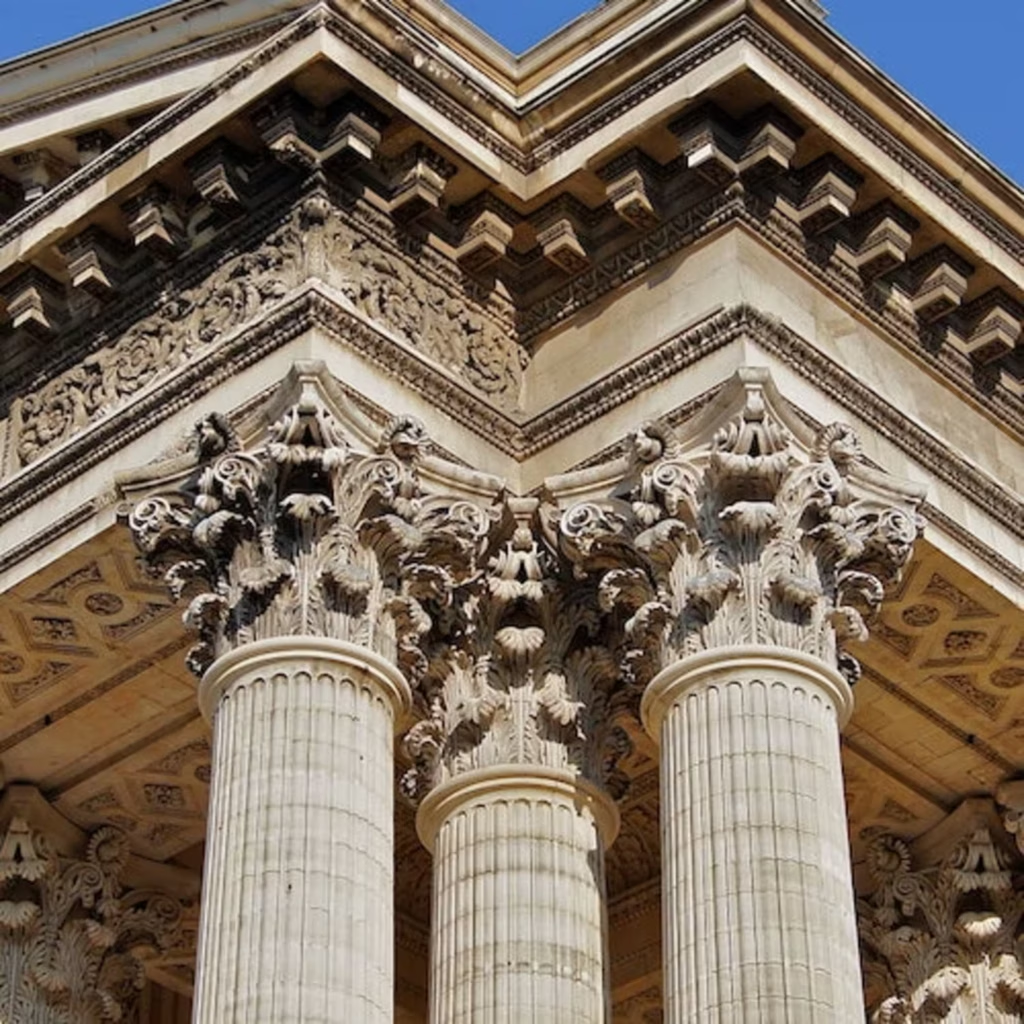
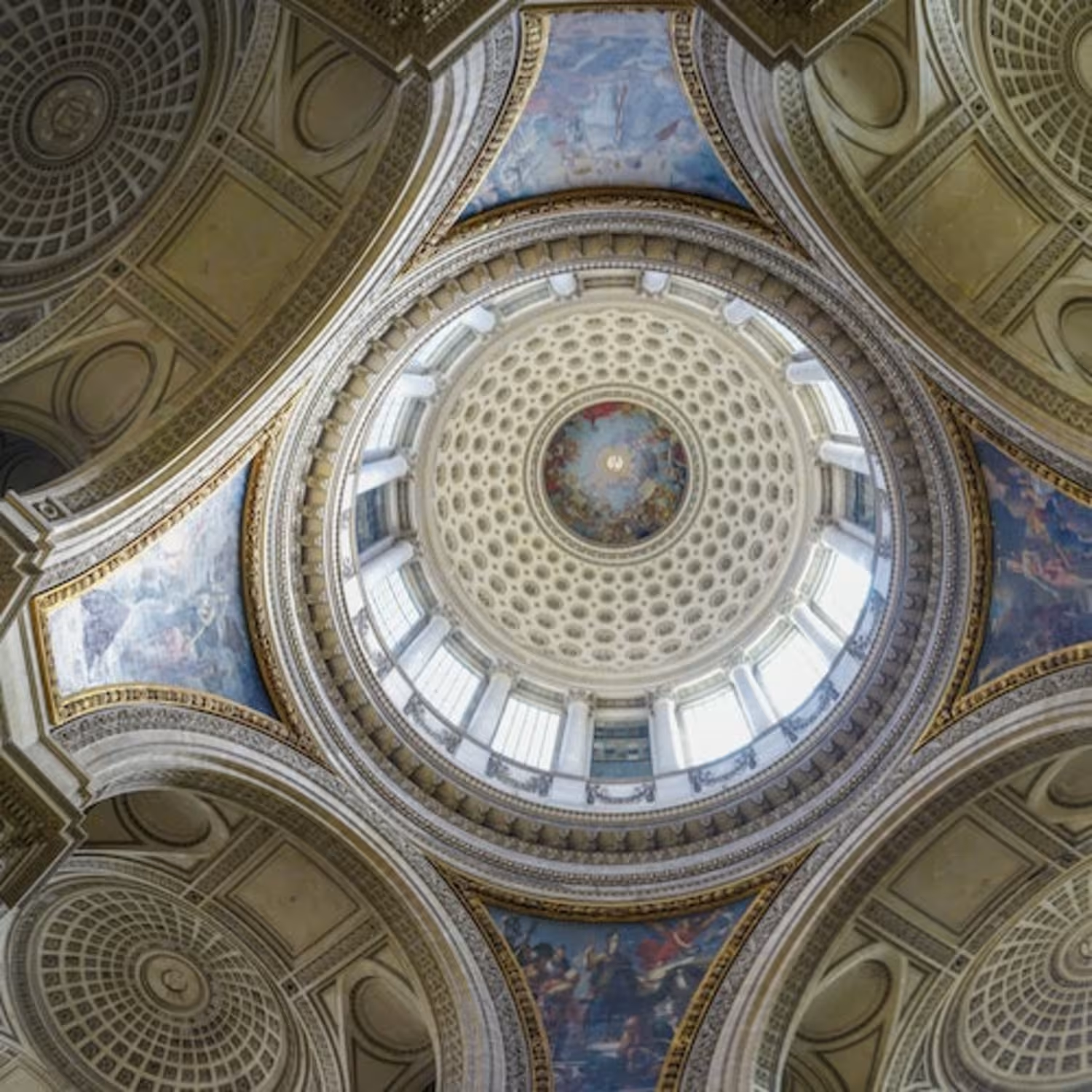
Explore an elegant neoclassical structure located atop Montagne Sainte Geneviève.

Discover captivating murals portraying the origins of Christianity.

Visit the crypt housing the resting places of France’s illustrious figures.

Witness the famous Foucault’s pendulum demonstrating Earth’s rotation.

Enjoy panoramic views over Paris from the monument’s position in the Latin Quarter.
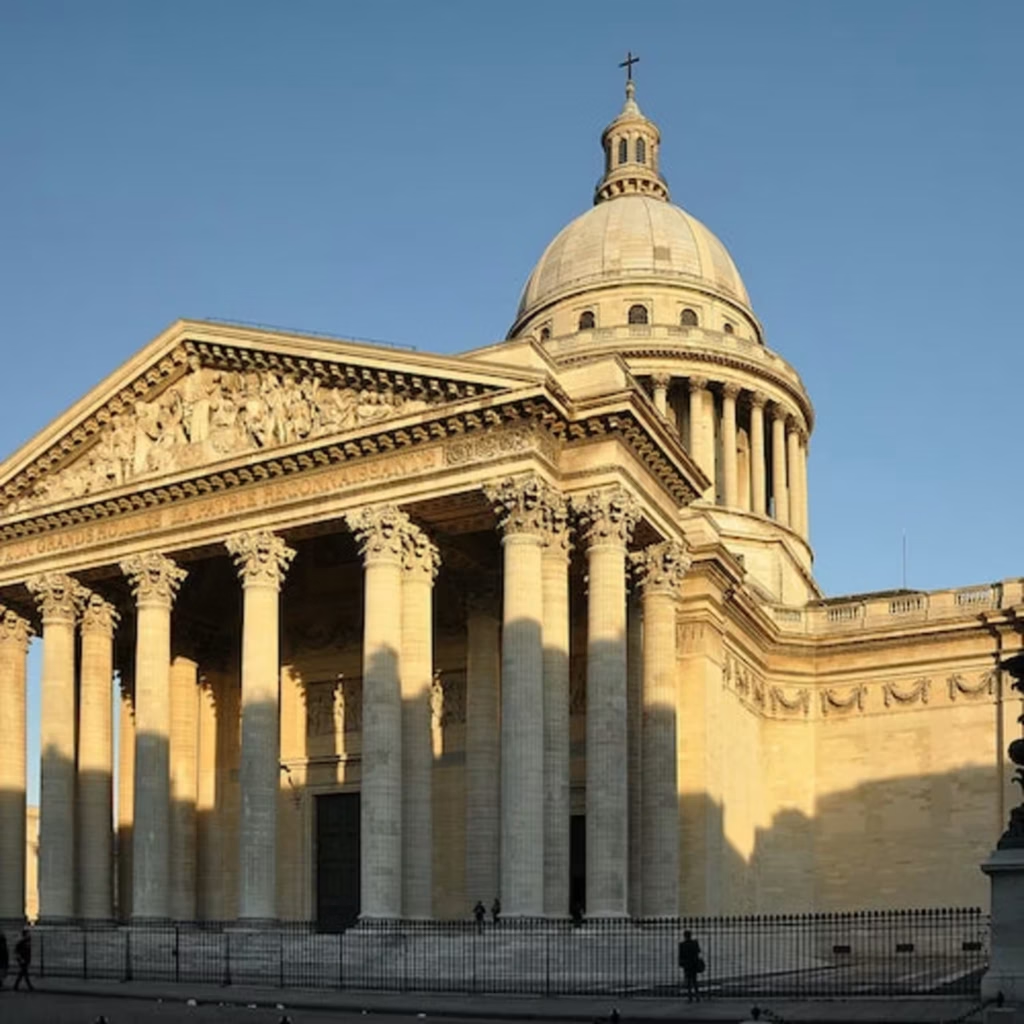
Ticket-free access to the Panthéon & Saint-Denis Cathedral Basilica

Highlights

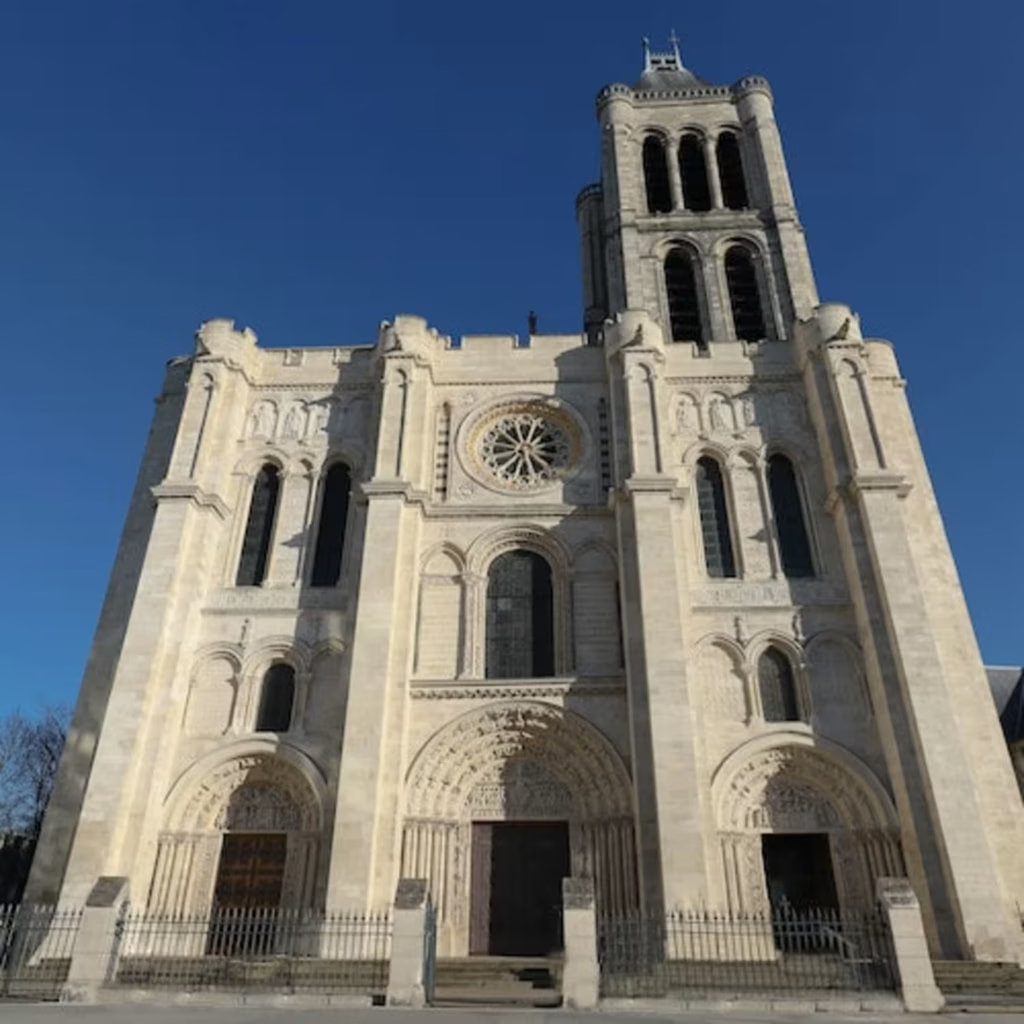
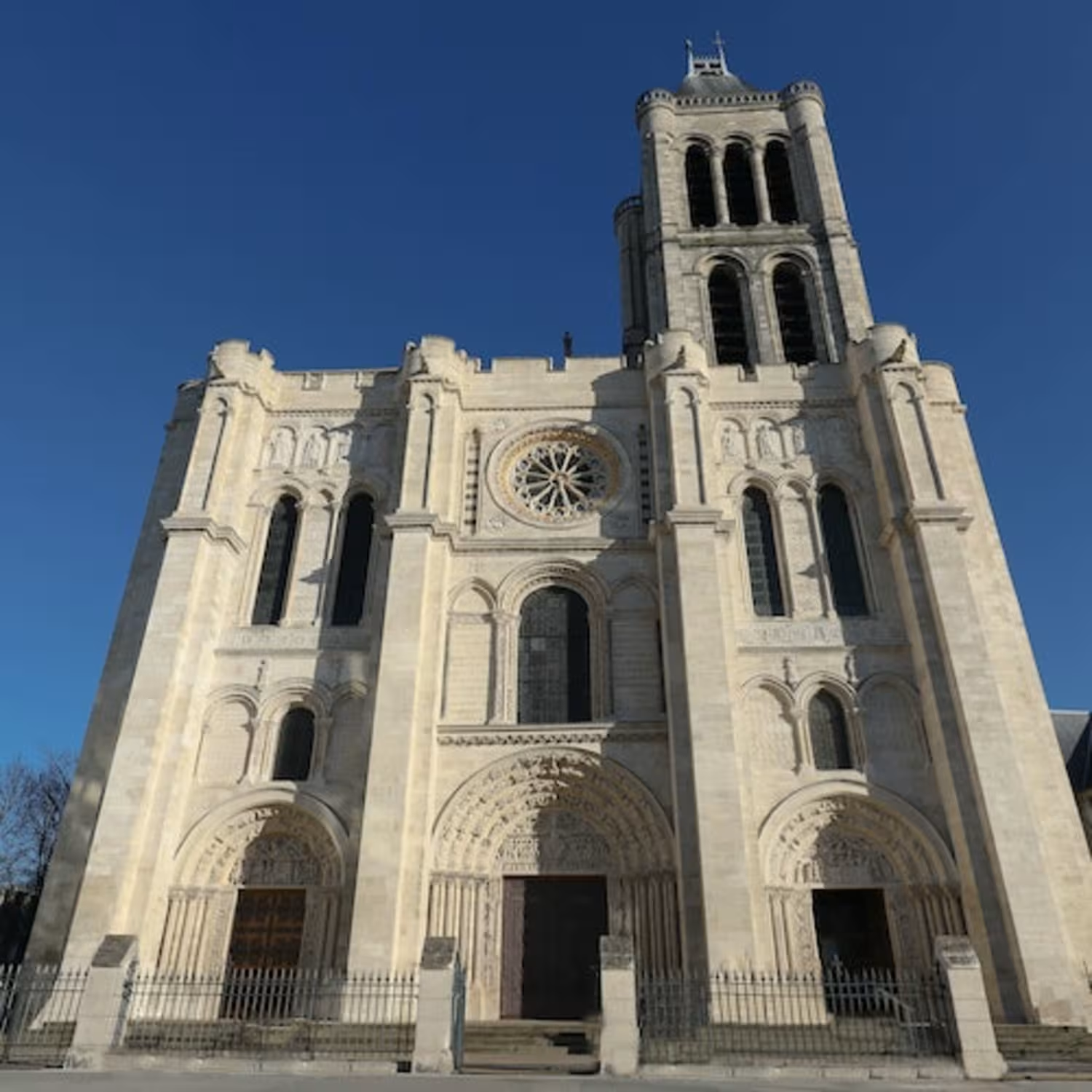
Gain admission to both the historically rich Panthéon and the majestic Basilica of Saint-Denis.

Discover the resting places of notable French figures, including royalty and renowned intellectuals.

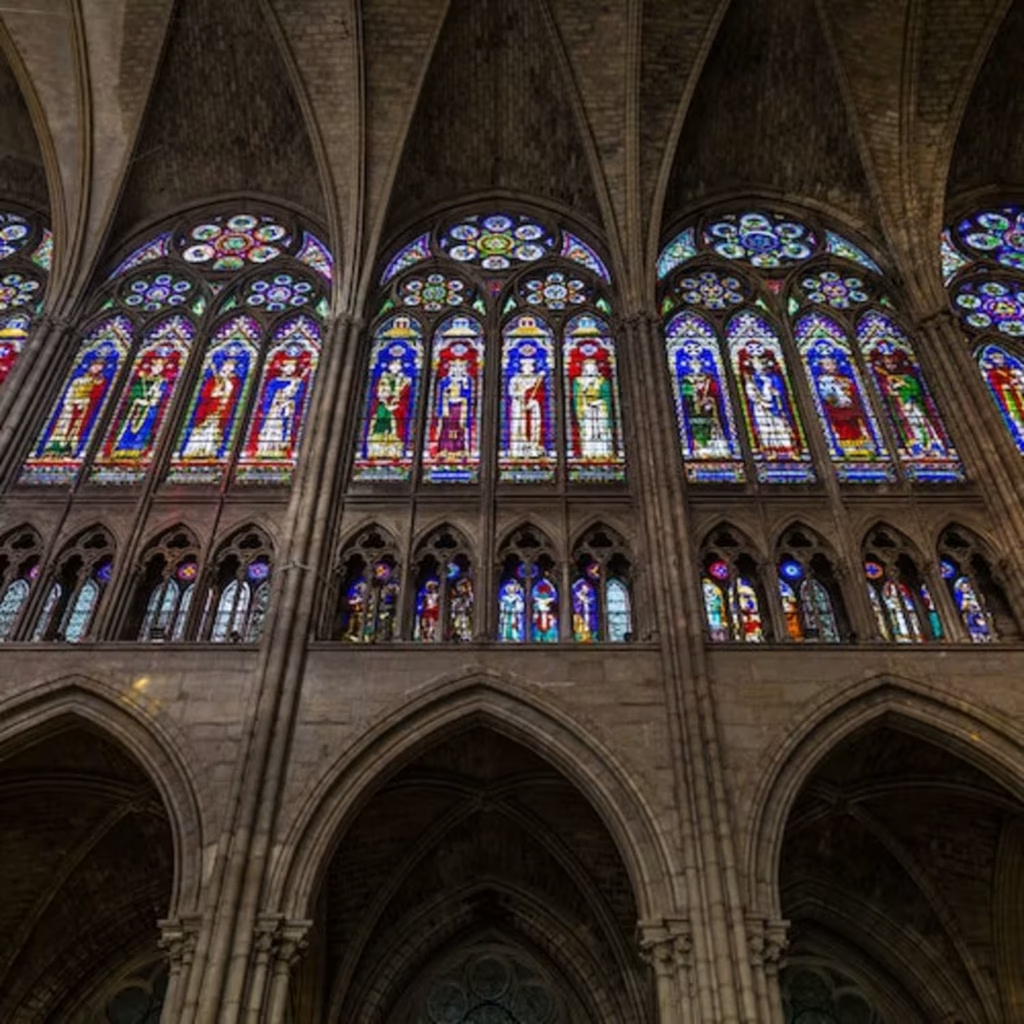
Enjoy the impressive architecture and artistic details inside these famous landmarks.

Visit at your leisure with tickets valid throughout their respective open hours.

Benefit from a convenient combined ticket ideal for a thorough cultural experience.
Questions About Germaine Tillion and the Panthéon

Is Germaine Tillion buried in the Panthéon?

Symbolically. Her coffin in the crypt holds soil from her grave in Saint-Maur-des-Fossés, where her body remains, as her family wished.

When did Germaine Tillion enter the Panthéon?

On 27 May 2015, together with Geneviève de Gaulle-Anthonioz, Pierre Brossolette and Jean Zay.

What did Germaine Tillion do in the Resistance?

From 1940 she helped prisoners escape and gathered intelligence in the network linked to the Musée de l’Homme, until her arrest in 1942.

What is Le Verfügbar aux Enfers?

An operetta Germaine Tillion wrote in secret in Ravensbrück to make her fellow prisoners laugh. It was first staged in 2007.

Why was Germaine Tillion sent to Ravensbrück?

She was arrested for her Resistance work in 1942 and deported without trial in October 1943.

What happened to Germaine Tillion’s mother?

Émilie Tillion, also a resistance fighter, was deported to Ravensbrück in 1944 and killed there in March 1945.

What did Germaine Tillion do in Algeria?

She studied the Chaoui of the Aurès in the 1930s, set up social centres in 1955 and was among the first to denounce the use of torture.

This website sells official tickets for this venue. Please note, however, that it is not the official website of the venue.

The images and videos on this website may contain visual elements that have been created or enhanced using AI technology. They are provided for illustrative purposes only.